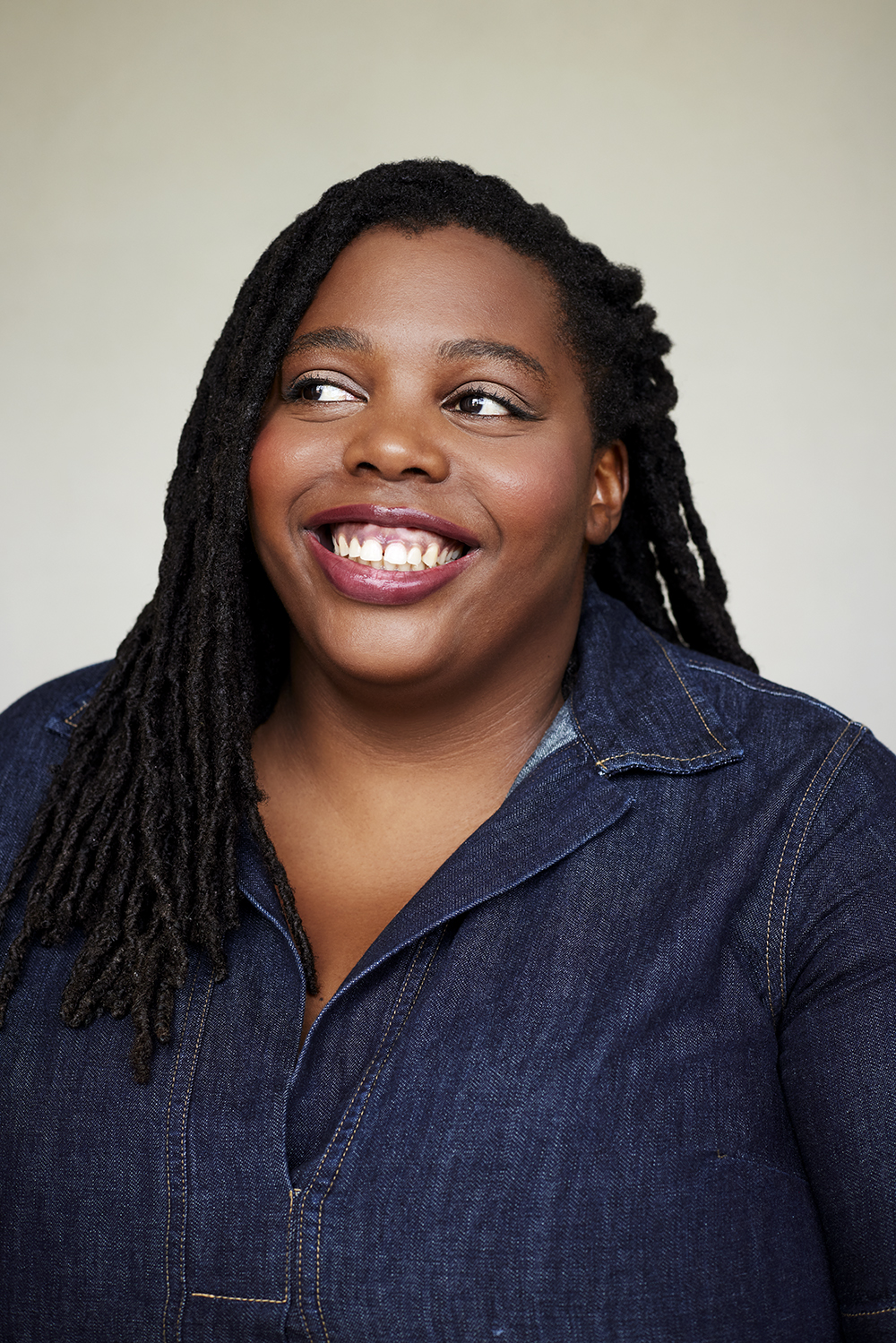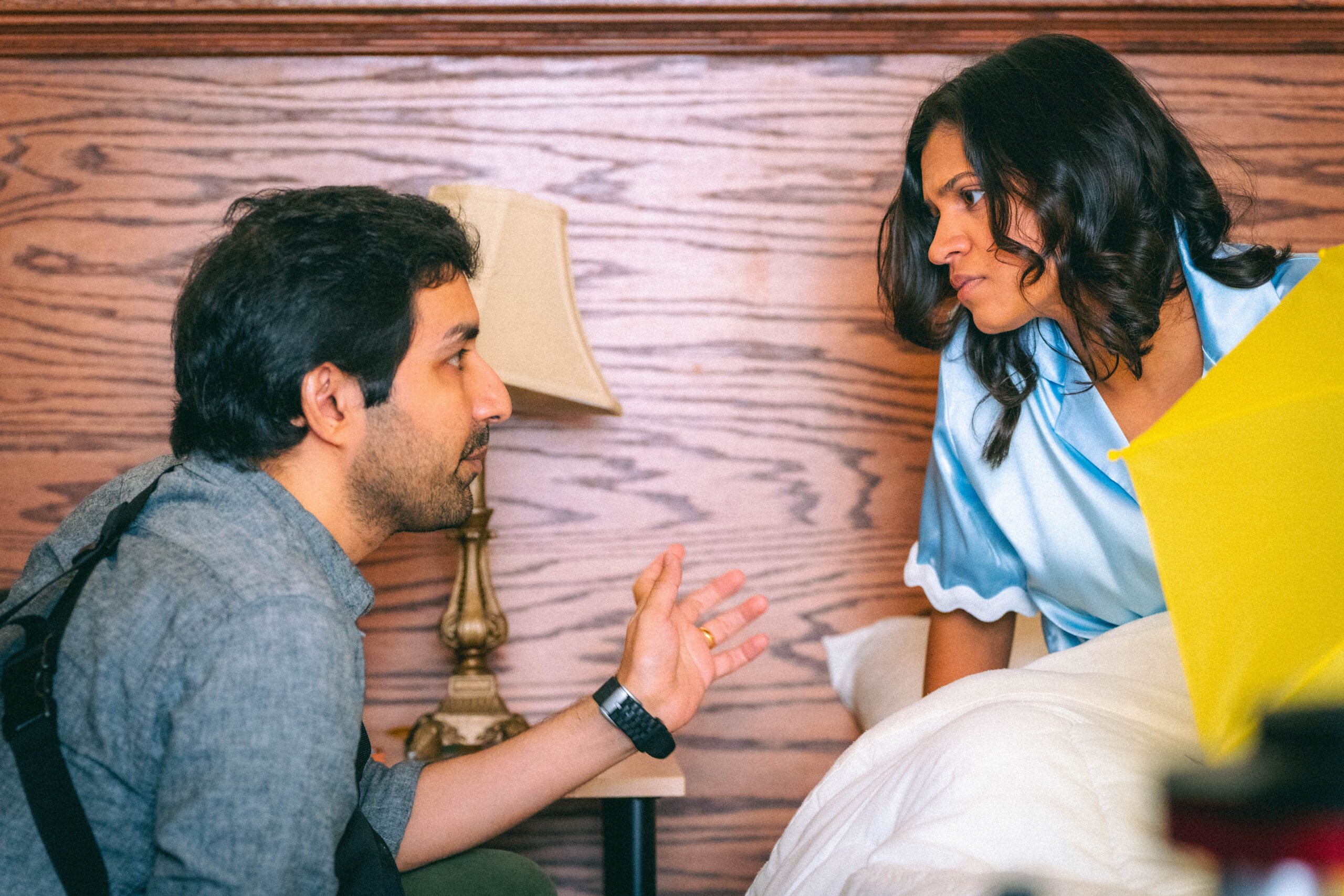
Filmmaking was not Rahul Chaturvedi’s first profession. His journey into Canada’s film and television industry took time, persistence, and constant reinvention. To avoid creative burnout, he deliberately moved across formats, building experience in scripted television, factual programming, kids’ TV, game shows, and web series – an adaptability that few in the industry manage to sustain. In this chat, Rahul Chaturvedi speaks about navigating the long game of a creative career, balancing ambition with practicality, and continuing to evolve as a storyteller.
Looking back at your early projects, what do you now see as your biggest learning curve? Was there ever a point where you seriously considered stepping away? What kept you going?
The biggest learning curve came on the first season of Late Bloomer. In that room I learned about breaking story, scheduling the writing of a TV season, script versioning, and coordinating story changes across production departments. Watching how the realities of production shape a story, and how professional artists balance practical considerations with storytelling ambition, was genuinely eye-opening.
I haven’t seriously considered stepping away in the last few years, but I’ve dabbled in different formats to keep myself from burning out. When some scripted projects didn’t go forward, I worked on factual TV with Bollywed, which opened up a storytelling muscle I didn’t know I had. Same for kids’ TV, game shows, web series. Every time things get difficult, I step away and knock on new doors, and every door that opens has new things to explore.
As for what’s kept me going, this is my second or maybe third profession. I used to work in the tech industry while taking evening film classes for years. It took me so long to enter this industry that I’m constantly worried I’ll take it for granted and it’ll all go away. I don’t support insecurity as a driving motivator, but a healthy amount of fear is good to kick your ass and push you to keep putting in the work.
Do you think merit matters more than connections in getting writing projects greenlit? Have you ever had a project you believed in deeply that the system simply didn’t understand?
I’m slowly realizing that merit and connections aren’t unrelated, and both are necessary for getting anything made. If you have talent and keep putting it in front of other talented people, chances are one of them will decide to bring you into a room you didn’t previously have access to. In that room, you’ll work on big ideas with really smart and passionate people, and that will elevate your own work. It’s a cycle: as your merit grows, your connections grow, which gives you new opportunities to grow your merit further, connecting you to more people. The whole game is to enjoy the ride, which is much easier said than done. Sometimes it feels like you’ve been waiting outside these rooms for so long, and the right connection to bring you in will never come.
I have a project I’ve been working on for around a decade. My Christmas story Namaste Santa centres immigrants and people of colour in a holiday story. It’s been an interesting one, because our film funders keep calling it a TV project, and our TV funders keep calling it a film project. Everyone is convinced it would get funded easily, and everyone is waiting for some other funding body to be “first in” and kick things off. Thankfully my perseverance is greater than the system’s apathy, and we’ve been able to attach some really cool talent and get good traction on it. I have a graphic novel version coming out in October, and believe the audience love will finally push our funders to get into action.
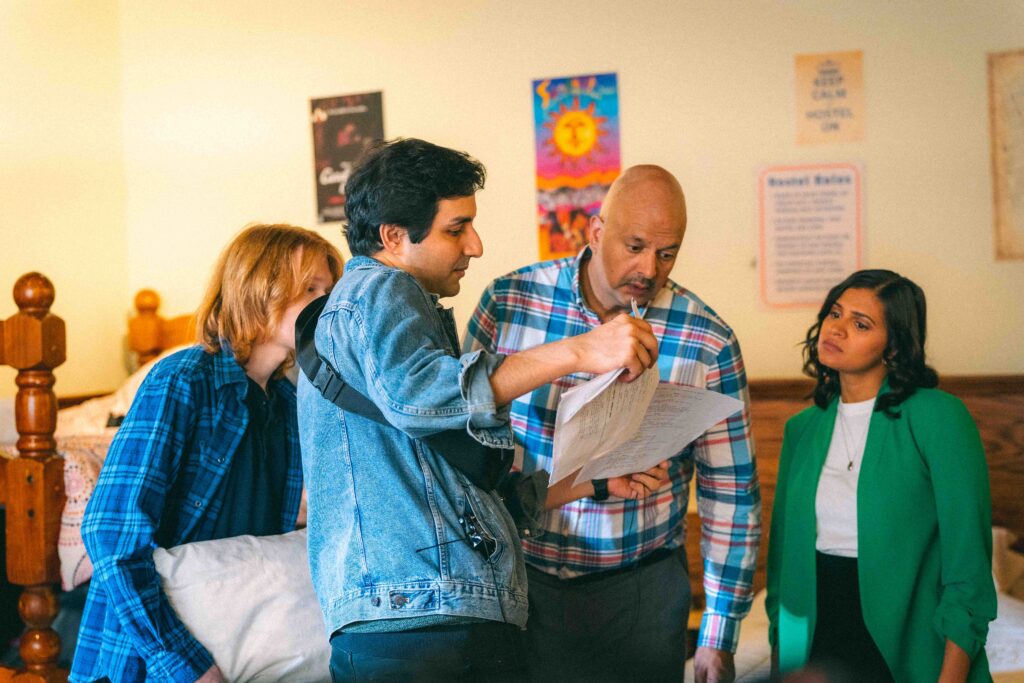
When it comes to writing, what part do you personally struggle with the most? Do you ever experience creative burnout, and how do you push through it when deadlines don’t allow rest?
Dialogue and character are always the hardest, especially since I write comedies. You have to keep checking that the humour is still true to your characters, and that you’re not just inserting jokes for the sake of a laugh. I’m very particular about getting the voice of each character right, which isn’t always great for my wife, who is trying to sleep in the middle of the night while I’m walking around the other room reading dialogue aloud. I know I’ve got it right when I stop feeling like I’m writing the character and start feeling like I’m just listening to them. That’s the goal every time, even if it takes a few laps around the apartment to get there.
For your web series 18 to 35, did this concept start off as a TV series, and you had to make it into a digital series instead? Tell me more from the pitching and funding perspective.
The original instinct was a TV series, but we pivoted to digital pretty early, before we even had a pilot script. We saw an opportunity to pitch a web series to Bell Fibe TV1 at the Forest City Film Festival, we went for it, we won, and we never looked back. Our EP Luisa also did a lot of outreach to businesses in London, Ontario, and landed support from Delta Hotels, Digital Extremes, and the Tricar Group, which made a real difference.
Now that the digital series has found some success, we’re revisiting the idea of developing it as a half-hour. I think the idea and the characters have enough strength to sustain that format. It’s just a matter of finding the right production and broadcast partners.
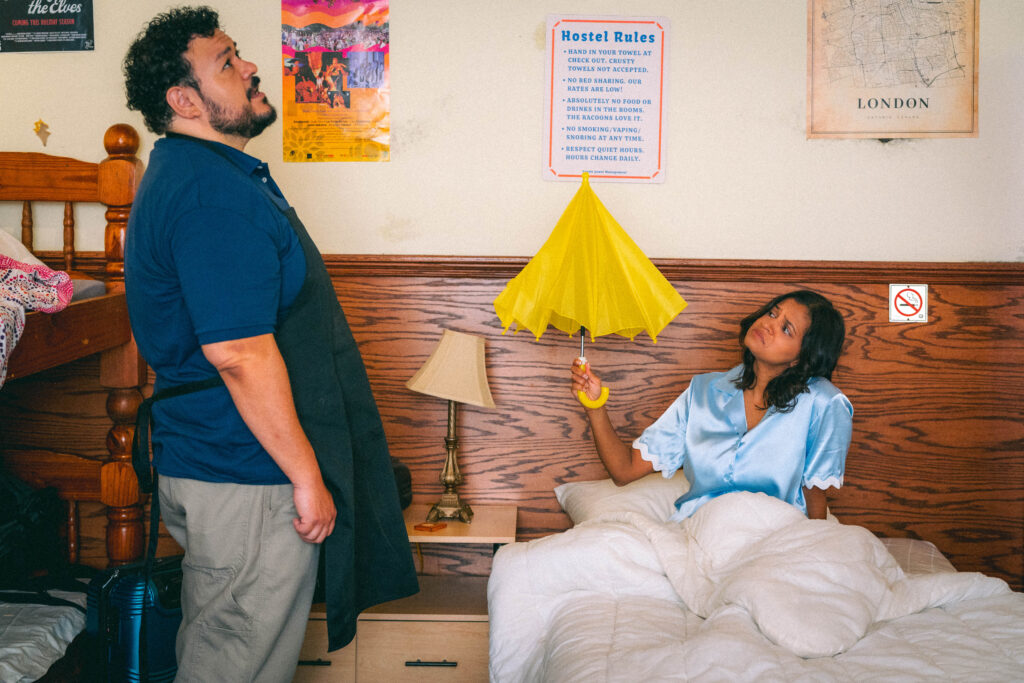
How did budget constraints shape your approach to visual storytelling, particularly given the need to accomplish so much within a limited timeframe?
The budget pushed me to be creative and decisive. We didn’t have a dolly, so we went handheld, which actually added to the chaotic energy of the show in a way that felt right. We shot with two cameras simultaneously, one on wides, one on close-ups, to cut down on setup time. I went through every script three or four times before the shoot, looking for anything that wasn’t earning its place. If a scene wasn’t adding value, it was cut. We block-shot by location, finishing all the kitchen scenes in one day, then the bedroom scenes, the lobby, and so on. To save time on costume changes, we gave Harriet and Dani work uniforms they wore through most of the season. Every constraint had an answer somewhere.
What’s next for you?
A couple of shows in development: a YA drama set in the world of competitive table tennis, a political comedy about a progressive Gen-Z woman teaming with her Fox News-watching conservative grandfather to win the local mayoral election. And my first graphic novel, Namaste Santa, comes out in early October. It’s turned out so beautiful – I can’t wait to share it with you all.