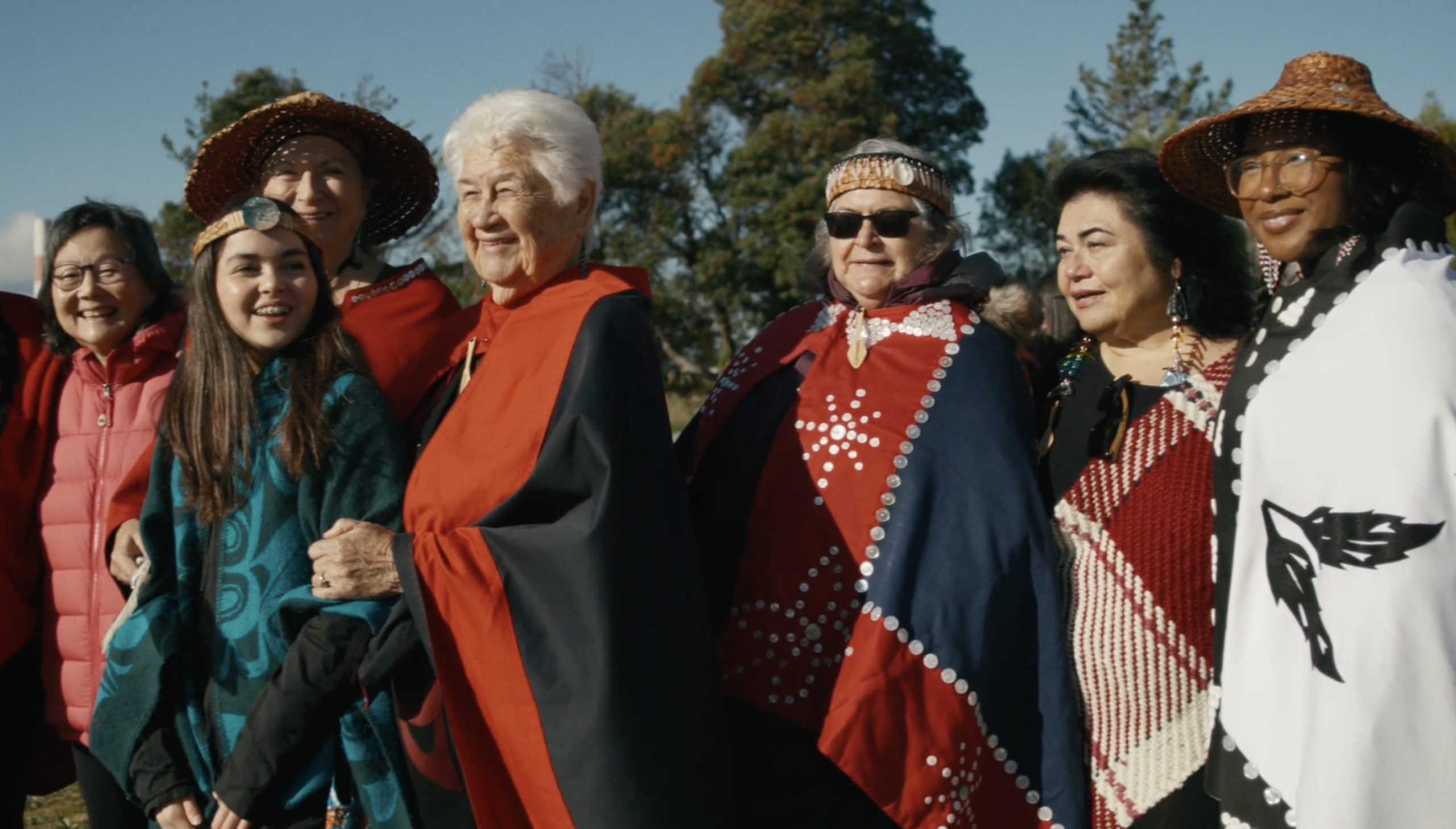
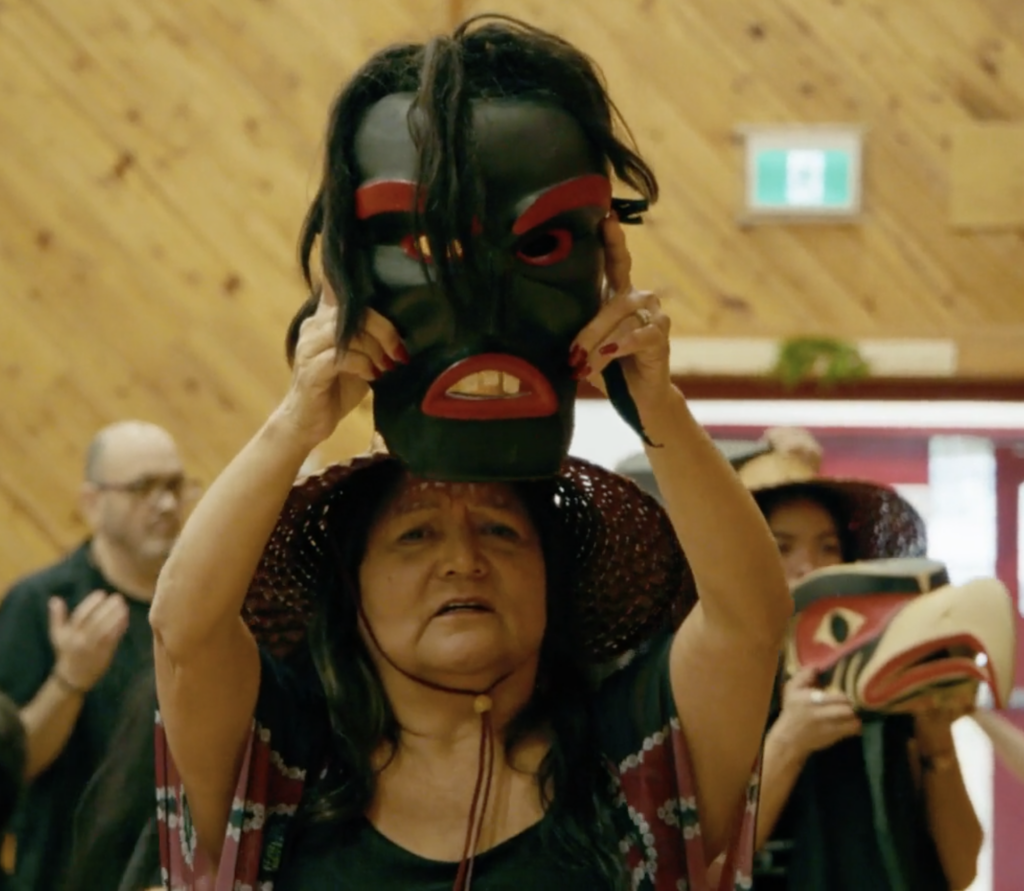
Film təm kʷaθ nan – ‘Namesake’ has been in production since 2022. It documents Tla’amin Nation’s request that the City of Powell River change its name. In a chat with Armin Sethi, filmmakers Eileen Francis and Evan Adams examine the layered histories, contested narratives, and emotional weight behind a place many know, but few understand in full. At its core, the documentary asks urgent questions about identity, memory, and accountability – particularly through the lens of Powell River and its Indigenous history, and what it means to reckon with a name that carries both colonial legacy and living cultural presence.
təm kʷaθ nan – Namesake had its world premiere at the Hot Docs Canadian International Documentary Festival on April 29th.
INSPIRATION FOR THE STORY
Eileen Francis: For me, it came from wanting to show how I see my community, and how that differs from what many people were taught. I felt this story could open space for reflection and conversation.
Evan Adams: We know everyday Canadians are dealing with Reconciliation, and that for many of them, they’ve never really heard our voices before. We just knew people needed to hear this story.
UNDERSTANDING THE HISTORY AND IMPORTANCE OF POWELL RIVER
Eileen Francis: Growing up, I started to really appreciate how beautiful the place I live in is. I look out at the islands, the ocean, and the forests, and I know my roots are here. Many people’s roots are here as well. But during filming, and through the conversations around the name change, I was reminded that a name change already happened when this place was renamed Powell River. The land did not disappear then. The people did not disappear. And that stayed with me. History cannot be undone, but it also cannot erase what has always been here. What we can do is decide, together, what kind of future we want to shape.
‘NAMESAKE’ IN CONTEXT OF STORY AND COMMUNITY
Eileen Francis: Namesake speaks to the power of a name and what it carries: history, identity, and memory. In this story, it asks who is being honoured by a place name, and whether that name still reflects the values of the community.
Evan Adams: A namesake is a person, place, or thing named after another person or thing, or vice versa. So we asked the question, who the heck is your town named after – and WHY?
HISTORICAL ACCOUNTABILITY AND STORY OF RESILIENCE
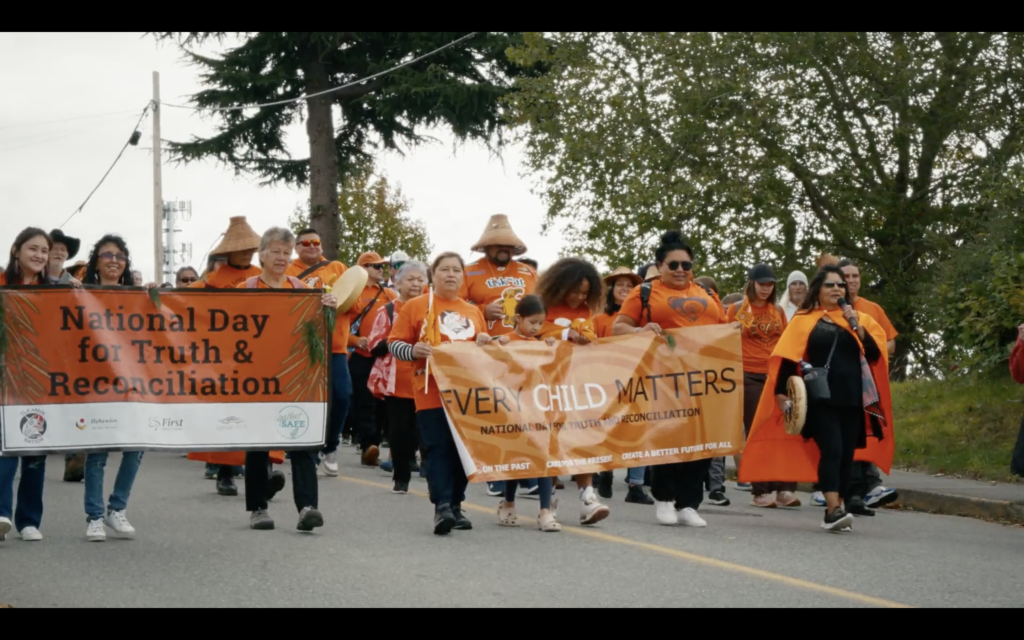
Eileen Francis: It’s both. Historical accountability is personal to me because many people in my family and community attended Residential School and Day Schools. But we are still here, and the resilience it has taken across generations to carry culture forward and reclaim what was disrupted is profound.
Evan Adams: I definitely learned that “we are accountable” – all of us. So many of us don’t really know that…
COLLABORATION WITH TlA’AMIN NATION
Eileen Francis: I’m Tla’amin, so I felt a responsibility to the crew and to the documentary to approach this story with care, respect, and cultural safety. During public engagement events, listening to unfiltered opposition through my headphones was deeply heavy. After those sessions, the crew and I often had to debrief, and I also sought cedar brushing to cleanse myself spiritually. It reminded me that this was never just a political debate, but a tension between a community trying to heal and the resistance to that healing.
Evan Adams: We were trying to capture the timbre of what was happening in the town – and we had to know what Tla’amin Nation was asking for too. The better we got to know both sides, the more we realized that there was an intersection that was way more interesting…
RANGE OF PERSPECTIVES ON NAME CHANGE
Eileen Francis: It was important to include a range of voices because this issue is deeply connected to community, history, and identity. Through our relationships and regional connections, we were able to speak with academics, political figures, Elders, and future Elders who helped bring depth to the story.
Evan Adams: Honestly, the loudest perspective – which was combative and anti-Indigenous – was making a boring and repulsive film. We also wanted more people to see themselves in this story. I think we captured that.
NAVIGATING SENSITIVE AND EMOTIONAL MOMENTS
Eileen Francis: It meant taking care of one another on the crew and relying on a support network that understood the emotional weight being carried. The debriefs, carrying cedar in our pockets, and being brushed by cedar were part of that process. After those heavy days, we would return to filming Tla’amin culture in motion, and the crew was welcomed into those spaces and, in the Tla’amin way, invited to our table and fed.
Evan Adams: We trusted the First Nations participants to be resilient – well, because they always have been. It was awful to go through this – but we did it together.
CHALLENGES ENCOUNTERED IN CONNECTING PAST POLICIES
Eileen Francis: The emotional weight of this is felt by all of us. Past harmful policies shaped our future in ways that are still felt today. The disruption of culture did not end when the policies did. When we started to drum and sing again, we had to borrow songs from other willing nations because our own had been silenced. And then we found a 1920s recording of Tla’amin songs preserved on a wax cylinder in a museum. We use those recordings in the documentary. That, to me, says everything about what was lost and what we are still recovering.
Evan Adams: It wasn’t hard to put events onto a simple timeline. And it wasn’t hard to connect Israel Powell to residential schools and to Powell River. But we knew it would be hard for people to accept it all in the bright light of day.
SCENES CENTRAL TO EMOTIONAL AND HISTORICAL WEIGHT
Eileen Francis: Scenes showing that we live in a shared territory, but carry different histories, became really important to the film. We may live in the same place, but we do not all move through it in the same way. As Tla’amin people, we move through life with our teachings, our naming traditions, and our connection to place. But that exists alongside a colonial history of segregation, imposed names, and disruption. Holding that side by side helped show both the emotional and historical weight of the story.
Evan Adams: There are many scenes of townspeople being courageous. I think the scene of a young man putting down flowers for children who went to residential schools – and his words – still makes me cry.
CARE, CONSENT, AND ETHICS
Eileen Francis: There was a lot of material, and some of it was quite triggering. We made careful decisions about what comments and moments to draw back from so that we were not exploitative with people’s words or experiences. My goal was never to disrupt community conversations, but to document them with care. There were times when I was the only Tla’amin person in the room, and even when I felt tensions rising, I knew my role was to witness and hold that responsibly. During interviews, if a question led somewhere emotional, I would give people space and sit with them. That is the Tla’amin way.
Evan Adams: We were very sensitive about how we portrayed people – a lot of people got off easy! I had many sleepless nights on this film – what I saw was so disgusting. And some of the hatred was directed at me! I was happy that I live in the woods and not in the middle of town!