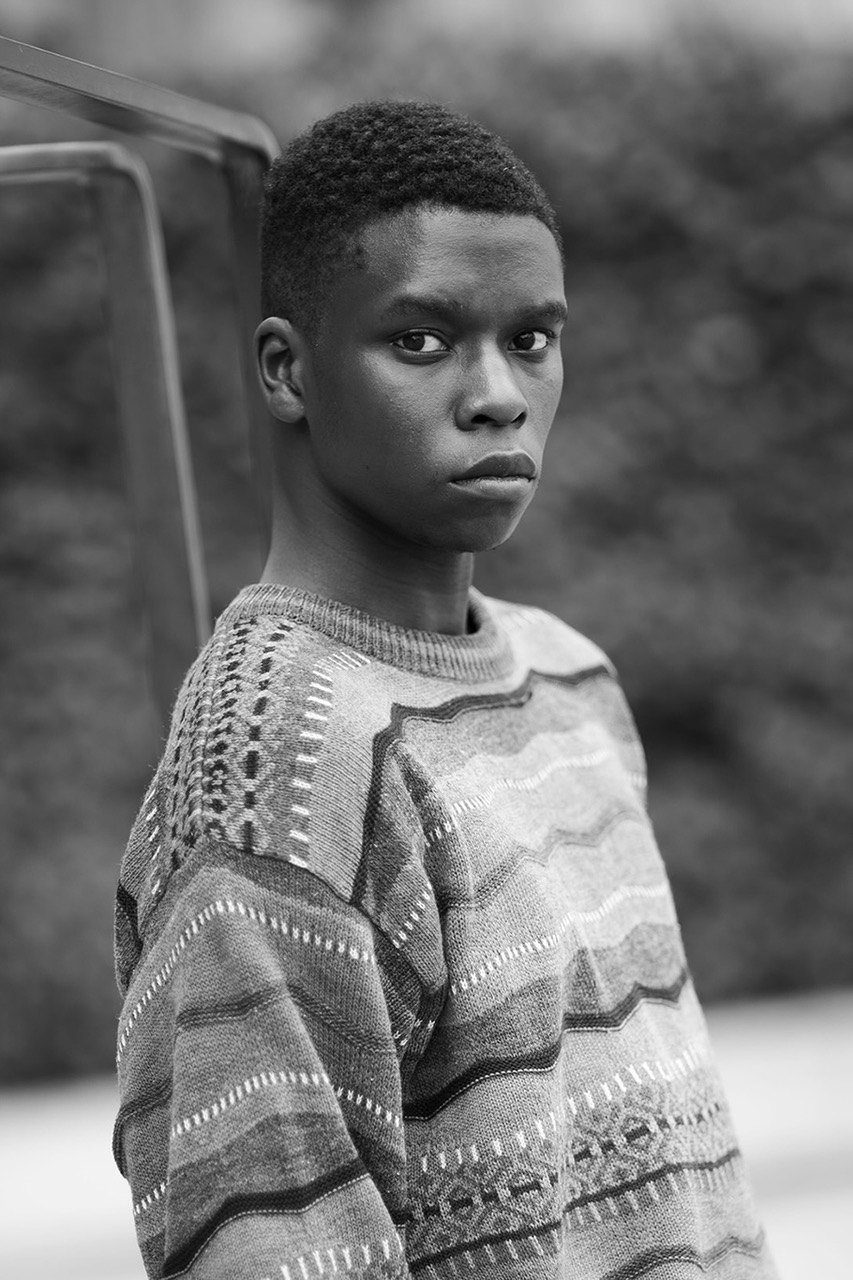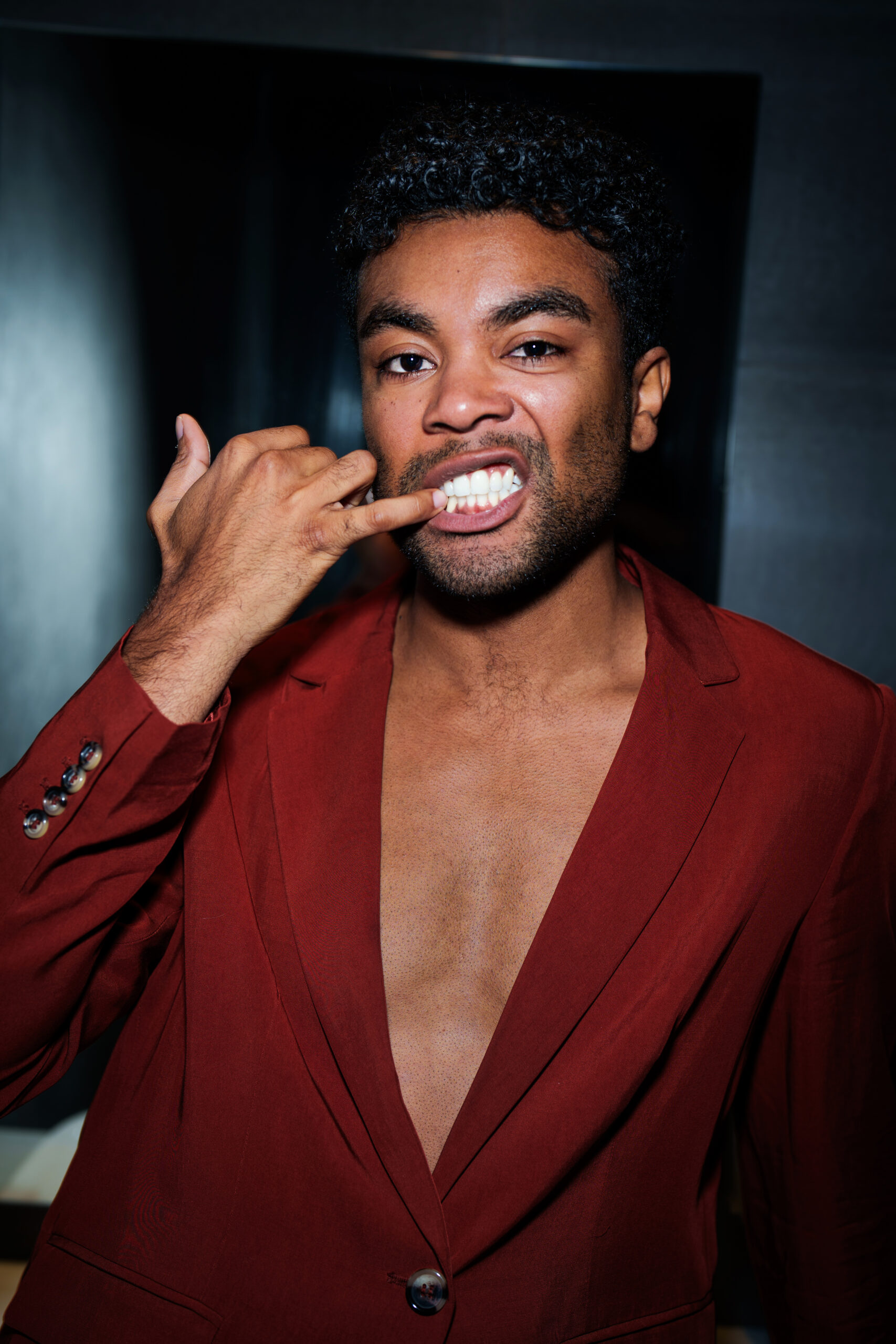
For Alexander Nuñez, storytelling has never been about waiting for permission. Rather, it’s about building the world you want to see come to life.
A Toronto-based writer and actor nominated for both Canadian Screen Awards and WGA Awards, he has built a voice that is sharp, honest and driven by an instinct for characters that sets his work apart.
His series Settle Down recently earned nine Canadian Screen Award nominations, the kind of response that confirms the path that he has set out on. However, his path to that moment was neither straight nor simple.
Early acting success gave way to a deeper creative pull, toward stories that felt personal and voices that felt true. In this conversation, Nuñez reflects on the realities of breaking into the industry, the turning point that pushed him toward writing, and the craft of making people laugh while quietly saying something that matters.
At the core of his work is a commitment to authenticity through the telling of specific, honest stories that his audiences loyally gravitate towards.
Q. In earlier interviews, you have stated that you were only 17 years old when you were cast in a Disney sketch comedy pilot. The pilot didn’t end up getting greenlit, but through the process, you were able to get an agent. Was acting something that you were always interested in as a child, or was it something that happened suddenly to you? Tell us more about your earlier years navigating the world of acting at a younger age.
A: I’ve been finding ways to perform since I was able to form sentences. But like a lot of kids, I was never taught to see the arts as an avenue for a career. I was in theatre classes, performing plays, and practicing improv throughout high school, but I was also very focused on getting into a psychology program at a good university. Booking that pilot as a teenager was exciting, but it also destabilized me! I felt knocked off the safer path I was trying to make for myself. Once I realized there was potential in making a living as an artist, I had to see it through.
My early acting years were tough, but I’m glad! I booked that first job on nothing but luck and charm, and it got me my rep, Chris Oldfield (who I am still with today). You could imagine how big my head got after that. But after the pilot didn’t take off, and I started auditioning, I realized I had no real clue what I was doing. I had no technical training and no understanding of audition etiquette. It was very humbling, to say the least. It got me motivated to find great coaches, to train, and practice. That time was a big lesson in showbiz for me: the lows aren’t forever, but neither are the highs. That’s why it’s important to have humility and work ethic.
“Booking that pilot as a teenager was exciting, but it also destabilized me! I felt knocked off the safer path I was trying to make for myself. Once I realized there was potential in making a living as an artist, I had to see it through.”
Q. You started off acting and then got into writing, which is a different ballgame altogether. Thereafter, you were both writing and performing your own work. What initially drew you towards writing? Did it have to do with the lack of opportunities and representation in casting, or was it something entirely different?
A: Honestly, it started a bit selfishly! I wasn’t getting hired much as an actor. During a particularly slow year, I thought, “[i]f I write and produce something myself, at least I’ll get to be on set.” But I also felt boxed in by how the industry saw me. The roles I was getting were one-dimensional, sometimes even stereotypical, and I didn’t know how to break out of that. Writing allowed me to create the characters I wanted to see.
Now, it goes beyond just creating roles for myself. I’ve genuinely fallen in love with the science of the craft: story structure, the rhythm of comedy, and creating tension. More than anything, I just love that moment when something I’ve worked hard on connects with an audience in a real, meaningful way.
“I also felt boxed in by how the industry saw me. The roles I was getting were one-dimensional, sometimes even stereotypical, and I didn’t know how to break out of that. Writing allowed me to create the characters I wanted to see.”
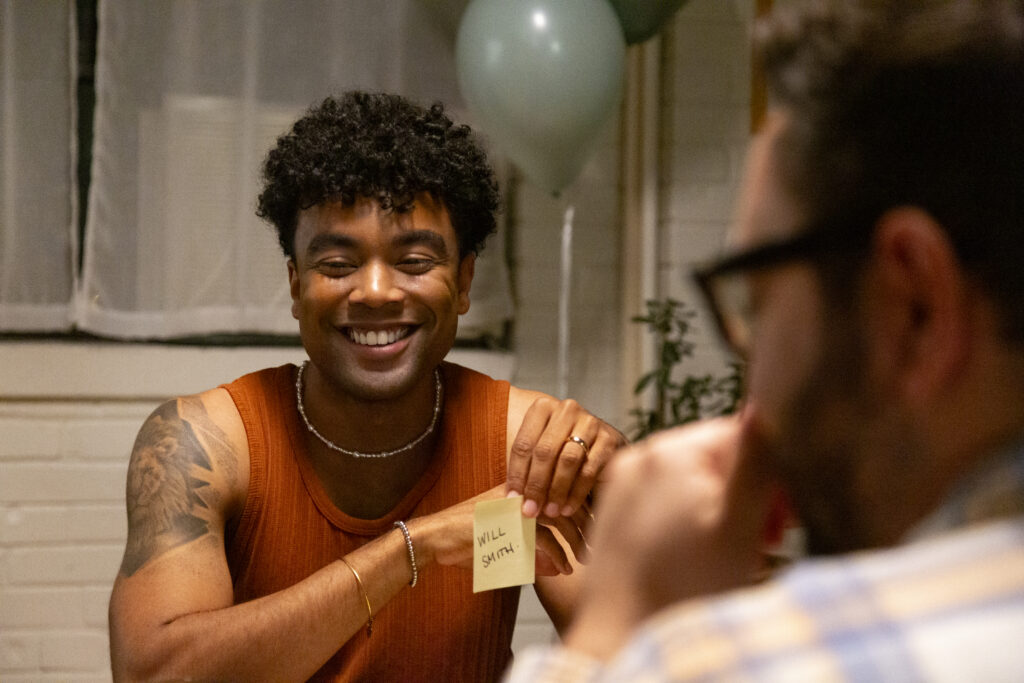
Q. Writing and performing your own work can be advantageous, but it can also come with its own set of challenges. You can have a character that you have written a certain way, but perhaps it can be hard to explore new emotions and actions out of the realm of how you wrote the character. How do you navigate your portrayal of a character if it needs to be more than what is required on the page?
A: There’s always a piece of you in the characters you play, whether you wrote that character up or not. That’s my process, at least. But I think it’s important to keep a boundary between yourself and what is fictional, especially when you’re the creator of said character. When that line blurs, and you see that character as a direct representation of you, it’s easy to become rigid about how they’re written. That’s when characters become one-dimensional, mind-numbingly flawless, or passive victims in their own stories. I’m still not immune to making that mistake. That’s why it’s important to workshop your stuff with people you trust. Feedback is gold.
“I think it’s important to keep a boundary between yourself and what is fictional, especially when you’re the creator of said character. When that line blurs, and you see that character as a direct representation of you, it’s easy to become rigid about how they’re written.”
Q. Your original mini TV series Settle Down (streaming on CBC Gem) is a comedy that follows Mason, a podcast host and an expert on queer relationships, whose own marriage seems to be on the rocks. What inspired the concept behind this project, the characters, and what was it like bringing this project to life?
A: Charlie David (Producer, Border2border Entertainment) approached me after our time together on Avocado Toast (OUTtv) and asked if I had any ideas I’d like to pitch with him to OUTtv! Truthfully, I didn’t have the concept fleshed out, but I had the character, Mason, in my head for years. I’ve always felt I’ve given great advice to my friends, especially in the dating realm. But I’ve never been good at taking my own advice. Mason is a major exaggeration of that ironic trait.
When I had written out the pitch for the show, I thought about my partner and me during the pandemic in 2020. I made us go to counselling because he was driving me crazy. But in the sessions, our therapist turned her attention toward my neuroticism. I thought, “[t]hat’s it! That’s the series!”
There are different traits of me in all of the main characters on Settle Down, though I will also admit, I’ve taken a lot of inspiration from my friends and family, and the wacky stories they’ve shared with me over the years – I guess a hazard of having a screenwriter friend?
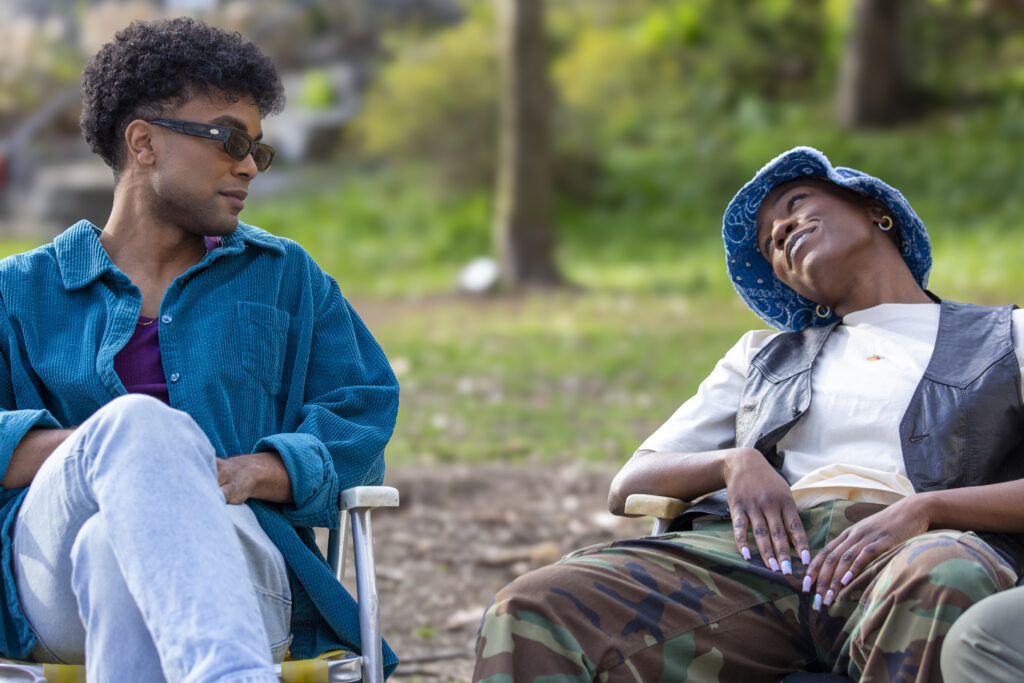
Q. Settle Down explores relationships and identity through a queer lens. How did you approach balancing humour with emotional honesty in the series?
A: I think the key to Settle Down’s tone is in the situational humour. I love a well-crafted joke. And insult comedy, when done right, is just… chef’s kiss, to me. But in seeing audience reactions, I’ve found the bulk of the laughs and gasps come from how the characters deal with the situations they find themselves in. That aspect made it easy to write natural reactions that help ground the show a bit. In the pilot, for example, Mason’s husband, Jarod (Leighton Williams), is caught performing at a slam poetry event. The comedy lies in the fact that Mason thought he was sneaking out to have an affair. But the sad reality is that Jarod was there to vent about his marriage to Mason.
“I think the key to Settle Down’s tone is in the situational humour. I love a well-crafted joke. And insult comedy, when done right, is just… chef’s kiss, to me.”
Q. Please take us through your writing process for a project like Settle Down. Was the process easy or a bit difficult? Were there many revisions, or did you have it all right from the beginning?
A: Maaan, I went through it! The pilot had so many iterations. The biggest pain was solidifying the engine that was going to push the narrative forward for six episodes. Initially, the idea was that my two main characters, Mason and Jarod, were already separated in the pilot. Mason would spend the series trying to win his husband back. But it just didn’t provide me the runway I needed. It robbed me of the chance to properly explore their relationship. And, between his great dating advice and wooing his ex back into his arms, Mason was morally flawless. He was the least exciting character in the show. The pilot that exists today is probably my third or fourth shot. Once that first episode was figured out, writing the rest was easier. I penned detailed episode outlines into notebooks for months. It was a LOT of meticulous planning. Once I was confident with what I had, I wrote about an episode a week for a six-week block. My story editor, Izad Etemadi, and my director, Sam Coyle, gave brilliant notes to polish the scripts before we went to camera. The three of us were a well-oiled machine.
Q. You’ve written across several formats, ranging from sketch comedy for This Hour Has 22 Minutes to scripted series. How has your writing voice evolved across these different spaces?
A: It’s hard to say, I still feel like my voice is evolving! Across the board, it’s always been about learning through trial and error. I look back at some of what I’ve done and gone, “yikes”, other things stick with me. I can say I have learned a trick or two in every writer’s room I’ve been in. 22 Minutes, for example, was a real practice in sending a message as efficiently as you can. It’s all about finding what works. Best idea wins. It’s helped me keep from being precious. I feel like I’m becoming famously ruthless in making cuts and edits to my drafts.
Q. As a queer creative of Jamaican and Chilean heritage, you bring a unique cultural perspective to your work. How does your identity inform the stories you tell and the characters you create?
A: Honestly, I haven’t really done anything specific to my cultural roots, though I am working on a few ideas to change that. Though as a person with a diverse background and a proud member of the LGBTQ+ community, I do feel a responsibility to provide all the opportunities I can to our industry’s racialized and marginalized professionals, both in front of and behind the camera. I’m working hard to try and continue to do that wherever I can.
“…as a person with a diverse background and a proud member of the LGBTQ+ community, I do feel a responsibility to provide all the opportunities I can to our industry’s racialized and marginalized professionals, both in front of and behind the camera.”
Q. What kinds of stories or themes feel most urgent or exciting for you to explore right now as a writer and also as an actor?
A: Like all artists, my upbringing has informed my relationships and my worldview and naturally, my work reflects that. I have an obsession with dysfunction and how it weaves its way into family dynamics, friendships, love lives. Just when I think I’ve run dry on these topics, I catch a second wind.
Q. You have worked on several projects over the years, such as Moonshine, Avocado Toast, and Settle Down. What changes or evolutions have you seen within the Canadian screen industry, and what changes would you like to see in the future when it comes to representation and opportunities for Black and queer creators?
A: I’ve definitely seen the industry become more competitive. Writers’ rooms are smaller, production budgets are tighter, and so there are fewer opportunities for creatives to break in and build sustainable careers. Canada’s already a small market, so I’ve really felt those shifts. What I’d like to see, especially for Black and queer creators, is a move away from the pressure to “translate” our stories for a perceived broader audience. Too often, there’s an expectation that our work needs to explain itself or prove its relatability, and therefore, its marketability. It’s a trap. The strongest workout is specific. It comes from writing the show you actually want to watch, in your own voice, from your own perspective.
We need to trust that audiences are capable of stepping into new worlds, unlike their own. I say this as a proud city slicker and a HUGE Letterkenny fan. And if the traditional Canadian system is slow to embrace that, which it often is, I think the future lies in looking beyond it. Our audience is out there. We just have to be willing to find them outside of the usual network structures. The industry here can feel small, but the scope of our stories doesn’t have to be.
“What I’d like to see, especially for Black and queer creators, is a move away from the pressure to “translate” our stories for a perceived broader audience.”
QUICK TAKES:
Q. What projects are you currently pitching or developing?
– Car Dealership sitcom, a show about two irresponsible friends who decide to have a baby together, and my first go at a feature film (family drama… go figure)!
Q. What stage are these projects in (writing, pre-production, post-production)?
– Ready to pitch. Scripts locked and loaded.
Q. What kind of collaborators are you looking for right now? (writers, actors, producers, crew, etc.)
– Producing partners, give the scripts a read. Hit me UP.
Q. How can people get in touch if they want to collaborate or learn more?
– My reps are on my IMDB, give ’em a poke! For an alternative chiller option, I’ll respond to a DM on Instagram: @alexjonunez
Q. Are you looking for submissions, funding, or other opportunities?
– The real question is, when am I not?
Q. Any upcoming events, screenings, or launches readers should know about?
– Settle Down has just been given 9 nominations at the Canadian Screen Awards! If you’re a Canadian Academy member, my lovely, hard-working team would appreciate your vote. Our show is now available for easy viewing on Prime TV! You can also still catch it on CBC Gem and OUTtvGo. Also happy to announce that the entire season of Small Achievable Goals is out on CBC Gem. Give it a binge!
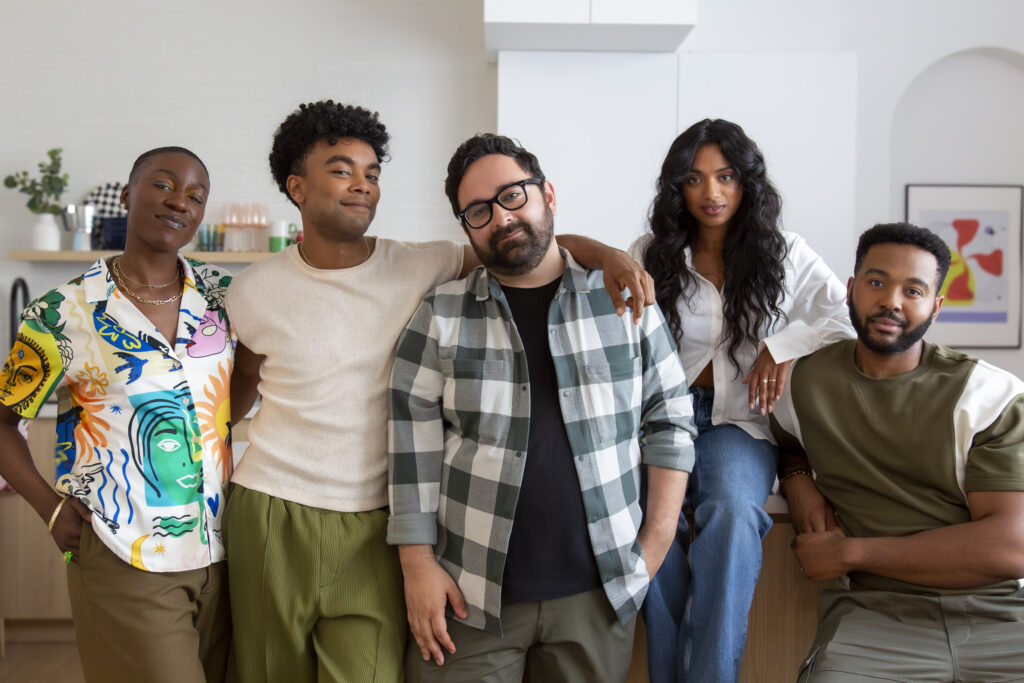
Photo Credit: Farrah Aviva.