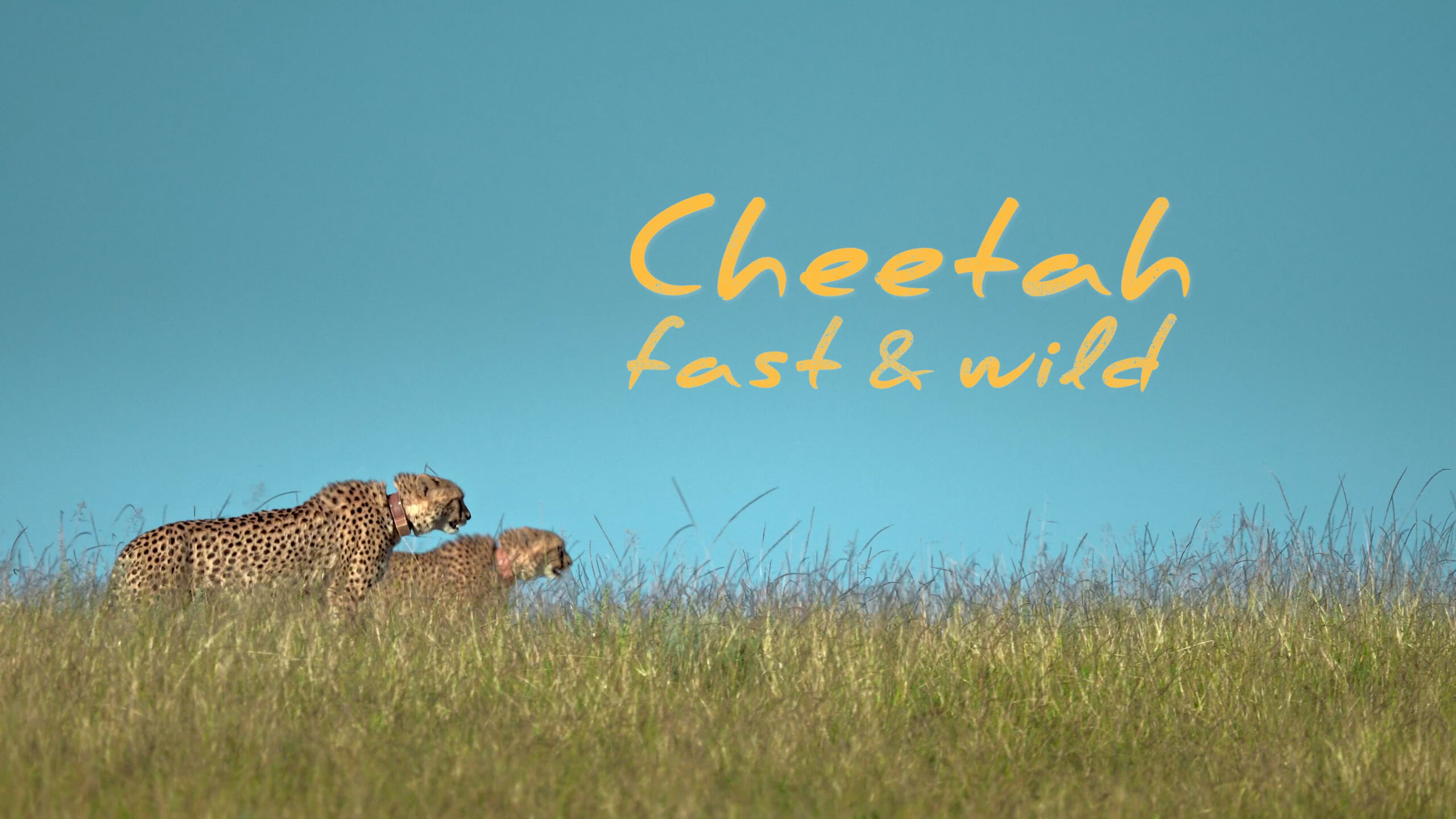
Cheetah Fast & Wild is a rare and intimate look at survival, which follows both captive-reared and wild-born cheetah cubs as they navigate the unforgiving realities of life in the wild. What unfolds is not just a nature story, but a layered exploration of storytelling, ethics, and conservation. The documentary debuted as a part of The Nature of Things on CBC and CBC Gem on Thursday, April 2nd, 2026. Through conversations with director Joe Kennedy and conservationist Marna Smit, we unpack how the film balances narrative, science, and cinematic craft.
Two Worlds, One Story: Structuring Parallel Narratives
Joe Kennedy: These are two complementary storylines of young cheetahs needing to learn to become successful hunters, but with very different approaches to achieving this same goal. Lilly and Iris, both captive-raised, are on their own and must rely solely on their instincts, with no teacher to show them the way. The wild Sanbona cubs can learn and watch their mother, and practice chasing down prey as she releases captured antelope for them to chase. So the contrast between these two parallel stories is strong. The stakes for the Ashia sisters are obviously higher; if they don’t learn to hunt and live wild, then they will have to return to a life in captivity. They are beginning to learn to hunt very late in their development (22 months old), unlike the cubs,
Filming the Unpredictable: Storytelling in the Wild
Joe Kennedy: Perhaps the most important part of our planning was in scheduling at least 100 shooting days to capture behaviour. Cheetahs hunt every three to four days, and it only takes them less than a minute to chase down prey. So since this film is about cheetah hunting behaviour, we needed to maximise our time spent with these cats.
Overall, the story we filmed followed my pre-filming script. I wanted to show the development of the captive-raised cheetahs over the course of their wilding process, and compare them with wild living cubs also learning to hunt, but with their mother as teacher. Fortunately, I was able to nail down the pre-filming script because I conducted a 10-day recce of all the filming locations, where I saw most of the cheetahs and learned much more about their natural history. I didn’t know that cheetahs could thrive in forests, as they do at one of our locations, Buffalo Kloof. Nor did I know how well they could hunt in rocky mountain habitats, as they do in Sanbona reserve. With these discoveries in mind, I was able to tell a broader story of cheetah natural history, which I certainly haven’t seen before. All the cheetah films I’ve seen have been shot on the grasslands of the Serengeti or desert flats of the Kalahari. To see cheetahs thriving in vastly differing habitats was a revelation and a testament to their ability to survive to this day.
Ethics and Responsibility: When Survival Hangs in the Balance
Joe Kennedy: The cheetahs in Sanbona and other reserves live natural wild lives, for the most part. Reserve ecologists do keep an eye on them to ensure all is well, but they do face risks, like predatory lions or accidents while hunting. The Ashia cubs were born on a wild reserve called Gondwana, but their mother was killed by lions when they were only three months old. So, for the most part, we as filmmakers have no means to change the wild narrative of these cheetahs’ lives. Reserve staff can be more involved. Rather than let the cubs starve or fall prey to other predators, the reserve staff decided to rescue them and send them to Ashia for safekeeping until they reached an age where they could be sent to a wilding camp, where they could begin to learn to hunt.
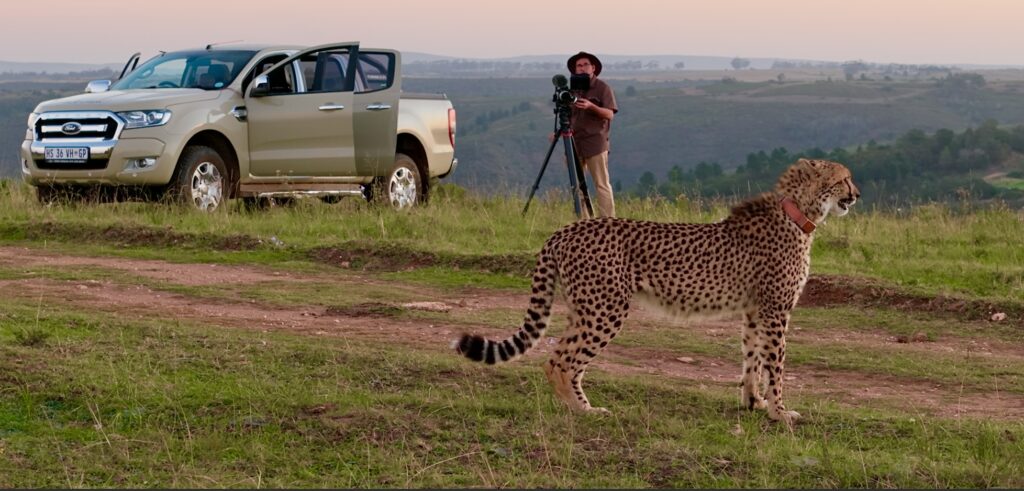
Our ethical responsibility came with the requirement not to interfere with the cheetahs’ daily lives. We had a strict do-not-disturb protocol to ensure all intrusions in their lives had minimal impact. For example, because we could track them with satellite and radio collars, that meant being able to approach the area where their trackers indicated they would be and spotting them at a good distance with zero disturbance. Most filming was done from distances that didn’t bother the cats or their prey. Regarding the first day when the Ashia sisters were released into the wildling camp, we operated under a do-not-disturb rule. The sisters did whatever they wanted to do, which turned out to be chasing rhinos, adult zebras, and buffalo – all animals that could have killed them. But reserve staff and cheetah experts were on hand to help if any cheetah was injured, which in the end wasn’t needed.
Our drone was potentially the most intrusive and disruptive element of the filmmaking process and one, if care wasn’t taken, that could have compromised their ability to find and hunt prey. One crucial decision was to go with the quietest drone possible to capture the images we needed. That made a difference. Then, with each set of cheetahs, we first habituated them to the drone to let them get used to it on their terms. Only when they began ignoring the drone did we use it to follow them. Similarly, if we noticed that prey were particularly aware of the presence of the drone or ourselves, we removed it/ourselves from the scene. There are also flying techniques that we used to minimise drone noise and visibility.
Mirna Smit: Cheetahs will spend a minimum of three months within the wilding camps before we consider release to a final reserve. They would need to be completely self-sufficient and show good and consistent technique when hunting. An essential factor of a successful wilding is the close monitoring with daily visual/photo and constant reporting and evaluation of every cat in the pre-release stage. Once released, any possible intervention is discussed with the respective reserve team and within their own ethical conservation bounds. Most reserves do intervene with any of the animals in their care where possible – for example, for a hunting injury or an injury sustained by a predator. Some reserves will even go the extra mile during the initial release window by actively intervening by driving other predators like lions away from the newly released cheetah.
Capturing Growth: Transformation as Narrative
Joe Kennedy: Fortunately, the learning process went hand in hand with a clear narrative arc for Lilly and Iris. They begin the story as innocents, never having even seen or had a close encounter with the other animals in the wilding reserve. They were still very young cubs when rescued, so they hadn’t properly begun following their mother yet. So they made plenty of mistakes, which makes for a great story. Chasing rhino, being chased by buffalo, chasing down impala, but then not knowing what to do next; again and again, the sisters made mistakes. But they learned a bit from each encounter, so within a month, we could see tangible improvements in their behaviour, which helped the narrative momentum. By the end of our shoot, they were accomplished hunters.
A key factor in capturing the learning process was in devoting months and months of time to documenting behaviour. This was key. An encounter with a buffalo or an impala might only last seconds, so we needed to be there with the cheetahs day after day, week after week. Slowly, scene by scene, we accumulated the core footage that we needed for our story.
Marna Smit: Key stages consist of first ensuring the cats remain healthy while in captivity. They are vaccinated against possible viruses prone to animals in close proximity. Diet consists of what they would eat in the wild, but is still supplemented due to important nutrients lost during freezing processes. Fitness is instrumental in keeping them at their best – mentally as well as physically – and serves them well when reaching the next stage. Once of an age, the next step is to develop their hunting skills and fitness in the wilding camps. Although the first kills are not pleasant to watch, just as it’s not pleasant to watch when a female cheetah teaches her cubs to make a kill on a “ham-stringed” antelope, the previously captive individuals improve their technique with each new attempt.
Visual Language: Differentiating Captive and Wild
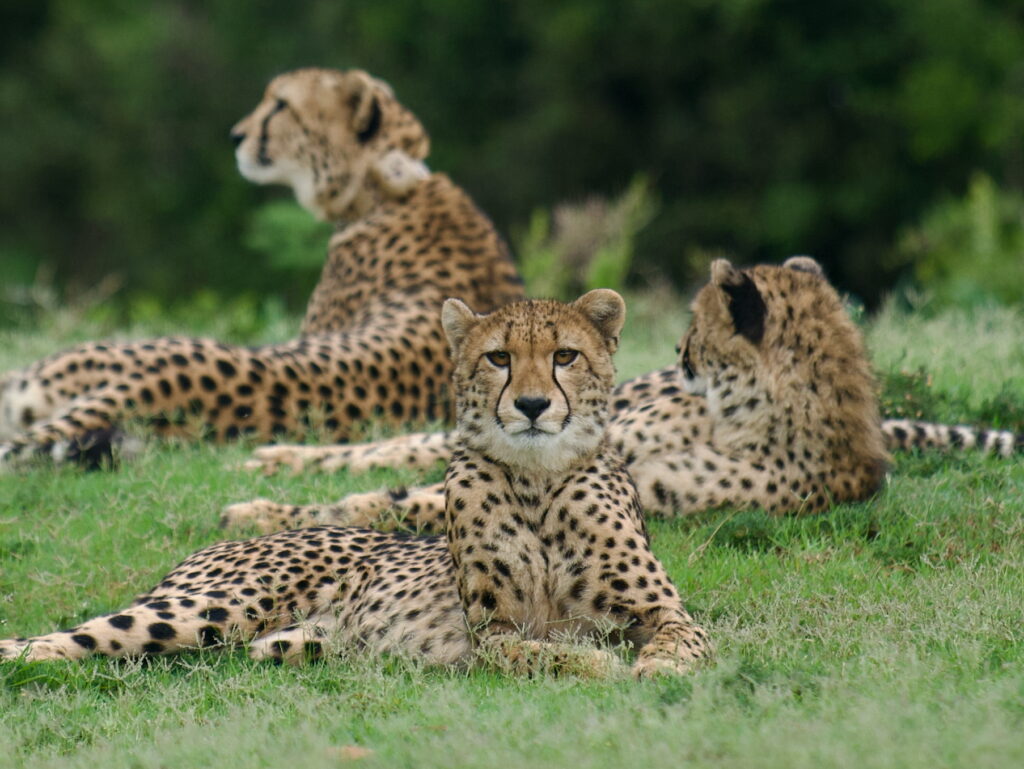
Joe Kennedy: Filming cheetahs in the captive setting of Ashia gave us the opportunity to place cameras in fixed positions, knowing that the cats would come past them. It allowed us to shoot the same behaviour repeatedly, like lure-chasing, with different lenses, different camera speeds, and different camera systems. For the wild-living cheetahs, we fell back on tried and tested long lens cinematography, and when circumstances allowed, the drone. One of the unexpected and more rewarding moments came when the cats got curious and approached us, allowing for close, intimate portraits of them. I think they got used to us and saw us as unusual curiosities that they like to check out now and again. They didn’t see us as prey or as threats.
A World First: Innovation in Conservation and Filmmaking
Joe Kennedy: There are a number of takeaways from this film. First and most important, cheetahs are now down to less than 6,700 individuals (as compared to 100,000 at the start of the 20th century and hundreds of thousands before then). Every cheetah now counts. Second, Ashia Cheetah Conservation is doing some amazing conservation work. They have revolutionised big cat conservation by designing and implementing a system that can take captive-raised cheetahs and turn them into free-living successful hunters, which can then give birth to and raise new generations in the wild. Those new, wild-born cats are now being translocated to other places in Southern Africa where they are establishing founder populations of cheetahs. All this takes time and money, and highly dedicated people who are willing to put in the long-term work that this kind of conservation requires. Third, this innovative conservation approach is bringing fresh genetics from captive cats to wild populations. Cheetahs have an astonishingly narrow gene pool, thanks to a population bottleneck that reduced their numbers to just a few breeding individuals. So every new cat counts. Fourth, the Cheetah Metapopulation featured in the film is a great success story. South Africa has 76 reserves with cheetahs, numbering over 500 cats now, which are managed as one interbreeding population. Cheetahs are moved between the reserves to maximise genetic diversity. With ever-decreasing habitat available to wildlife, the metapopulation approach to wildlife management will become ever more necessary in the future. So, bottom line, what we are seeing with cheetah conservation in South Africa has lessons for conservation elsewhere.
Marna Smit: The astounding drone footage that the team managed to obtain while the cats were practising their hunting techniques was absolutely fantastic and showed us just how vulnerable they really are during this very important but dangerous learning phase. It underscored that our approach is sound and worth the effort and money put in. A major breakthrough point was surely to see wild females teaching their young offspring hunting techniques they themselves were never able to learn from their mother, like making a kill on a “ham-stringed” antelope. It was kind of mind-blowing to see for the first time on film how deeply ingrained hunting and mothering instincts are!
Beyond the Film: Impact, Awareness, and the Future
Joe Kennedy: I approach conservation films with two aims. One, to give audiences a positive story that encourages them to support these initiatives and convince them that conservation is a worthwhile effort. The second is to give them the facts surrounding the conservation issue in a way that dovetails naturally with the film’s narrative. In this way, they get the bad news, but in a way that has a constructive solution aligned with it.
I’d love to see some of the elements of wildlife conservation in Africa brought to North America. For example, when bears or other big predators are relocated in my part of the world (British Columbia), it’s all done in a very short amount of time – a day or two. The failure rate is high, with the bears returning to the original location, being labeled a problem bear, and destroyed. If this were South Africa, they would build an enclosure (called a boma) in the new location and place the bear there for a minimum of one month, where it would acclimatise to the new place. There is then a greater chance of a bear staying put when released to the wild. That’s what they do with cheetahs and many other animals, and it works.
Marna Smit: Policy is difficult to change as conservation bureaucracy is a big, slow-moving beast in itself, but as has been seen with other species like rhinos or gorillas, if there is enough public outcry, the beast can move a bit quicker.
The goal of Ashia’s cheetah conservation efforts and phased wilding program is to support the genetic health of the cheetah population in South Africa and to offer a survival chance for orphaned wild-born cheetah cubs. By wilding individuals with vital/special family lineages, we are ensuring that the cheetah population remains genetically robust.
Photo Credit: Fast Cat Films.