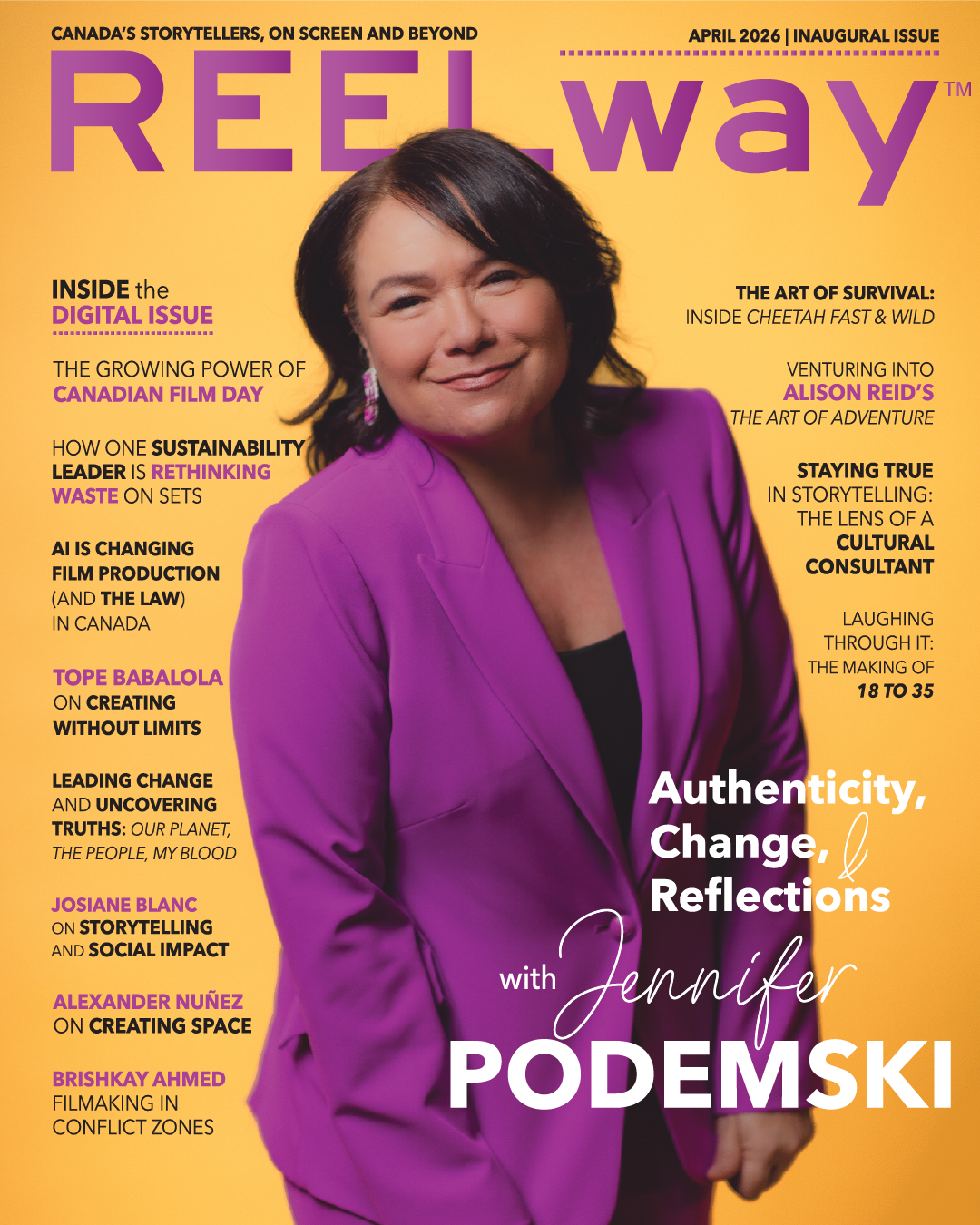
When we set out to tell stories, we are constantly aware of who we are and what we bring to the table. We should always be aware of ensuring authenticity, especially when we are trying to be the voice of change, reason, and reflection. Speaking with Jennifer Podemski was a conversation about all of that – her cultural identity, her story, and the infusion of all of that to propel change and hope in an industry that often presents with barriers on a daily basis.
Asis Sethi: Your cultural identity, being Anishinaabe, Metis, Jewish, has informed so much of your work. How has that dual lens shaped the kind of stories you feel compelled to tell?
Jennifer Podemski: Well, that’s a pretty layered answer. I don’t know if it’s the same for everybody, but two cultures that are both very strong are sort of a recipe for an identity crisis, because as you grow up, you start to wonder where you belong. Just by virtue of being called in so many directions. It’s like having kids; everyone wants your one hundred percent attention. And that’s, over time, what I realized with my own cultural identity. It’s like your children, you are not half of a mother because you have two kids. You are one hundred percent of a mother, no matter how many children you have. And that’s how I feel with my cultural heritage, whatever identities that I’ve been born into. I think that it’s been other people my whole life who have been asking me do you feel more this or do you feel more that? And the truth is I always searched for an answer, trying to make sense of it, and I didn’t come to my truth until much later on in life.
My dad is from Israel. My grandfather is a Holocaust survivor. So that story played a big role in my upbringing. My mother is from a reserve in Saskatchewan. My mother is a child of residential school survivors, so she didn’t really grow up in a house with ceremony and culture as much as maybe she would have if her parents hadn’t gone to residential school. So my upbringing, through my mother’s lens, was much more political.
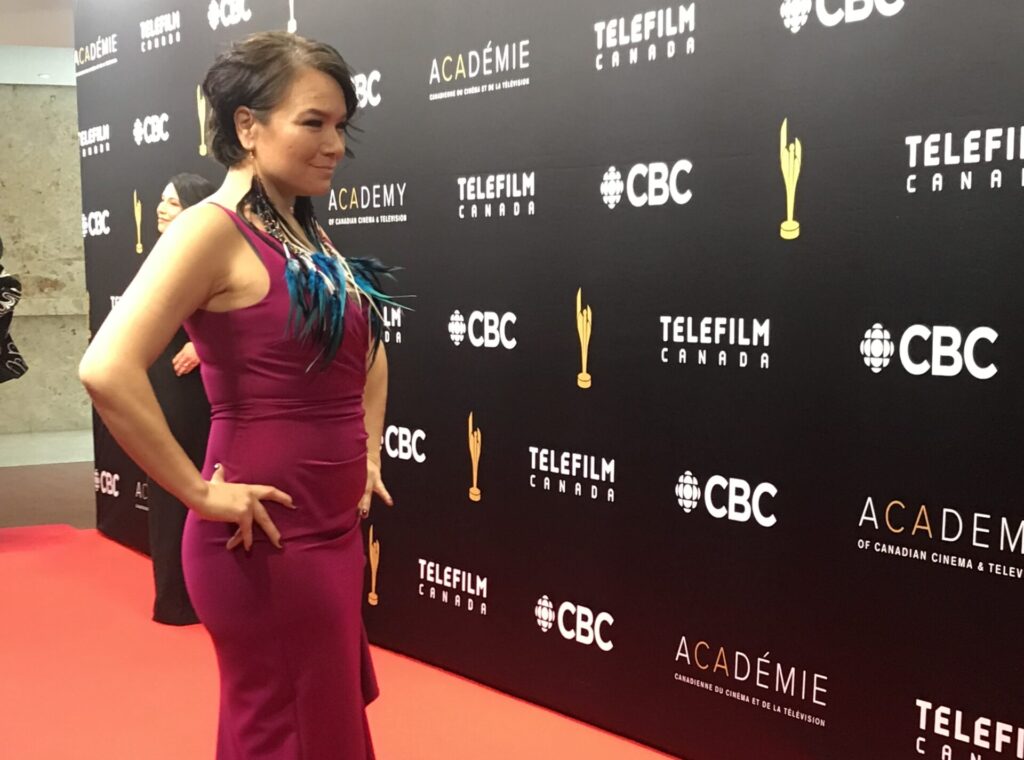
Because of my upbringing and my worldview, I’ve always been fascinated by the underdog. As a storyteller, I just feel so connected to the underdog, always. I think as a storyteller, [I am] more trying to ask the world to relate to versions of people that I feel are very underrepresented. And who are the underdogs, who don’t have a voice, or didn’t have a voice. And the only reference I have for that, in an authentic way are both of my cultures.
Asis Sethi: Talking about life, I remember reading one of your interviews, you had mentioned that the day you were born, you were taken away from your mom, and it wasn’t until a social worker had intervened that you were returned. How has that early experience informed the kinds of stories you feel compelled to tell today? As filmmakers, we are always told to find your voice. And we realize that voice that we speak about comes from our lived experiences.
Jennifer Podemski: So there are two things to that. And maybe you relate to this. When someone says finding your voice or your voice as a storyteller, I think that those of us who do this work are sort of searching for that answer the whole time anyway. I can’t say that I have found my voice. It’s always a process, and I think as a woman, especially, I experienced so many changes, just like every other woman, the person who I thought I was yesterday, I’m not that person today.
“I want to see more Indigenous people in executive positions. We work way too many hours, people are tired, the expectation on what we’re able to deliver in a day is beyond human ability”
And a lot of that is just hormones, but also, I find there’s a lot of growth. There’s a lot of evolution in womanhood, so I don’t know that I’ve ever really found my voice, but I’ve constantly been searching for it. Sometimes, I feel like I am just a conduit to the voices of those people I’ve never met, but they are in my bloodline. Some of them might be my grandparents or my great-grandparents, but I really feel spiritually connected to many voices that want to be heard.
Maybe in many ways, like the specific story about me being taken, is less my story than it is my mother’s story. It did happen to me, but I don’t remember it. I probably hold it in my body. It’s probably why I’m a nervous, anxious mess of a human being. It’s like my earliest trauma, but it’s really my mother’s story.
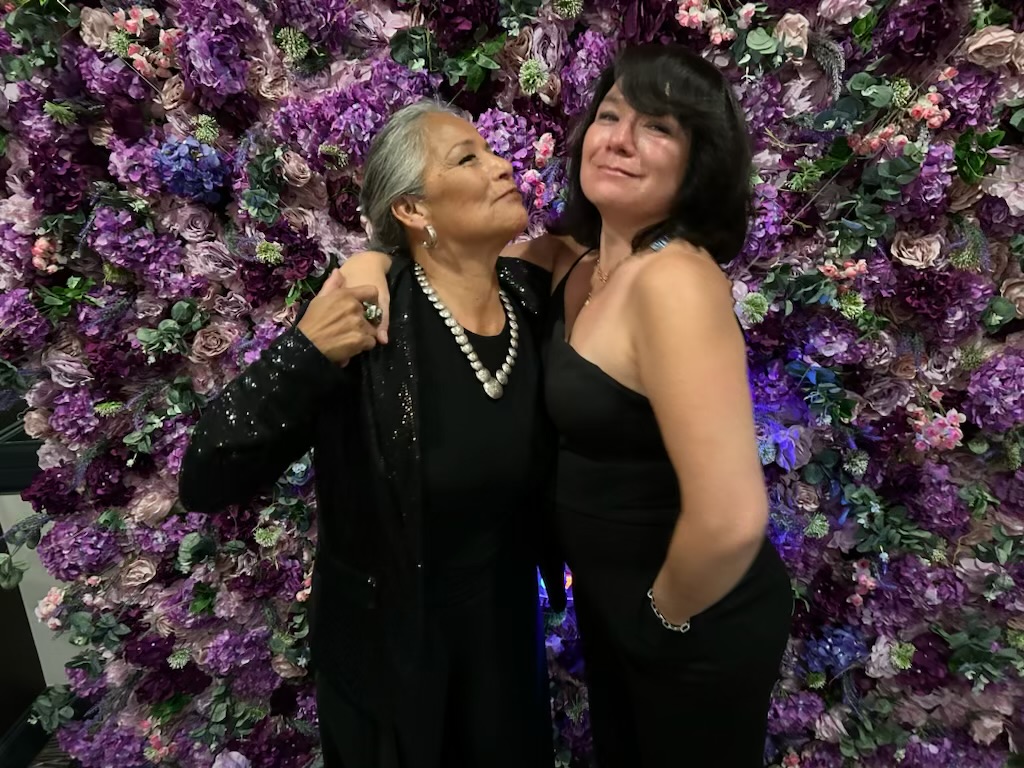
And so I feel there are things that I can write and relate to that directly happen to me, but I feel like myself, I’m much more of an observer and a conduit to stories. And I think the reason why I even came to do this work was out of anger. The way that I was seeing Indigenous people, specifically women, being portrayed in the industry from an actor’s perspective. And my anger just grew and grew and grew over the years that I was only acting – always knowing that I wanted to do something more than be an actor, but not really sure how to do that. And then one day, I was just like, “This is too much. I can’t stand by and witness this kind of erasure, this kind of racism, this kind of inauthentic reimagining of stories.” It’s like you’re standing by, witnessing someone do something or retell something that you know isn’t true. But you don’t have any agency to say anything about that, and then you’re just called a troublemaker or just an actor.
A part of me always knew that I wanted to be a storyteller. And partly, it began happening because a career as an actor wasn’t fulfilled as much as I had imagined it would be, and a lot of that was because I was only ever seen as a Native actor. Part of it is a spiritual calling. I have the privilege of having a voice at that time when I became a filmmaker, storyteller, and producer.
Asis Sethi: Right. And I believe that’s what led you to find Big Soul Productions in 1999 – looking at the lack of representation in the industry for Indigenous people.
Jennifer Podemski: Yeah, exactly. It was divine intervention in so many ways. I had been an actor exclusively – a struggling actor. I was in New York, my sister was doing a show on Broadway called ‘Rent’, and I moved there with her and slept on her couch for a year. I came back to do a project called the National Aboriginal Achievement Awards, where I met Laura Milliken. We had a lot in common in terms of our mixed identity and growing up in Toronto and being in the film industry and TV business, and complaining to each other about how bad everything was, and how impossible it is to get anywhere, and how racist it is. And then we kind of just started talking about some ideas, and one thing led to the next, and we were like, yeah, let’s make a show about Indigenous youth who are trying to make something for themselves, like a youth achievement show, and that was the first conversation. Then we were like, well, we can’t really have a show unless we have a company. So then we made up a company, and it was a culmination of all these things that you’re supposed to do, like an example of manifestation in a way that we never knew was possible. It was really crazy.
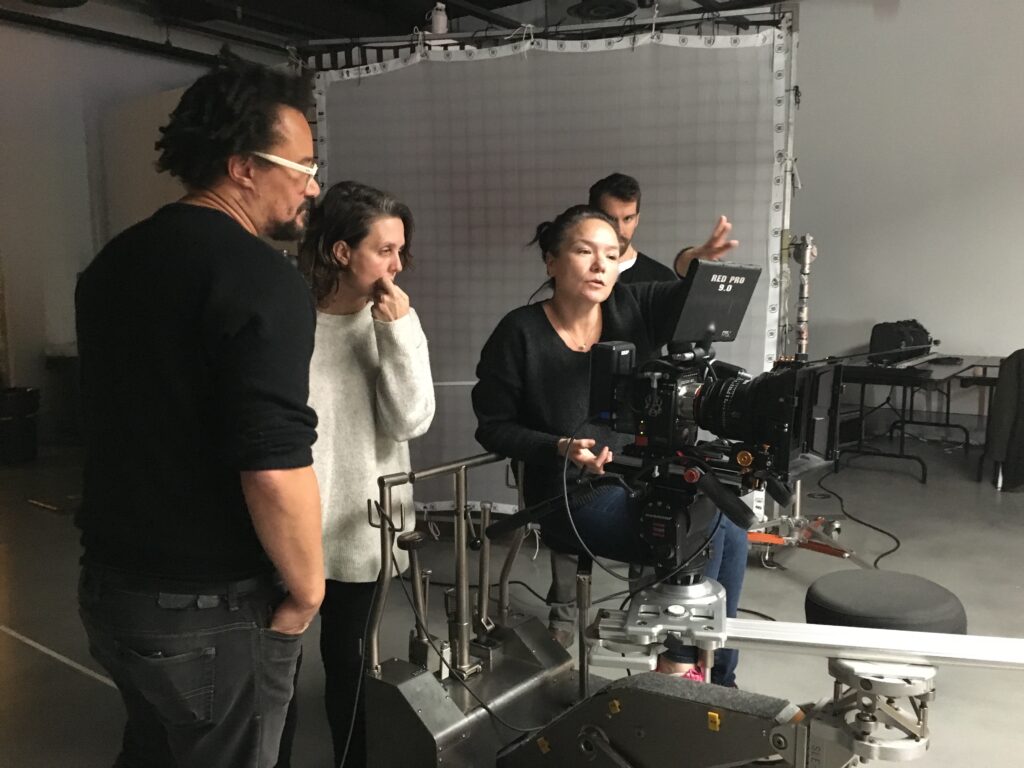
Asis Sethi: And speaking about family, you’ve also been on set with your son, which is so incredible!
Jennifer Podemski: Oh, yeah! Oh my gosh…it’s crazy.
Asis Sethi: And on the sets of ‘Welcome to Derry’, you also ended up acting in the episode with your son Michael.
Jennifer Podemski: Yeah, that was funny because my friend was directing it. I was offered a role on the episode my son was in and before I could take it I had to find a chaperone. One of the other set parents agreed to do it for me.
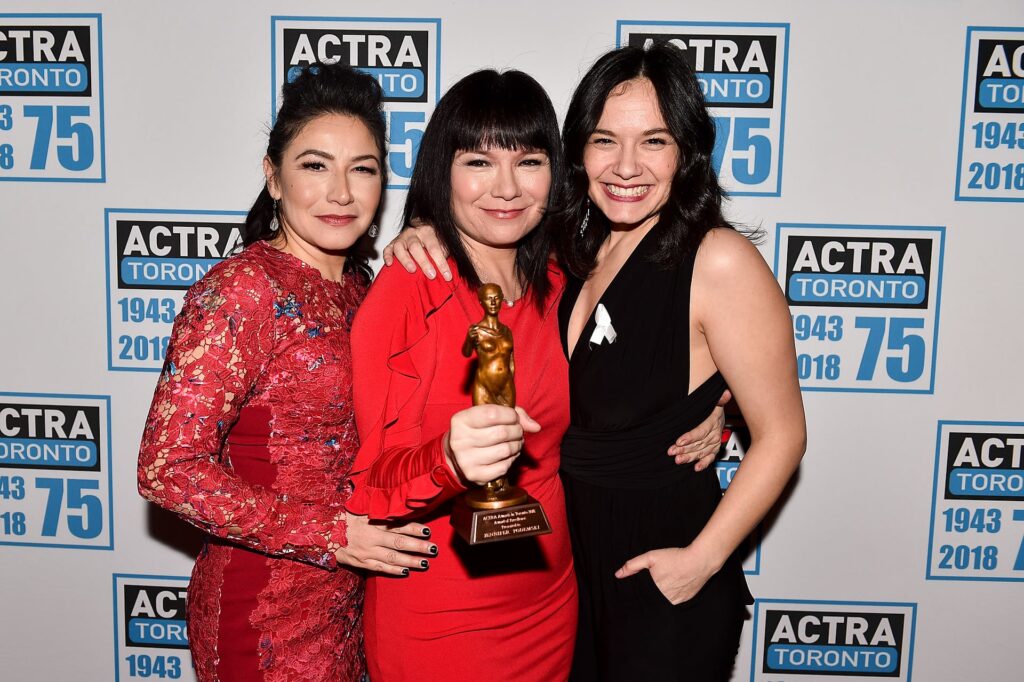
Asis Sethi: Being on set with him and being able to also watch him navigate acting, did you see your younger self in them?
Jennifer Podemski: I think I took a very different approach than what I imagined I would have done. I’ve been doing the set mom thing since he was 6. So it was at that time he was in Anne with an “E”. That was my first time really working with him, but by the time he started working on other projects, he had more agency and more opinions, so I just stood in the background as a support person for him and let him find his way. As he gets older, I have to be very careful that I don’t embarrass him, because I just am apparently the most embarrassing person on the planet to have around, so… I’m just very careful I don’t overstep. I am offering my support, and I don’t push him or manage him in that way. I feel like the exercise for me is letting go of control, and the exercise for him is standing in his power.
Asis Sethi: Coming to Little Bird – first, I have to say it’s such a beautiful series. I got goosebumps every time I watched it. You could relate to every moment that you had created on screen. I imagine you had intense moments on set, there were tears, it was a brutal winter, and you were filming during COVID. How do you process and navigate these emotionally heavy environments while you’re still trying to maintain that focus on the story and the work you’re doing? It can be very challenging emotionally, but how do you make sure you’re doing this every day on set? You have your own personal story, your personal trauma, and your community’s story, so how do you maintain that focus?
Jennifer Podemski: There’s such a great term that you probably are familiar with because you have a 12-year-old, and they say “lock in”. And that’s it, you just lock in. You know the assignment. You don’t have an option to leave early, or to go home, or if you cry yourself to sleep at night – that’s up to you, but it doesn’t matter, because you’re still going to wake up at 4, you’re going to drive the hour, or 2 hours, wherever you’re going, you’re going to do a 14-hour day, and you’re going to drive back, and you’re going to go to sleep, and you’re going to lock in, you’re going to do it every day. And you’re going to do your best. My personal journey doing that work has a lot to do with prayer. It’s asking for guidance, support, and permission to do the things that have to be done, to bring this very difficult story to life.
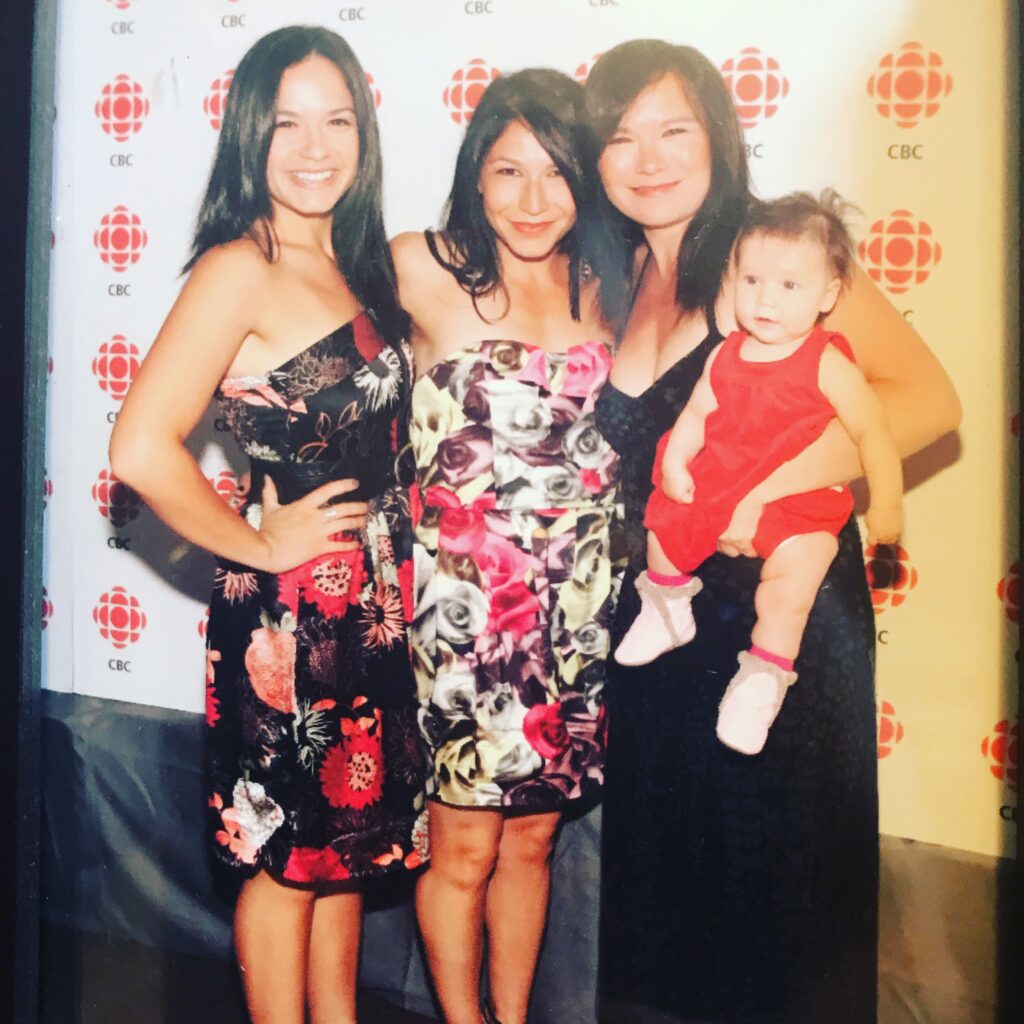
I was very lucky with the project. I would consider myself someone who has a good sense of humor. There were a few people with whom we were working with that also had it, and that was what kept us going. A lot of laughing, a lot of fooling around, and being silly.
And all the while, we’re always asking ourselves, “Why do we do this job?” There was something that felt like there was a bigger reason. This is way, way bigger than me. So, just be humble, stay the course, and lock in.
Asis Sethi: You also had tents set up, you were receiving guidance from Elders, and you also had your aunt on set, who you gave the title ‘Cultural Authenticity Steward’. Tell me more about how these intentional choices shaped your relationship with the broader community and what kind of accountability they create generally for storytellers?
Jennifer Podemski: It goes back to the idea that if there’s a piece of the puzzle that’s missing and the machine doesn’t move forward without that part, you have to create that part, you have to build that part. And that was the role of my aunt, as an Indigenous representative, on this project. There was another Indigenous person from one of the production companies, but this story was so grounded in my own community so to we had to be accountable in a way that wasn’t just by myself. I realized that my aunt was the person who was organizing things on the Muscowpetung side, in terms of meetings and visiting and going around – everything to do with, like, the lumber on the house from that day, and she would drive around and go talk to elders and talk to the engineers. That’s a really big job. In the end, there wasn’t any money so I paid her myself. And then I came up with this title, Cultural Authenticity Steward.
She is one of the most valuable people on the project. She would read all the scripts, and she would talk to all heads of department, answering questions about specific things that were mostly in the past. Everything needed to be vetted. Every day, something comes up that you’re going to need to vet, and the advisory circle is like your circle of knowledge keepers who help you; they validate or authenticate something in your script. I just wanted to make sure, across the board, that every single thing that was on the page was authenticated.
“The specific story about me being taken, is less my story than it is my mother’s story.”
Asis Sethi: From your perspective, what do you think is the most pressing structural change that the industry still needs, whether it is casting, or authentic storytelling, funding, mentorship, or even executive leadership?
Jennifer Podemski: I think all of those things need to be addressed. It’s a structure that has been in place for a long time. It’s not really built to accommodate everybody. It’s very rigid – it’s a hierarchy which I think is one of the main problems. There are certain things that are a result; there are certain outcomes of this structure that are very harmful for a lot of people. So with immediate changes, I want to see more Indigenous people in executive positions. We work way too many hours, people are tired, the expectation on what we’re able to deliver in a day is beyond human ability, and the capability to have a relationship outside of work and a family.
The current structure of the industry hurts women predominantly and generally causes a lot of harm, and I think that is a huge problem. So if I were to pick my battle, I would think the entry point to systemic change is more of a radical thing, it’s more at the union level. Yes, strikes are great, but let’s just stop normalizing 14-hour days.
Asis Sethi: It’s not an industry where you can sustain yourself as you get older, and your kids get older, it’s just not possible.
Jennifer Podemski: Absolutely. It’s not possible, and it’s not healthy. It really doesn’t work for the workforce. And that’s where I’d like to see change.
Asis Sethi: Through the highs of award recognitions and perhaps, the lows of systemic resistance – how do you stay grounded as an artist and a leader in the community?
Jennifer Podemski: I’ve resigned myself to the fact that every job might be your last, and I think a lot of people feel that in this business. I am constantly aware that at any moment, I may have to get another job. And that’s just what keeps me grounded.
Asis Sethi: It’s a very harsh reality about our industry. You would think the more experience you get in the industry, the easier it is to sustain, but that’s not true.
Jennifer Podemski: Yeah, absolutely.
Asis Sethi: Jennifer, thank you so much. This was such a lovely conversation. Thank you for making the time.
Photo Credits: Nadia Kwanbidens Photography, Jennifer Podemski, Doug Bedard.