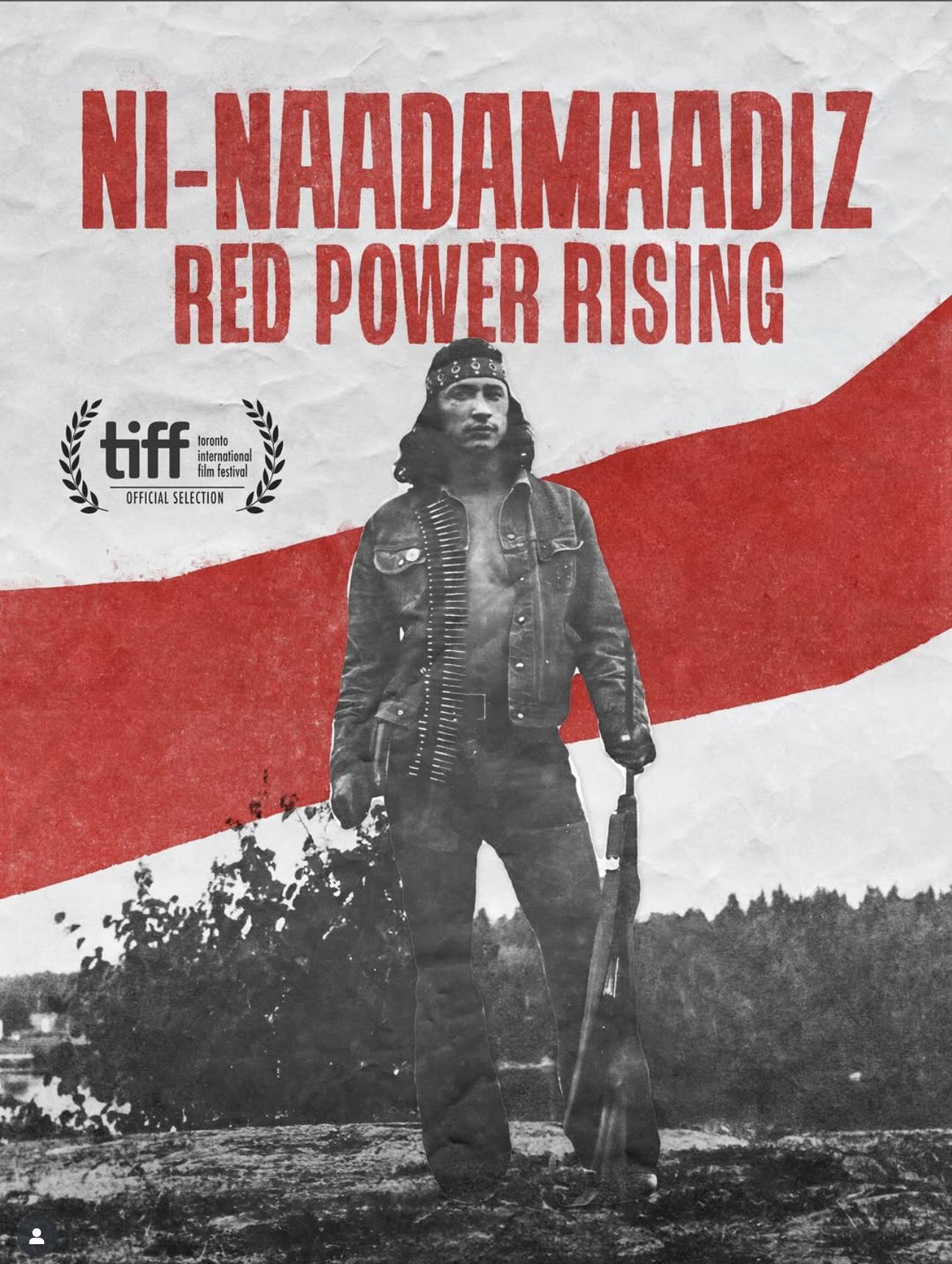
Métis filmmaker Shane Belcourt’s ‘Ni-Naadamaadiz: Red Power Rising’ revisits a pivotal but often overlooked chapter in Canadian history: the 1974 occupation of Anicinabe Park in Kenora, Ontario, led by Anishinaabe activist Louis Cameron and a group of young Indigenous Warriors. What began as an exploration of the occupation evolved into a deeply personal documentary about memory, family, resistance and the enduring fight for Indigenous sovereignty. Drawing on rare archival footage, firsthand accounts and Cameron’s unpublished manuscript, Belcourt brings the story to life through the eyes of those who lived it, including Cameron’s son Tyler. In this conversation, Belcourt reflects on what first drew him to Cameron’s story, the unexpected discoveries that reshaped the film, his responsibility as a Métis filmmaker telling an Anishinaabe story, and why he considers ‘Ni-Naadamaadiz’ not simply a historical record, but a “love song” to the people and communities at its heart.
As part of the REELway X OFFA Award Winners Series, Shwayta Sharma spoke with Métis filmmaker Shane Belcourt about ‘Ni-Naadamaadiz: Red Power Rising’, winner of Best Indigenous Film at the 2026 Oakville Festivals of Film and Art (OFFA).
How did you first come across the story of the Anicinabe Park occupation and Louis Cameron, and what was it about their story that made you feel compelled to bring it to the screen?
Way back, while working with a team making two Historica Canada commercials, we received a copy of a 1974 Canadian Dimensions Canada article all about the ’74 Park Occupation. It was in-depth and reminded me of the movie Mississippi Burning. Too much for a commercial, but it was a gripping story to say the least. And central to it was the “Spokesperson” Louis Cameron, quoted in the article. But what was most striking about the article, the event, and the accompanying photos was how much it reminded me of my Dad and my childhood. My Dad, Tony Belcourt, has been an Indigenous Rights Advocate his whole life, so growing up around revolutionary types was my foundation. So what ultimately drew me to be a part of the team making Red Power Rising was Louis Cameron and all of the Warriors who took this courageous, loving act, but knowing that this love of who we are and want to always be is who my Dad is … and who I always hope I’m also living up to.
You originally imagined ‘Ni-Naadamaadiz’ as a largely archival film, only to discover that just eight minutes of footage survived from an occupation that lasted more than a month. How did that scarcity of archival material reshape your filmmaking approach, and did you come to see the absence itself as part of the story?
It was harrowing to have a vision and have the entire producing team sold on that vision and then … poof. Vision gone. Need a new vision! So we pivoted from the MLK v FBI live entirely in the archival world to “round two”, wherein we would speak to all that were there and have them look back. That kinda blew up because sadly, a lot of the leadership of the Occupation was no longer with us. But during that phase of production, Louis Cameron’s son Tyler brought a copy of his father’s unpublished manuscript wherein he wrote all about the events and inner workings. Tyler asked, “Would this be useful?” Ha! On to round three of the visioning! This time it would be a documentary about a son trying to understand his father’s life and role via his unpublished manuscript. And then in the end … it became a weaving of all three “visions” into one. Documentary … never a straight line! But also, the producing team behind this project really needs a shout-out: they were patient, supportive, and always willing to go on the ride no matter the crazy corners.
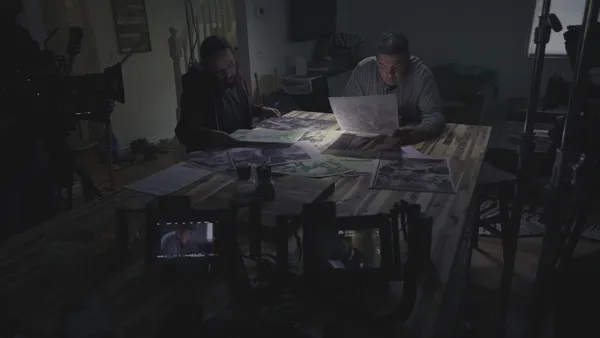
You’ve described ‘Ni-Naadamaadiz’ as a “love song” to Louis Cameron and have even referred to yourself as a “propaganda filmmaker” because of how deeply you love your subjects. How do you balance that emotional investment with the responsibility to interview, rather than simply celebrate, a historical figure?
Story and character are the most exciting when it’s complicated and “imperfect”. Be that ironic endings, ones where there’s a loss and a win at the same time, or having central characters that need redemption because of their “demons” – always drawn to this. So if this is in a documentary or a scripted work, having hard questions and emotional troubles is always a part of it; I never want to shy away from that. But what is the “soul” of the storytelling? And that, for me, is love. I love working with indigenous teams telling our indigenous stories. I want all the indigenous people involved – be that in the making or the audience eventually watching – to feel that love of who we are coming through with the fearlessness to dig into the “hard stuff”. But that “hard stuff” will be balanced. So … can we celebrate who we are and where we’re from while also not shying away from the hard stuff? And the heart of the story being loving and celebratory can maybe feel like propaganda because in the end I want us to feel good about who we are and keep moving forward together in a good way. Oh, and if outside audiences like the works, then that’s great too! (But not the primary focus for me.)
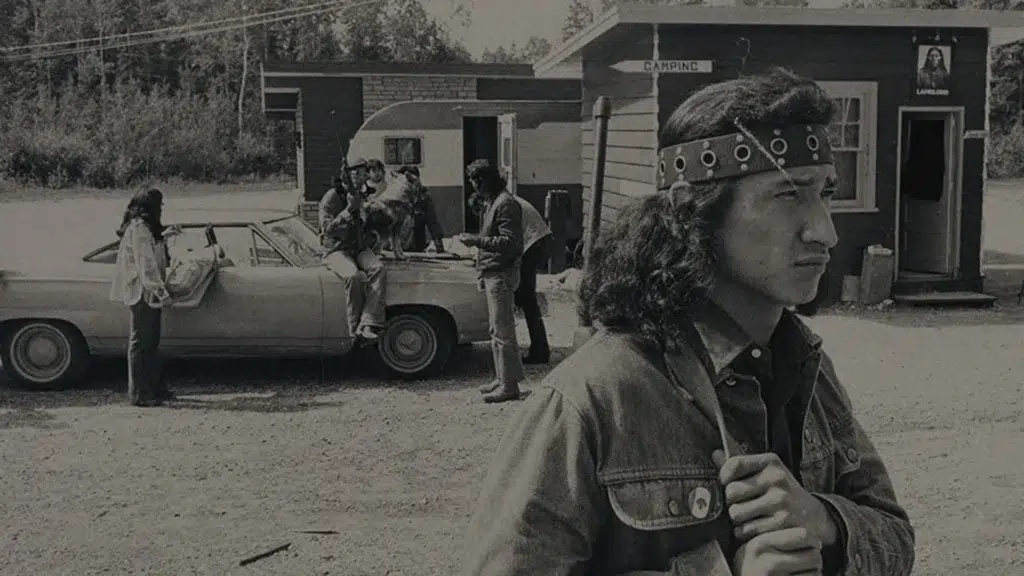
The discovery of Louis Cameron’s unpublished manuscript revealed a much more intimate dimension of the story through his son, Tyler. When did you realize that the film needed to be about more than reconstructing the Anicinabe Park occupation, and that understanding the man behind the movement was equally important?
Louis Cameron’s mind and insight into Indigenous life at that time were brilliant and inspired. Sadly … much of it still resonates today. And his son Tyler is truly his father’s son, and he too was able to speak so eloquently and from the heart about the world where all of this story takes place. As noted, it was a rollercoaster making this documentary, seems like it went from the furthest outside the core of it until finally, with Tyler, we got to be right in the heart of it all. Like it was meant to be. Forever grateful to the entire Cameron family.
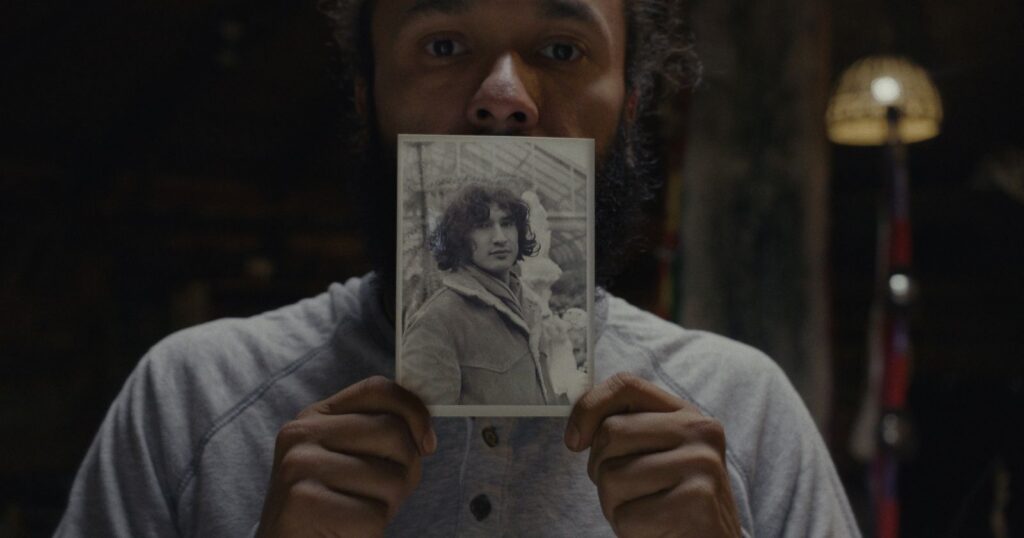
You’re Métis, while the film centres on an Anishinaabe movement and community. What conversations did you have with the people connected to Anishinaabe Park about your position as a filmmaker, and how did those conversations shape your approach to authorship, representation and responsibility?
While I had heard about the story from years ago, I never pursued telling it. A few years later, I received a call from Tanya Talaga and her team at Makwa Productions that they were working on this story and they wanted me to jump on board as writer-director. So in a sense I was a “for-hire” on this project, and I wasn’t doing the groundwork on this story the way Tanya and Jolene Banning were years before my involvement. So I walked into a world where much of this relationship building was already set in place. My role then was to be in a room with the keepers and holders of this story and just sit and speak with them freely. Being indigenous, being around leadership and storytelling, being Metis from a long line of Metis from the historic community of Lac St. Anne – this all helps people feel comfortable with me and sharing with me. In one sense I’m an outsider, yes, but it was quick for folks to “vet” me and share with me thanks to my upbringing, connections, and, of course, the work Makwa did and always does.
Many of the issues at the heart of the 1974 occupation, including land rights, systemic racism, policing and Indigenous sovereignty, remain unresolved today. Do you see ‘Ni-Naadamaadiz’ primarily as a historical record of a pivotal moment, or as a reminder that the movement represented by the Warriors never really ended?
The film is meant to do both. In speaking so specifically of one time, the hope is that an audience can be engaged with that entirely during the viewing. And then after the viewing, immediately come to discuss: oh, some of this is a forever engagement, and those warriors then are these warriors today. But also, the love of who we are, of who our families and relatives are, who our communities are – these are coming from way back times right into today. So both the “problems” are the same in many respects, but so too is the central reason why people stand up: love.
Quick Takes:
Q. What projects are you currently pitching or developing?
Have a new mini series coming out on CBC in February 2027. Co-created with Tasha Hubbard for CBC and APTN called COLD COUNTRY. Also developing a new scripted series along with a feature narrative.
Q. What stage are these projects in (writing, pre-production, post-production)?
New things are in development while the series is in post-production.
Q. What kind of collaborators are you looking for right now? (writers, actors, producers, crew, etc.)
Right now I’m mostly holed up in my office writing. Always open to a collaboration discussion!
Q. How can people get in touch if they want to collaborate or learn more?
I’m pretty easy to find on socials, etc.
Q. Are you looking for submissions, funding, or other opportunities?
Just focusing on writing right now!
Q. Any upcoming events, screenings, or launches readers should know about?
Tune into CBC in February 2027 for COLD COUNTRY