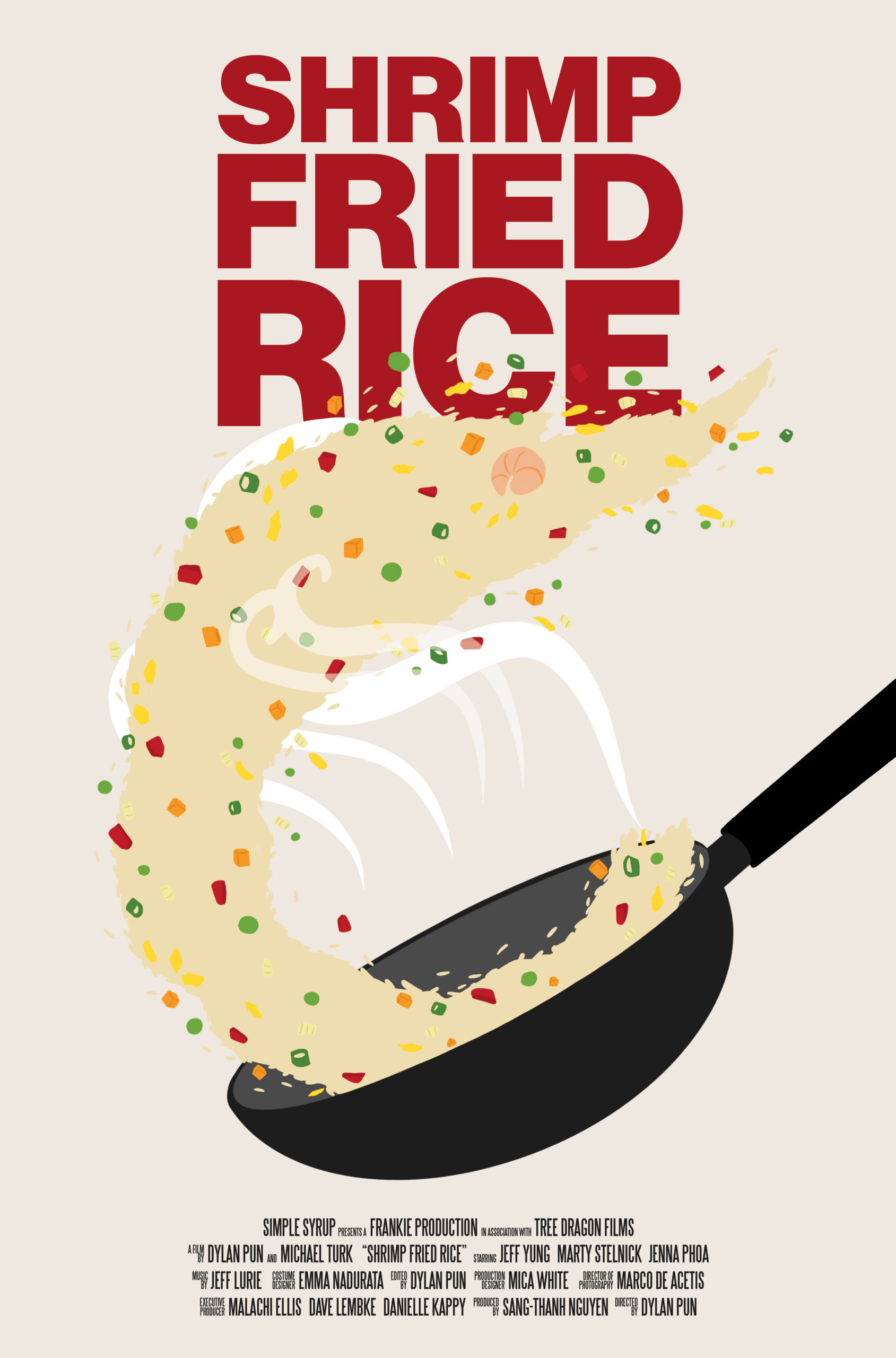
What happens when a film about a shrimp controlling human chefs becomes a vehicle for exploring power, authority, and control? For filmmaker Dylan Pun, the answer is ‘Shrimp Fried Rice’, an absurdist mockumentary that embraces its outrageous premise while using comedy to explore more complex ideas beneath the surface. Conceived as an opportunity to push the boundaries of his directorial voice, the film combines unconventional puppetry, grounded performances, and a deliberately chaotic visual style to create a world where the bizarre feels completely ordinary. That bold approach has resonated throughout the festival circuit, with ‘Shrimp Fried Rice’ earning Best Canadian Short Film at the 2026 Oakville Festivals of Film and Art (OFFA) after more than a year of festival screenings. In this interview, Shwayta Sharma chats with Pun about building a believable world around an impossible premise, balancing absurdity with social commentary, the unexpected challenges of directing puppets, and why he continues to push his stories one step further.
Congratulations on your award at the Oakville Festivals of Film & Art. What did that recognition mean to you and your team, and how has the festival journey shaped the film’s reception?
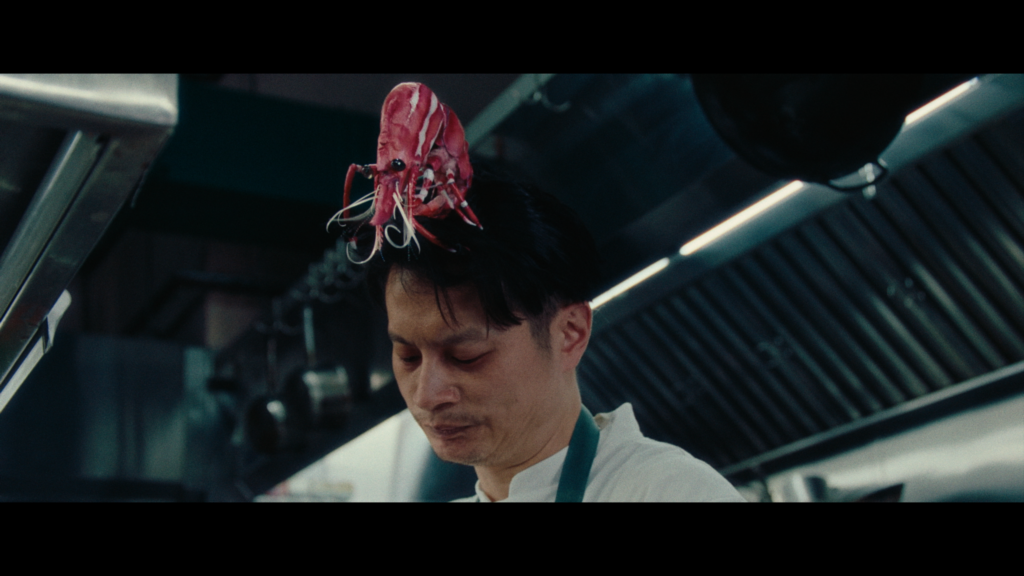
Winning Best Canadian Short Film at OFFA was such an honour. My team and I put in a lot of work to make this film, and to be recognized for it means so much. Every time we play at a festival or win an award like this, it really gives the film momentum. People hear about it and want to see it. After over a year on the festival circuit, I continue to receive emails and messages from folks asking where they can watch the film because someone they know told them to go see it.
What first drew you to ‘Shrimp Fried Rice’ as a project? What was it about the script that made you want to direct it?
‘Shrimp Fried Rice’ was conceived a few years ago when I was beginning my career as a director, and I was exploring my place in directing comedies. I was drawn to the idea because of its pure absurdity and its origins in internet culture. How far could we take it? How ridiculous could we get? I needed to find out. This project was about pushing boundaries and gaining new experiences as artists, which is why I wanted to direct it so badly.
The film blends absurdist comedy with social commentary. As the director, how did you ensure those deeper ideas came through while keeping the humour at the forefront?
Making people laugh was the easy part. Trying to ground it and give it a message was always going to be a challenge. I think when you’re directing something as absurd as this, it’s all about why things are so bizarre. What caused this crazy situation to come about? What do these characters represent? Exploring these ideas with the team and the actors allowed us to delve into these serious and complex issues in a way that was digestible through our characters and our story.
Why was the mockumentary format the right storytelling choice for this film, and how did it influence your directorial approach?
Mockumentary is great because the documentary style sets up the expectation that this film is about something real, only to immediately leave reality and get into the absurd. It’s a great storytelling vehicle for building a world quickly, which was necessary for the runtime of the film. The format influenced everything from the look of the film to the structure of the edit, and the way I directed talent. We wanted the film to feel like it was unfolding in front of us, like even those making the “documentary” didn’t know what was going to happen next.
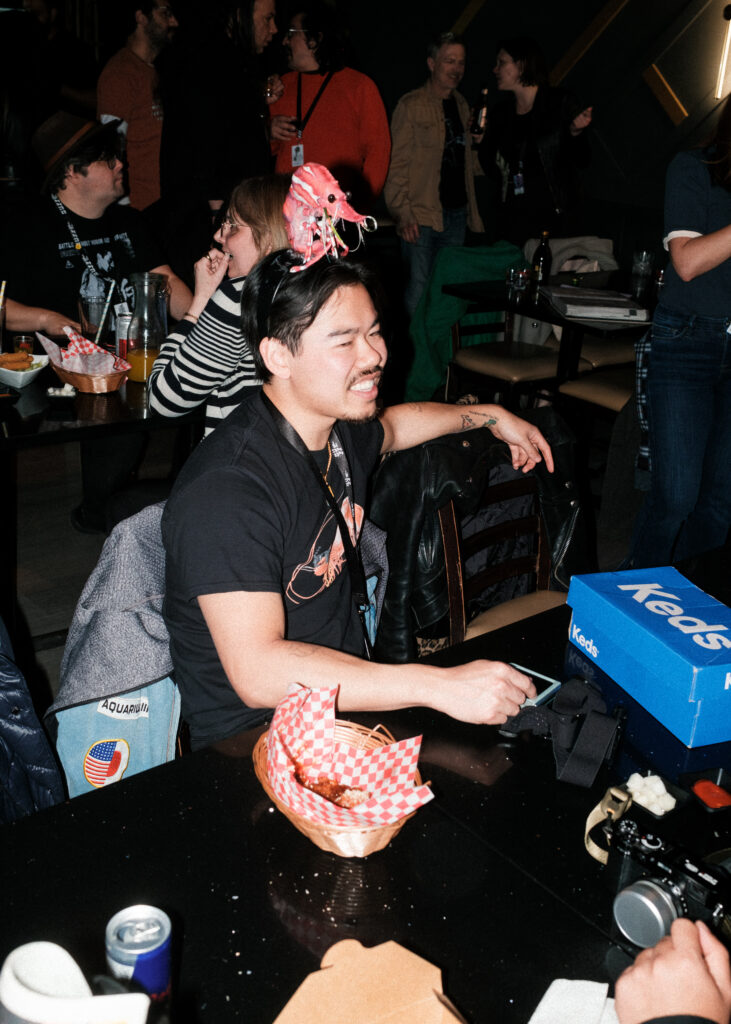
Photo Credit: Sebastian Buzzalino
The performances feel remarkably grounded despite the film’s unconventional premise. How did you work with the cast to create believable characters in such a unique world?
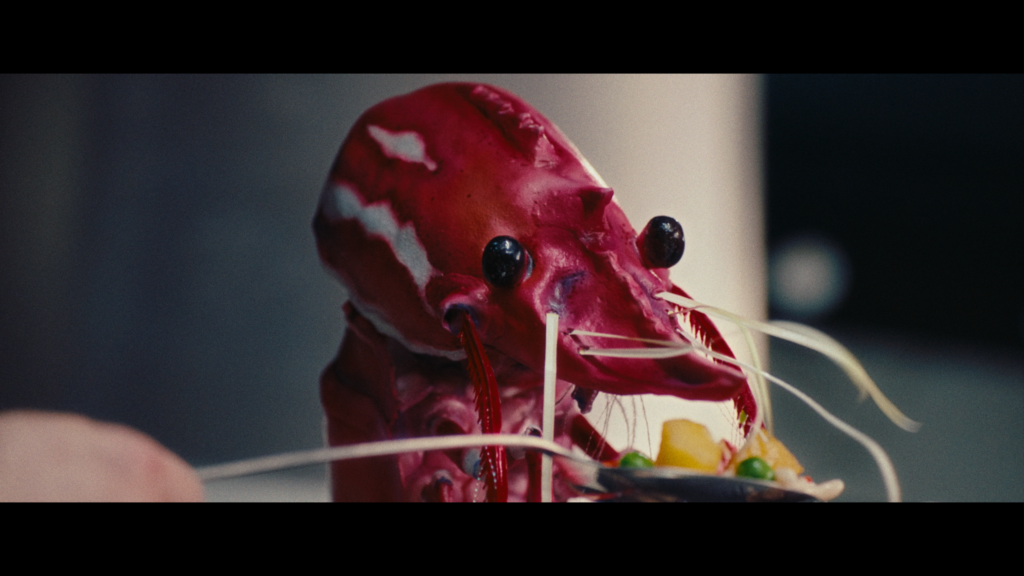
I have to give so much credit to all of our actors, but especially Jeff Yung (Dave) and Marty Stelnick (The Shrimp), who really brought these characters to life. The one thing I told everyone as we were making the film was that if our characters believe in the world they exist in, then our audience will too. Nobody in this world blinks an eye when they find out animals are cooking their food by controlling human chefs. For these characters, this is their reality, and their performances reflected that.
Were there any visual, tonal, or stylistic choices you made that helped reinforce the film’s themes beyond what was written on the page?
So much of the film is about control and authority. Visually, we wanted to represent that balance between chaos and control, and much of that comes from the switches between the documentary and the reality TV portions of the film. The documentary portions are chaotic in movement, and dramatic in look, while our TV portions are clean and sterile. There is elegance and beauty to the cooking of the food, balanced by unpredictability and the crudeness of the Shrimp during his time in the kitchen.
Festival audiences often bring unexpected interpretations to a film. Has there been a reaction or conversation that changed the way you think about ‘Shrimp Fried Rice’?
I haven’t had any shocking conversations yet, but multiple people were upset that (spoiler alert) we killed ‘The Shrimp’.
Independent filmmaking often requires creative problem-solving. What was the biggest challenge you faced during production, and how did it ultimately shape the finished film?
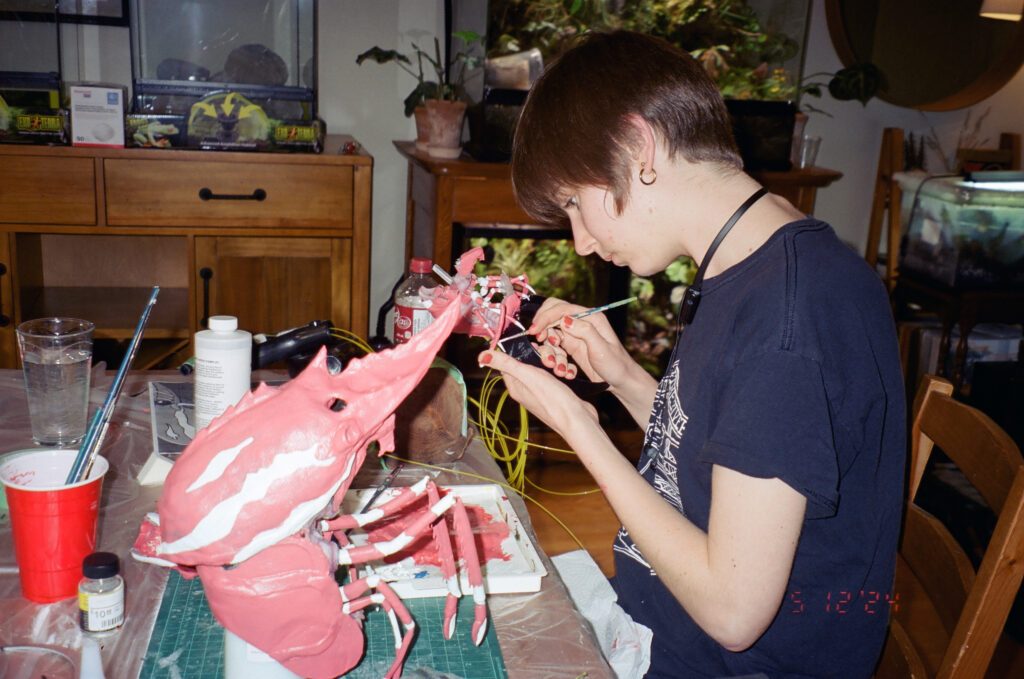
The biggest challenge was easily working with the puppets. This was my first time, and I think it was a first for many people on the team. When we wrote and initially conceptualized the film, I was not aware of how restrictive filming with puppets was. It may seem obvious, but I hadn’t thought about how you have to hide your puppeteers. And to have those puppets on top of people’s heads made it even more unconventional for the puppet team. It really shaped how we planned our shots, what movements were possible, and how meticulous we needed to be about our storyboards and shot list. I’d say 90% of the storyboard lines up with the final film because there wasn’t time to experiment with our budget and time constraints. Thankfully, our puppet team, Tree Dragon Films, did such an amazing job of guiding us through the process and making sure we were prepared for how filming was going to go.
Looking back, is there a particular scene or creative decision that best represents your voice as a director? Why does that moment stand out to you?
I think the decision to (spoiler alert) use a real shrimp as the puppet Shrimp falls into the wok is the moment that best represents my voice. If there’s one thing to know about me as a director, it’s that I’m always looking to take things one step further, do something that’s unexpected. It’s such a silly, ridiculous moment, but it was just an example of me asking myself, “What’s the most ridiculous thing I can do right now?”
Following the success of ‘Shrimp Fried Rice’, what kinds of stories or genres are you most interested in exploring next, and how do you hope to evolve as a filmmaker?
Right now, I’m currently in post-production for a horror comedy about a historical female serial killer titled ‘Don’t Raisin!’, and I am in pre-production for a martial arts action short titled ‘Dynasty Garden’. With these films, I’m continuing to blend comedy with other genres and show that I can direct things that lean a bit more serious. Ultimately, I want to continue directing visual spectacles. Whether that’s talking shrimp, blood baths, or old Chinese women kicking people through walls, I just want to keep pushing my limits and seeing how absurd things can get.
Quick Takes:
Q. What projects are you currently pitching or developing?
‘Don’t Raisin!’, a horror comedy short about a historical female serial killer; ‘Dynasty Garden’, a martial arts action short about a woman and her mother-in-law fighting over the dinner bill, and an untitled crime thriller feature film.
Q. What stage are these projects in (writing, pre-production, post-production)?
‘Don’t Raisin!’ is in post-production, ‘Dynasty Garden’ is in pre-production, and the untitled crime thriller is in early development.
Q. What kind of collaborators are you looking for right now? (writers, actors, producers, crew, etc.)
I’m looking for actors (particularly ones with martial arts experience), and I’m always looking to connect with new writers and producers.
Q. How can people get in touch if they want to collaborate or learn more?
You can reach out to me on Instagram at https://www.instagram.com/pun.mov
Q. Are you looking for submissions, funding, or other opportunities?
If anyone would like to consider ‘Shrimp Fried Rice’ for their festival or other screening opportunities, we are always open to showing more audiences. And of course, we are always looking for more funding!
Q. Any upcoming events, screenings, or launches readers should know about?
If you’d like to see ‘Shrimp Fried Rice’ for yourself, we’ll be putting the film on YouTube in late September or early October! Follow @shrimpfriedricefilm or @pun.mov for updates on the release!
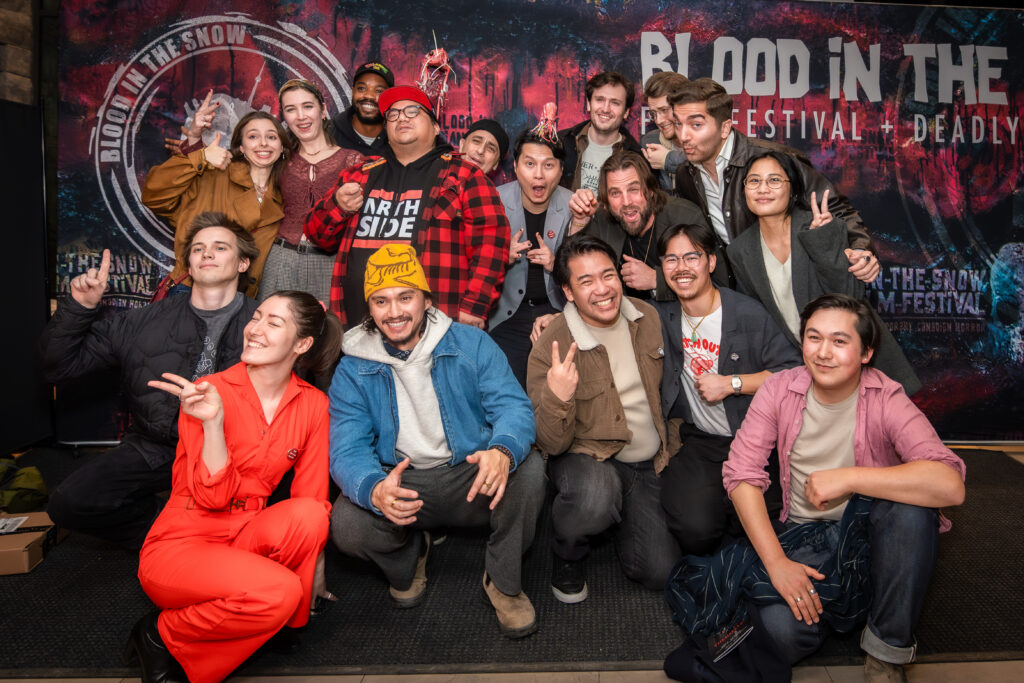
Photo Credit: Blood in the Snow Film Festival