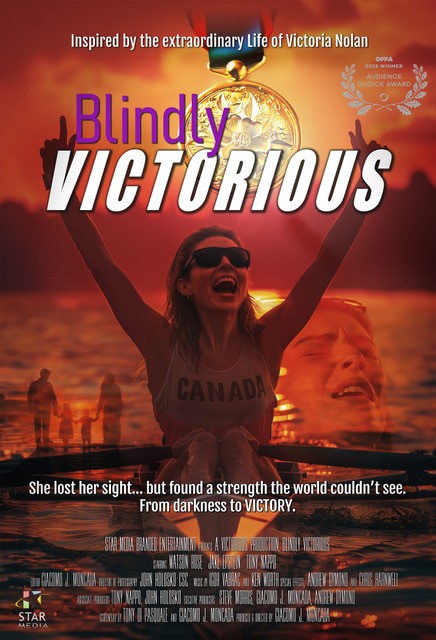
What happens when the life you once knew disappears, and you are forced to discover who you are all over again? For Victoria Nolan, losing her sight meant far more than losing her ability to see. It meant confronting the loss of independence, confidence, career and identity, before finding an unexpected path forward through rowing. In ‘Blindly VICTORIOUS’, director, writer and producer Giacomo Moncada transforms Victoria’s extraordinary journey into a deeply human story about resilience, love, fear and the courage to begin again. Rather than defining Victoria by her Paralympic achievements, Moncada explores the woman behind the victory: a mother, wife and individual learning to navigate a radically changed world. In this conversation with Shwayta Sharma, Moncada reflects on bringing Victoria’s lived experience to the screen, the creative challenges of portraying blindness and transformation, and why he believes the film’s greatest message is that even in our darkest moments, there is always a way forward.
What was it about Victoria Nolan’s story that made you believe it could sustain a feature film, rather than simply a conventional inspirational sports biopic?
What struck me about Victoria’s story was that rowing wasn’t really the story — I was deeply inspired by her life. When she lost her sight, she lost her career, her independence, her confidence, and in many ways, her sense of who she was. As a mother of two, she suddenly had to rebuild her entire life. That emotional journey felt so much bigger than a conventional sports story. And then, almost incredibly, she discovers a strength she didn’t know she had. Through a deeply emotional journey, she finds her way to the Paralympic Games and the World Championships.
For me, that gave the story everything a feature film needs: love, family, loss, fear, humour, setbacks, determination and ultimately, triumph.
I believe we are all born with that strength inside us. But sometimes there’s a glass ceiling above us — created by fear, doubt, circumstances or the limitations we believe we have. Victoria shatters that ceiling. And in doing so, she inspires us to believe that we can grow, flourish and live the life we were meant to live.
Victoria’s story contains several major transformations: losing her sight, becoming a mother, losing her independence, and eventually discovering rowing. How did you determine which moments deserved to become major dramatic turning points, and which parts of her real life had to be left out?
The key was always to follow Victoria’s emotional journey rather than simply the chronology of her life. ‘Blindly VICTORIOUS’ is inspired by her extraordinary story, so we had to condense timelines, combine people and events, and choose the moments that were essential to her transformation. We were constantly asking: Does this moment change Victoria? Does it raise the emotional stakes? Does it move her closer to discovering who she really is?
Losing her sight was obviously a major turning point, but we wanted the audience to feel what that loss meant. She didn’t simply lose her vision — in many ways, she lost herself and had to learn to navigate an entirely different world.
Her relationship with Eamonn, her children, her struggle for independence, and eventually discovering rowing all became part of that emotional journey. Ultimately, we wanted to capture the moments that challenged her, changed her, and transformed her.
Because ‘Blindly VICTORIOUS’ is inspired by a real person who is still very much present in the world, there is a different responsibility than there is when creating a fictional character. How did you navigate the line between dramatic licence and staying faithful to Victoria’s lived experience?
It has been a great privilege to not only to co-write ‘Blindly VICTORIOUS’, but also as a producer, director and editor. Being involved from the earliest development through to the finished film has been incredibly fulfilling — but it also comes with tremendous responsibility. When you’re telling the story of someone who is still very much part of the world, you have a responsibility to treat their life and experiences with respect. That has been at the heart of the entire process.
‘Blindly VICTORIOUS’ is a dramatic feature inspired by Victoria’s extraordinary life, not a documentary. So we had to condense timelines, combine people and events, and sometimes create scenes that captured the essence of experiences that unfolded over much longer periods.
We also combined several important people in Victoria’s life into Coach Marino, brilliantly played by Tony Nappo. Much of his dialogue and the way he inspired Victoria was drawn from my Co-Executive Producer and friend, Steve Morris. I went to Steve early and often because he has an incredible understanding of people.
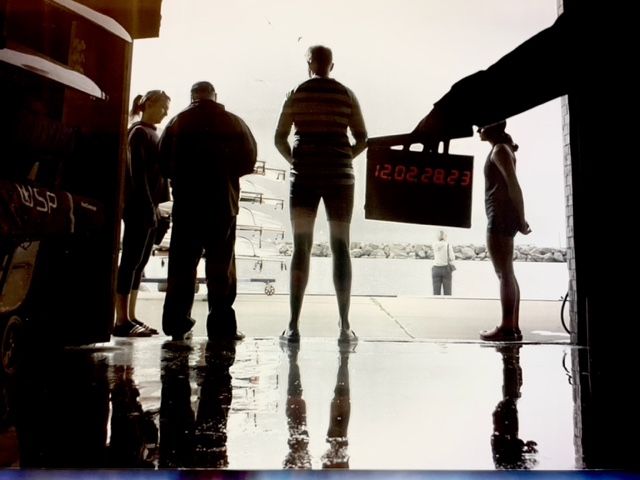
We took dramatic licence with how certain moments were presented, but I never wanted to compromise the emotional truth of Victoria’s experience. I also wanted Victoria and Eamonn to be deeply involved in that process. I was constantly moved by their stories of doubt, fear, frustration and vulnerability. Those moments were essential because they make her transformation so much more powerful.
I wanted audiences to see the person behind the achievement — not just the Paralympic champion, but the woman, wife and mother who fought through some very dark moments to discover what was possible.
You’ve said that one of the biggest challenges in filmmaking is whether your original vision actually becomes what is ultimately filmed. What was the biggest gap between the film you initially imagined and the film that ultimately emerged, and was there a change you made during production that ended up making the film stronger?
I think every filmmaker starts with a vision of what they believe their film is going to be. For me, that begins with vivid imagery and the emotional beats of the story, which is why I love storyboarding — hundreds of shots in great detail. I love living inside the fabric of the story, so it’s always difficult to let go of things you love once production begins.
Welcome to the harsh world of independent filmmaking. You constantly have to trim, adapt, and maximize everything you have to get the film across the finish line. You end up throwing things overboard to survive, and that’s why the people you work with are so important. Just like casting, your crew can make or break a film.
I was incredibly fortunate to have a top-notch team. My First AD, James Avey, and PM/Line Producer, Mustapha Zain, constantly went above and beyond to keep us moving. And my Director of Photography, John Holosko CSC, and second camera operator, Mario Madau, have been with me for nearly 30 years — from my early music videos to story-driven commercials and productions around the world.
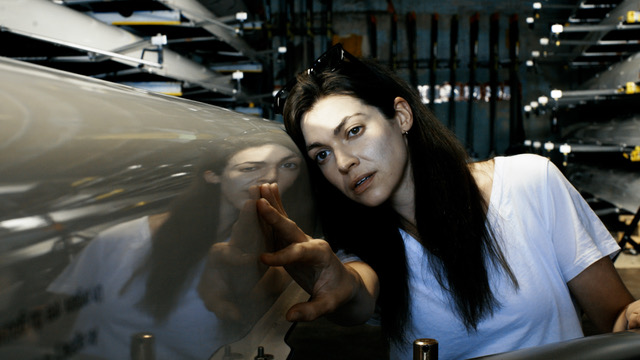
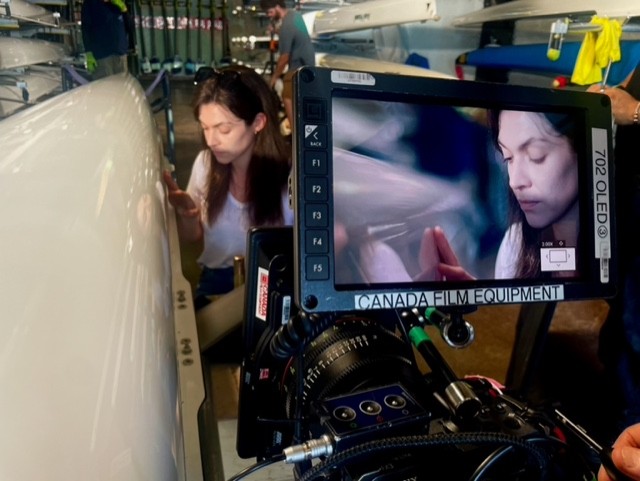
John has always understood me through my storyboards. He knew what was visually important to me and protected those elements, even when we had to adapt to the realities of production. That’s huge when you’re chasing the sun and managing hundreds of moving pieces on a 12-hour day. But you also have to be willing to throw out what you love. When you’re under pressure, the storyboards inevitably change. And that’s where I love working with actors. Sometimes it’s the smallest thing — a look, a pause, a gesture between two characters — and suddenly the film is telling you where to go. You have to feel it. And somehow, even when the storyboard changes, many of those original ideas are still alive underneath the frame.
I couldn’t wait to get into the editing room every day and discover what we had captured. And I’m incredibly grateful to Andrew Dymond and his team at Bazooka Bunny, who have been instrumental in bringing the visual effects to life. With a film like Blindly VICTORIOUS, so much continues to evolve in post-production. Through editing, visual effects, colour, and sound, the film keeps revealing itself.
That’s what I love about filmmaking. You bring together talented people who are passionate about their craft, and somewhere along the way, the film begins to take on a life of its own. There’s something beautiful about that journey — when you become completely lost inside the film you’re making.
From a visual storytelling perspective, how did you approach representing blindness with your cinematographer without allowing the camera to simply turn Victoria’s disability into a cinematic device?
This was something John and I talked about very early on. The real challenge was to let the audience feel what it means to lose your sight. In the beginning, we experience the world through Victoria, and then gradually we experience that world disappearing. But once she loses her sight, we didn’t want to constantly remind the audience that she couldn’t see. We wanted them to experience her new reality.
Watson Rose did a terrific job playing Victoria Nolan, especially in the subtle details — the way she moved, reached for things, listened and responded to the world around her. Those details were incredibly important. Sound and touch became essential to how Victoria experienced the world. Her loss of orientation, dependence on her other senses, and fear of not knowing what was around her all created a vulnerability we wanted the audience to feel. I’m actually working on the 5.1 sound mix now, and sound has become a powerful part of that experience.
John did a wonderful job finding the visual balance. Because we’ve worked together for so many years, he understood when to make a visual statement and when to simply observe Victoria. Ultimately, we wanted the audience to enter her world and emotionally understand what she was experiencing.
Rowing becomes much more than a sport in Victoria’s story. It becomes a language through which she rebuilds her independence and identity. How did you work with your cinematographer and performers to make the physicality and rhythm of rowing feel emotionally connected to Victoria’s internal transformation?
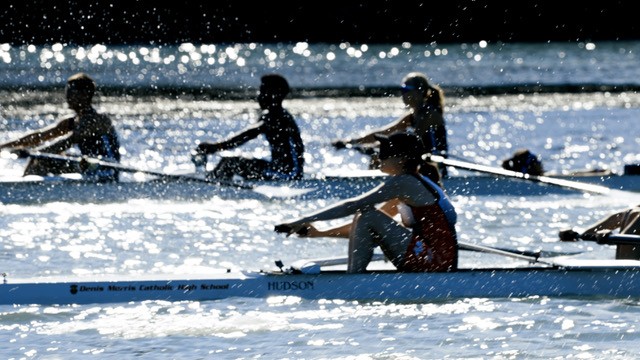
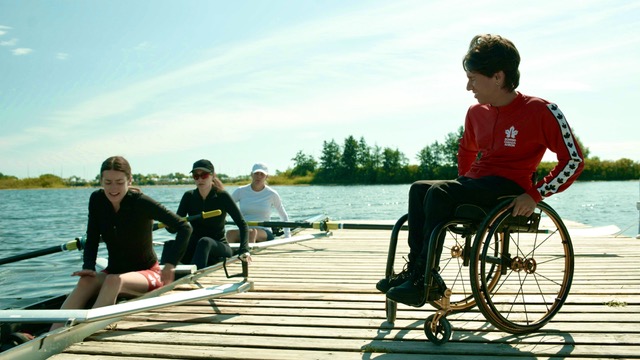
Rowing became almost another character in the film. I didn’t want the sequences to simply show Victoria getting better at a sport. I wanted the physicality and rhythm of rowing to reflect what was happening inside her. The music by Igor Vabrac and Ken Worth also plays a huge role, particularly in the rowing sequences and emotional beats.
Early on, everything was unfamiliar — hesitation, frustration and a lack of confidence as Victoria learned to trust her body again. As she progresses, the rhythm of her stroke becomes more confident, powerful and instinctive. That evolution mirrors her life coming back together, but even stronger.
John and I wanted the rowing to feel cinematic and emotional, not simply athletic. The movement of the boat, the oars, water, breathing and even her hands became part of the visual and sonic language. Watson had to physically embody that transformation. Her posture, determination and the way she handles the boat tell us that Victoria is changing.
We were fortunate that Watson had rowed at university, so she already understood the physicality and discipline of the sport.
What I love most is that rowing became a metaphor for her entire journey. Every stroke is about moving forward. She’s no longer just learning to row — she’s learning how to move forward with her life.
You were telling a story about elite athletic achievement, but the film spends significant time with Victoria as a mother, partner and woman dealing with isolation. How did you resist the temptation to let the eventual Paralympic success become the sole definition of her character?
I think that was one of the most important things for me. The World Championships and Paralympic achievement are extraordinary, but they are the destination — they aren’t the definition of Victoria.
Before she ever gets into a boat, she is a woman, a mother, a wife, trying to understand how she is going to live in a world that has suddenly become dark and unfamiliar. I wanted the audience to experience her saying goodbye to the simple things we take for granted — her last sunset, the flowers that bloom every spring, the world around her, and even the face of her husband. We don’t realize how precious those things are until they’re gone.
I wanted the audience to feel the isolation, frustration, and vulnerability of losing her independence. There are moments when she isn’t an athlete at all — she’s simply a woman trying to find her way back to herself and be there for her children and Eamonn. That’s what makes the eventual achievement so powerful.
The final race is really evidence of the transformation that has already happened inside her. The real victory is Victoria discovering that she is still there beneath the fear, isolation and circumstances. She didn’t become someone else — she rediscovered herself. I think that’s why ‘Blindly VICTORIOUS’ touches people so deeply. It’s about refusing to let the darkest chapter of your life become the final chapter. Because no matter how dark the night becomes, the sun will rise again — there is always hope.
Working with Victoria Nolan herself must have created an interesting dynamic between the real person and the fictionalized version of her life. Were there moments when her perspective challenged a creative decision you had made, and how did that influence the film?
After first working closely with Victoria and Eamonn four years ago, I continually bounced ideas off my friend Jim Henshaw, who guided me from the very beginning. I’m incredibly grateful to him.
I then brought in my co-writer and good friend Tony DiPasquale, and for two years we worked closely with Victoria and Eamonn while developing the story. It was wonderful just working on the script with my friend Tony and having Victoria and Eamonn always on the phone and involved was invaluable. They gave us the details you simply can’t find through research — what they saw, heard and felt, and especially the fear, frustration and uncertainty they experienced. Their perspective helped us continually find the emotional truth of the story.
I was deeply moved by how much Eamonn truly loves his wife. I wanted to show what it means to have a husband who supports and cherishes his partner, and how selfless he became as Victoria began to rise. You could feel how incredibly proud he and the entire family were of her.
It was wonderful working with Jake Epstein, who played Eamonn. He brought such depth and sensitivity to the role, and he really understood the love and strength at the heart of their relationship. He brought something very authentic to those scenes.
Ultimately, Victoria and Eamonn’s involvement helped us protect the heart of the film. We never wanted to lose the emotional truth of what they actually lived through.
The film had its world premiere at OFFA and went on to receive the Audience Choice Award for Best Feature. What did the audience’s response reveal to you about the story or the filmmaking that may have changed your perspective on the film?
The response at the Oakville Film Festival was honestly one of the most emotional experiences of making the film. Our Fine Cut was selected for the Opening Gala in a 450-seat theatre, and it quickly sold out. I remember watching the audience engage with the film at exactly the right moments — men and women wiping away tears — and enjoying the ride of inspiration.
When the credits rolled, we received an overwhelming standing ovation, and everyone stayed for the Q&A. People were touched and inspired, and it was incredibly meaningful to experience that response firsthand. As a filmmaker, you spend years inside a film, knowing every frame, cut, and performance. But sitting in a theatre and watching an audience experience it for the first time is completely different.
What moved me most was realizing that people weren’t simply watching Victoria’s story — they were feeling something about their own lives through it. Then receiving the Audience Choice Award for Best Feature Film made that even more meaningful because it came directly from the audience — the very people we made the film for.
It reinforced what I hoped from the beginning: that ‘Blindly VICTORIOUS’ could be about more than blindness, rowing or the Paralympics. It could remind people that whatever darkness they may be facing, there is always a way forward when you have hope and believe. Sometimes, you just need someone else’s story to remind you of that.
QUICK TAKES:
Q) What projects are you currently pitching or developing?
I am very involved right now in finding and engaging with our growing audience for ‘Blindly VICTORIOUS’ and building a strong distribution foundation for the film. At the same time, I am committed to making “movies that matter.” I am already developing another incredible story, and I’m super excited about the possibilities of what it will become.
Q) Any upcoming events, screenings, or launches readers should know about?
We are just completing the colour timing and 5.1 sound mix, so the movie will be ready very soon. From there, we will be entering film festivals in various parts of the world. We are also planning a series of Cinematic Events for ‘Blindly VICTORIOUS’ in communities across Canada and the United States, beginning later this fall and continuing deep into 2027.
Q) How can people get in touch if they want to collaborate or learn more?
Please email me at gm.StarMediaEnt@gmail.com, and we can hop on a call after that.
Trailer for ‘Blindly VICTORIOUS’: https://www.youtube.com/watch?v=55NKIO22Xos