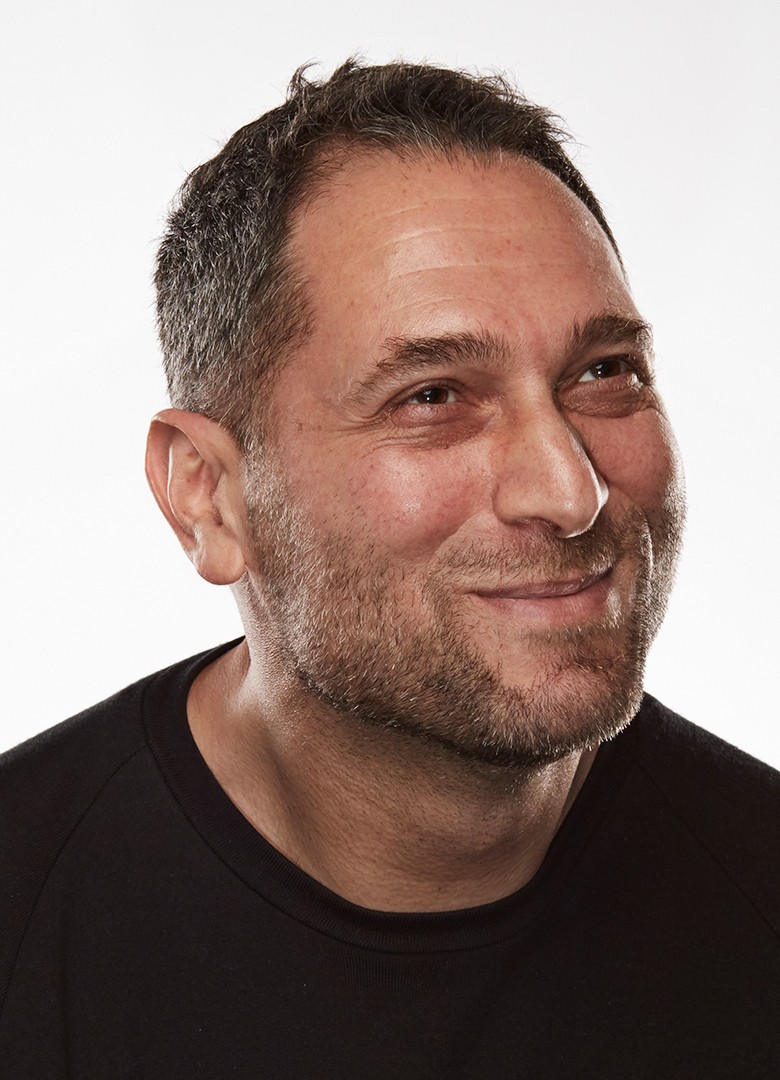
As part of the REELway X SACFF (South Asian Canadian Film Federation)’s Canada-India Co-Production Lab Series, REELway spoke with the Canadian filmmakers participating in this groundbreaking initiative. The series explores their creative practices, perspectives on international collaboration, and the projects they are bringing to the lab.
In this interview with Armin KS, Canadian filmmaker Gavin Seal discusses his identity as an Indian-Québécois-Canadian filmmaker. He also examines the challenges of navigating Canada’s film funding landscape and his belief in creating universal stories through bold, underrepresented voices.
Seal shares his perspective on multilingual filmmaking and international co-productions. He also introduces ‘Sophia’s Choice’, an English-Punjabi horror possession feature he is developing through the lab. The project explores the possibilities and complexities of collaboration between Canada and India.
You describe yourself as an Indian-Québécois-Canadian filmmaker. How does that identity show up in your work?
To be honest, I identify mostly as Brown. So the big problem with the industry, being B2G (business to government), is that it’s based on nationalist identities like this, but I don’t really prefer them. I like to think that my work, and my company, Intersectionnel Films, tell universal stories from bold, underrepresented voices, with undervalued international potential in the global marketplace. So we look for the intersection of art and commerce, and love the business term, product-market fit.
The reality is most of our artists aren’t telling stories that align with the government mandates for investing in nationalistic interpretations of identity. So, TBH, when it comes to skin tone, the main way it shows up is in casting.
Beyond that, we focus on stories about characters who are struggling with an incident that challenges their perspective on something. The classic framework is where the protagonist believes something, and then something happens that turns their world upside down, and they are ultimately transformed by falling down the looking glass.
So I only really play that “Indian-Québécois-Canadian” game because the B2G government funding model requires it. I’m proud to have found ways to make movies with private equity, where investors only care about whether people will buy tickets. I prefer that way of making movies, TBH.
As a filmmaker of colour, do you feel that filmmakers from minority communities are expected to constantly explain their identity?
Yes, not just as individuals, but in the work too. The reason Canadian films with people of colour often feel manipulative (in the way some people use “woke” as a pejorative, for example) is that the bureaucracy forces us to constantly use exposition to explain why characters do things, for the Caucasian bureaucrats greenlighting the projects. If we just let characters be characters, like in films with Caucasian characters, the bureaucrats can’t wrap their heads around them because of their own personal biases. Then the films end up feeling preachy, because the government forced us to explain everything to get the money. We can’t just be people.
Yes, and it’s the same reason there are so few good Canadian (and Québécois) films in general anymore. As long as the government is the studio, and they greenlight projects by mandate instead of simply funding the production companies themselves like other government subsidies, we’re gonna bleed out slowly. The production companies should have agency over their own business, again, the same way government subsidies work in other industries, like SR&ED credits, informed by market signals, with accountability for how taxpayer dollars are used, and unbeholden to being gatekept by a handful of broadcasters to trigger tax credits, which the bureaucrats demand be included in the financing plan now (which was not the case 30 years ago). So the incentives have been bastardized; they’re now a liability, and emerging producers need to find a better way, because the bureaucrats are too old to fix it and no one’s retiring.
The issue today isn’t talent, it’s discoverability. The likelihood that audiences have the same tastes as government bureaucrats seems low to me. For example, we’ll never be able to find Canada’s Curry Barker, because even if they’re out there, they would never have the patience for the bureaucracy. Look at Tope Babalola. From my understanding, there are production companies trying to make his films; he could be the next Curry Barker, and the problem is the government system makes speed-to-market for innovation impossible.
Do you think a film has to become more culturally “universal” to travel internationally, or does the opposite actually happen, that specificity is what makes a film travel?
For me, the only creative element that really matters is casting. Everything else in the story I tell is pretty universal. Simply casting people of colour in itself is actually a huge thing, and this isn’t about intellectual stuff like representation. This seemingly simple creative choice is not only inherent to my stories, but it’s a substantial undertaking in execution.
As long as we need to explain everything in terms bureaucrats understand, the work will always lose any edge the creators had. The bureaucracy will also force the product towards palatability to Caucasian bureaucrats. So I’m not sure we’ll ever see a Cronenberg again in this B2G model, in the era of content abundance.
Especially in Quebec. For example, on my last film I sent out colour-blind casting notices, and all the casting agents in Quebec only sent me Caucasian actors auditioning. When I asked why, they said they didn’t know I was looking for people of colour. So essentially, attempting to be more inclusive led to the systemic bias representing itself as inherently white supremacist in this province.
Choosing not to racialize my characters, to increase the pool for potential discovery, led to the system reminding me that people of colour in Quebec don’t even get the chance to audition for roles, because their agents don’t put them forward unless the character’s name is racialized.
The clearest example of the travel question is my last film. It screened at Cinema on the Bayou, the largest Francophone festival in the United States, where we were the first Québécois film to screen in both the Québécois and General programs because the film was in English, and won the Jury Prize. That same film was the first Québécois film to screen at Tasveer, the only Oscar-qualifying South Asian film festival in the world with a short film program. My perspective on reality lives outside the boxes that sometimes help us unite in solidarity, but can also divide and marginalize people who don’t fit into them. That’s the catch-22 we currently live in, and this tension between past, present, and future is in all my work.
Do you think Canadian funding structures adequately accommodate multilingual stories? How should producers think about language when developing an international co-production?
For me, cinema is a universal language, so the fact that there is any language requirement in the product (the film) is inherently ignorant of the medium.
The systemic bias and the inherent colonial xenophobia it carries are more obvious in Quebec because we’re the only province that caps non-French films at a maximum of 20% of the funding envelope. That’s an example of a soft control mechanism that makes it impossible to grow a business with government support unless you’re making what they tell you to make, regardless of audience demand, potential, or opportunity.
For example, I was talking to a filmmaker who was asking for advice on her silent film, and how to apply for SODEC’s French or non-French streams. Ridiculous. Like, not her question; it’s a great question, but the point is that her silent film with no dialogue has to be submitted based on language. Absolutely absurd.
Tell us about the project that you will be developing through the lab? What kind of producer are you looking for in a potential co-production?
The film I’m bringing to this lab is called ‘Sophia’s Choice’. It’s a horror possession film in English and Punjabi, with a sprinkle of Québécois. We received funding from the Canada Media Fund for the first draft of the script, and now, as we continue, we’re doing the dance of trying to give ourselves the space to be as creative as possible to write the best screenplay, while also balancing that with the realities of things like various government funders’ budget ranges, which inherently limit the creativity that we can pursue. So we’re working really hard to allow ourselves the freedom right now and worry about that later.
To be honest, from a business standpoint, the government is pushing these treaty co-productions for political reasons, but having explored them for a few years now, I still can’t see a path to profitability. I’ve been to Brazil, Hong Kong, and now I’m looking at India, and I love learning about this stuff, but every time I crunch the numbers, these international co-productions just don’t make cents. Being in Quebec makes this even worse, because SODEC really hates languages that aren’t French, so they really don’t see the opportunity for innovative models like this.
Because Telefilm is going around talking about how many treaties we have, I think it misrepresents how few treaties actually get used, and this does a disservice. The reality is many of these treaties are quite nascent. Some are being called treaties even though they’re only actually memorandums of understanding, often with governments that are no longer in power.
All of that is fine. These are interesting opportunities, but my point is that there’s a lot we still have to figure out, and I hope organizations like Telefilm are committed to continuing to invest in this research and discovery, because it’s going to take time. A lot of time.
So I’m excited to be part of this lab and potentially be one of the first filmmakers and producers in this country to take advantage of this treaty, but this is a hell of a Rubik’s cube we’ve got to solve, and Quebec is the biggest liability in the equation. Having been trying to play this international treaty co-production game for a few years now, it seems there’s a big gap between how the government is trying to sell this opportunity and the reality of both the difficulty and complexity, and the lack of a business case in terms of profitability, to actually pursue these for the majority of production companies.
Sustaining a financially successful career in this industry can be challenging. How do you financially sustain your career while making your films and travelling around the world to develop your projects?
My company Intersectionnel Films has three business verticals: cinema, content marketing, and innovation. Content marketing is what keeps the lights on, and it includes video production and strategy, mostly for B2B enterprise clients. And innovation refers to work we’re doing in anything we consider over the horizon, such as our YouTube channels and our creative technology platform winfilmgrants.ca, both of which are B2C.
For anyone struggling financially, my advice is to only have one activity that relies on the government. For me, that’s film. We aren’t getting into TV, for example, because it’s the same problem; it’s a B2G model where the government is the studio. Micro-dramas are poison for our minds and contribute to screen addiction and mental health issues. So that’s why we only do films, because we believe in the medium as an art form that brings people together. It’s an empathy machine.
QUICK TAKES:
Q. What projects are you currently pitching or developing?
The top priority for Q4 is winfilmgrants.ca.
Q. What stage are these projects in (writing, pre-production, post-production)?
Win Film Grants launched publicly this month.
Q. What kind of collaborators are you looking for right now? (writers, actors, producers, crew, etc.)
None.
Q. How can people get in touch if they want to collaborate or learn more?
howtomakemovies.ca
Q. Are you looking for submissions, funding, or other opportunities?
Funding for Win Film Grants to add provincial funders.
Q. Any upcoming events, screenings, or launches readers should know about?
If you’re a filmmaker struggling to apply for grants, check out winfilmgrants.ca