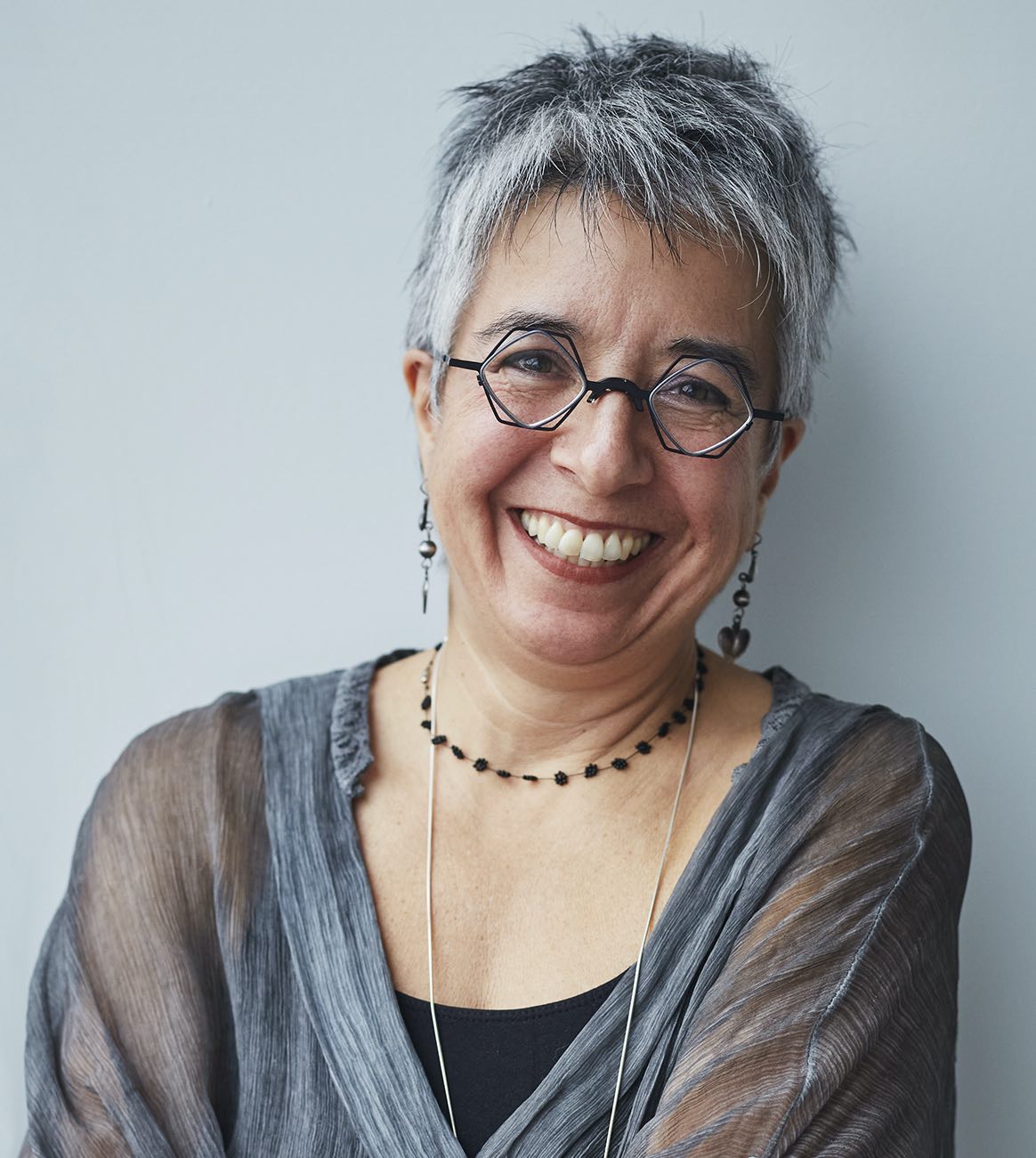
Mexican-Canadian filmmaker Andrea Martinez Crowther has built a body of work that moves fluidly between fiction and documentary, blurring the lines between what is real and what is constructed. Her films are rooted in emotional truth, often exploring themes of memory, family, identity, and the passage of time through deeply personal and introspective storytelling. Drawing from her bi-cultural upbringing and lived experiences across Mexico and Canada, Crowther brings a unique perspective to her work, one that resists boundaries and embraces complexity. In this conversation with Shwayta Sharma, she reflects on her process, the spaces between genres, and how her personal history continues to shape the stories she tells.
Your work lives between fiction and documentary; what draws you to that “in-between” space?
Of the four features that I have shot, two are fiction, one is a documentary and one is a fiction film shot as if it were a doc. I’ve been told my doc seems like fiction and I love to shoot fiction documentary style. So, yes! I definitely love to play around in that in-between space. To me it all comes down to storytelling (that’s why I don’t like calling my fiction features “narrative” features because I believe docs are just as narrative). Although the process of making a documentary and a work of fiction is very different, I approach them in a similar manner, asking myself: what is the story, what is the theme, how do I develop the characters (because of course in a documentary, real people exist but characters are constructed), how do I structure the drama for maximum emotional impact? Ultimately, to me, it is not about what is “real” or what is “made-up” but rather what is emotionally honest.
How has your experience as a Mexican-Canadian filmmaker shaped the stories you choose to tell? Did moving from Mexico to Canada change your creative process or perspective?
My situation is somewhat curious. Because I have been bi-cultural, bi-lingual and bi-national since birth, I speak both languages without an accent and seamlessly “fit in” both in Mexico and Canada. Oftentimes, people in Canada are surprised to know I am Mexican and in Mexico, the opposite occurs. Yet I, myself, have never felt completely from one place or the other. Feeling “different” has been part of my cultural identity ever since I can remember. In this sense, moving to Canada did not really change my perspective because simultaneously being part of both worlds is all I can remember. It is such an integral part of my identity and completely shapes who I am, the stories I choose to tell and how I choose to tell them. It may not always be the subject of my films but rather is present in the characters and their backstories. (Curious note: in my first film, Insignificant Things, the protagonist Esmeralda has a brother who left Mexico to work on a Canadian farm and, 18 years later, I am developing a narrative feature about Mexican agricultural workers who come to Canada to work on a farm. I am coming full circle). I also love playing with language. Two of my films are bi (and tri)-lingual and the Mexican-Canadian co-production I am developing will also be spoken in both English and Spanish. Right now, I am also exploring integrating this into my more “mainstream” filmmaking, for example, writing romcoms with Latinx-Canadian protagonists.
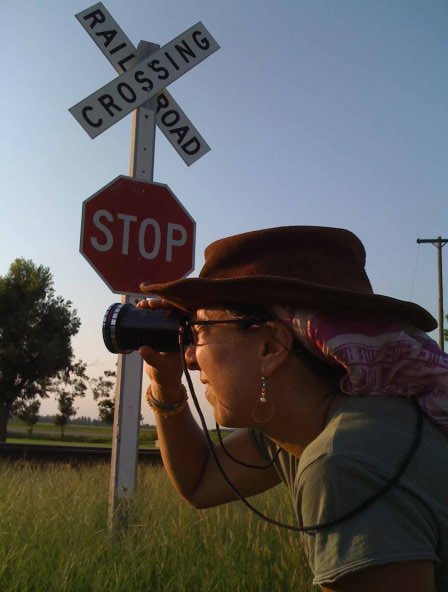
Your film Birdwatching deals with Alzheimer’s and personal loss; what were the challenges of fictionalizing something so intimate? How do you balance emotional truth with narrative structure when working with personal material?
Birdwatching is loosely based on the experience of losing my mother to Alzheimer’s. Whoever has gone through this process, knows how painful, heart-breaking and terrifying it can be. The film was borne from my own fear of developing Alzheimer’s myself. And fear is a very powerful motor when channeled. At one point, I was so convinced I had Alzheimer’s, the only thing that put my mind at ease was to tell myself “Okay Andrea, if you have Alzheimer’s make a film about it.” And suddenly, that fear turned into a story about Lena who, diagnosed with Alzheimer’s, decides to say goodbye to life by making a film. The challenge came for me in the decision to appear on the other side of the camera, playing the role of the documentary filmmaker helping Lena to make her movie. The first day I had to act, I did an embarrassingly terrible job! I was doubting my decision to act in my own film, even if it was mostly off-screen. But after that initial fiasco, I realized it was really just about being myself and being honest and in the moment. I consider myself an emotionally honest person and I’m not afraid to share that, so once I got over the hurdle of thinking I had to “act”, it became easier. The emotions were there.
Béa, the actress who interprets Lena, is extraordinary, unafraid to dive into the pain and the silliness and the rage and the joy of the character and her bittersweet situation. In terms of balancing emotional truth and narrative structure, I am a filmmaker that loves finding a balance between structure and freedom. I tend to be very structured at the screenwriting stage. So, it was very clear to me what the story (and the underlying theme, of course) was about, and how it would develop over time, but I left a lot of freedom to construct the character, the scenes and the dialogue. Béa and I were able to play and explore and improvise and I believe our collaboration is what makes this film so heartfelt and honest.
What differences have you noticed between the Mexican and Canadian film industries? Are there stories you feel can only be told from a diasporic perspective?
The two industries are surprisingly quite similar and face many of the same obstacles, most notably sharing the same mighty neighbour and how to promote and support national storytelling in the face of the U.S.’ influence on the industry. Independent filmmaking is obviously not an easy feat to undertake in either country and I always say perseverance is just as important as talent. But, at the same time, there are grants, funding opportunities and tax incentives in both countries which are crucial to keep local filmmaking alive. Presently, I am still learning my way through the Canadian system and have received a grant to shoot my first short film here. I have the great fortune of being able to travel back and forth between my two countries and am constantly looking for opportunities to co-produce as well as write screenplays that either take place in both countries and/or have bi-cultural Latinx characters. In that regard, I am presently developing a low-budget Indie rom-com with a Latinx protagonist as well as the Mexican-Canadian co-production Labranza, about migrant agricultural workers and the farmer who hires them.
How do you direct performances when working in a hybrid documentary-fiction style?
Working with Béa Aaronson was a joy and a challenge and a very collaborative process to find and construct the character of Lena. The moment I knew Béa would be interpreting the role, the character of Lena started to change and develop and become more nuanced and complex. Many of the scenes were born from Béa’s life. For example, when she talks about her son hiding in the dryer, she is talking about her own son. The fact that Lena was a scholar specializing in Proust and Baudelaire came about when I discovered Béa had a huge collection of their books and had written a dissertation on these authors. All of the artwork of Henrik (Lena’s deceased husband) were actually painted by Béa herself, who is also a visual artist. It was an extremely fun process to integrate aspects of Béa into the character of Lena. Béa is a very imaginative, off-the-wall person who thinks outside the box. So oftentimes with Béa it was a matter of reminding her to be Lena and not herself. We joke about how I would have to say “Lena, pas Béa!” when I would find a cigarette hanging from an angel sculpture’s mouth on set in the morning. This was Béa being creative, but did not go with the character of Lena. Most of the dialogue in the film was improvised. I would provide the outline of the scene for Béa (and myself) and we would take it from there. But I always knew when that nugget of gold would appear, that magical moment when something happened and I knew that would make it into the film.
What drew you to collaborate with Neshama Entertainment? How does working within a production company environment differ from your earlier independent work? What did you learn from this collaboration that you’ll carry into future projects?
For many filmmakers (and artists) such as myself, there is a constant search for balance between making art and making a living. It is not an easy task. Part of the reason why I came to Canada was because in Mexico, I had shot 4 Indie feature films – of which I was incredibly proud – but I wasn’t really making a living as a director. I moved to Toronto with the idea of inserting myself within the more mainstream industry, while continuing to work on my own projects. My first job in the Canadian industry was to write the rom-com “Paws in the City” (based on the book The Dachshund Wears Prada by Stefanie London) for the network The CW, produced by Neshama. It was a huge learning curve for me. I had never written a rom-com, never written an adaptation and never worked in that context. As a creator of my own work, I have creative control. This is a whole different ball game. There are so many decision-makers involved in the process. But I enjoyed the challenge. Growing up all over North America as a child made me extremely adaptable, so I found I was able to embrace a different way of writing and filmmaking and actually find the fun in it, which is so important. I discovered I could, indeed, write (and eventually direct) something that appeals to a more mainstream audience.
How do you shift your voice when writing for different genres or audiences?
I think this is particularly applicable in relation to what I mentioned above, in terms of creating for a mainstream audience. If I am writing something that I intend to be more “commercial” and want it to appeal to a network or streamer, I am going to approach the writing and concept according to tone, structure and overall conventions that would be quite different than if I was making an independent film.
What barriers have you faced as a woman of colour filmmaker working across different countries?
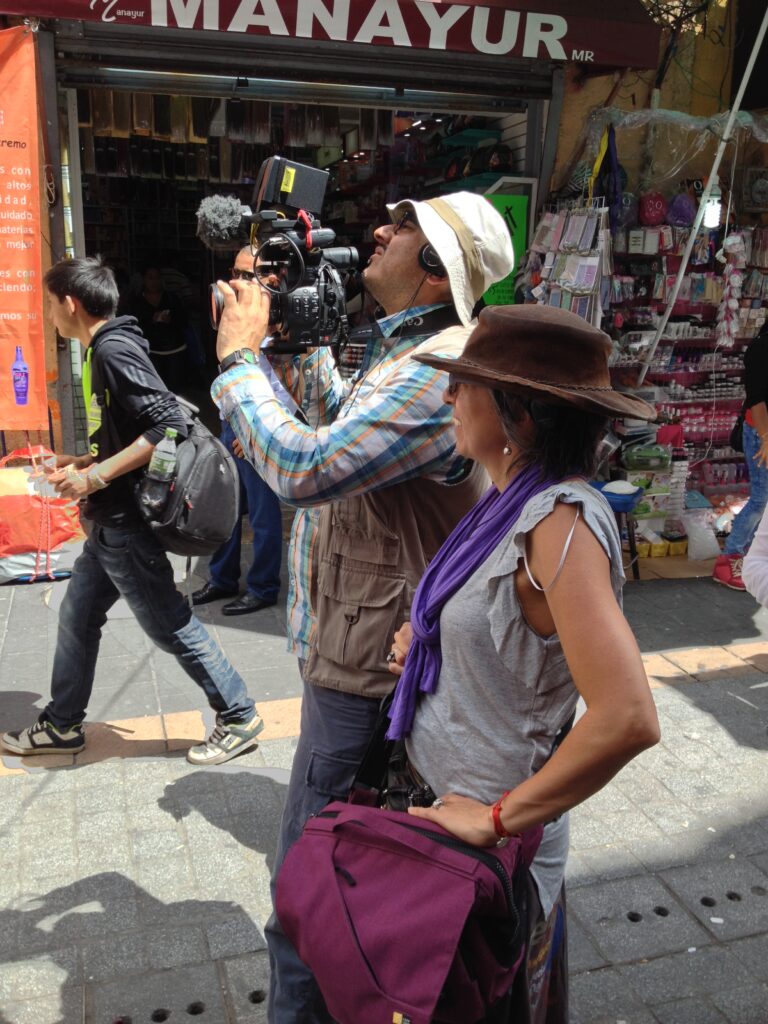
In Mexico, I experienced situations on set that I know boiled down to me being a female director in a mostly male-dominated arena. It was frustrating and infuriating but it also made me very resilient and perseverant. I would hesitate to say that I was unable to make a living as a director-for-hire in Mexico solely on the basis of being a woman, but I think I can safely assume that there was a correlation. Again, frustration and infuriation… leading to perseverance.
What advice would you give emerging filmmakers navigating multiple cultures?
It sounds cliché but I’ll say it anyway: tell stories that matter to you. The universal comes through the specific. If a story is authentic, honest and heart-felt, it will find its audience. I also think audiences are much more receptive to stories being told in other languages and from other perspectives. Even in more mainstream arenas, those stories are being included. So instead of trying to camouflage what makes you stand out, embrace it!
Quick takes:
What projects are you currently pitching or developing?
“Life Architect” – A micro-budget short with my cousin Amanda Martinez.
“The Oak Tree” – A bigger budget short, that received Ontario Arts Council funding.
“Labranza”- A Mexican -Canadian feature co-pro
“Tare” – my fourth feature for which I am looking for funds for Post-production
“Smitten” – An independent low-budget romcom
I am also pitching rom-coms as MOW’s.
What stage are these projects in (writing, pre-production, post-production)?
Life Architect – We’ll shoot this summer
The Oak Tree – set to shoot early winter
Labranza – It will depend on several funding decisions but if all goes well we will shoot late fall or next spring
Smitten – Development
Tare – Post Production
What kind of collaborators are you looking for right now? (writers, actors, producers, crew, etc.)
Producer – Smitten
Boom operator – Life Architect
PA’s – The Oak Tree.
How can people get in touch if they want to collaborate or learn more?
They can write directly to my email: andreamtzcrowther@gmail.com or through Instagram: Andrea Martinez Crowther
Are you looking for submissions, funding, or other opportunities?
Labranza – we’re looking for additional funding for this co-pro as well as a distributor
Tare- The film has been shot and edited. I‘m looking for post-production funds or in kind services for this film about loss and healing.
Life Architect- We’re looking for about 8k to make this micro-budget short. My crew has generously agreed do the film with or without funds, but I would love to be able to pay everyone.
The Oak Tree – I’m waiting to hear back from another fund for which I applied, as this short is a very challenging, ambitious (and somewhat expensive) endeavour.
Any upcoming events, screenings, or launches readers should know about?
In 2024, I screened “Birdwatching” through the Alzheimer Society of Toronto and I am always looking for additional ways of screening this film. If anyone is interested, I am open to sharing the film in whatever way possible.