18 to 35 is a comedy which has arrived on the Canadian television landscape to the kind of warm and enthusiastic reception that announces something truly worth watching. Nominated for five Canadian Screen Awards and two WGA Awards, it is also a testament to the strange grace of unexpected belonging, told through the unlikely world of the Crown Jewel, a run-down youth hostel in London, Ontario where international wanderers, eccentric staff and one adrift Wall Street executive find their way to something resembling home.
18 to 35 airs on Bell Fibe TV1, having garnered the kind of critical and audience response that confirms one of the most distinctive and necessary new comedies in recent Canadian television has well and truly found its moment. In this conversation, co-creator Charlie Whalley, actors Natalia Gracious (Misha), Jean Yoon (Harriet), Carlos Albornoz (Dani), and producer Luisa Alvarez Restrepo reflect upon 18 to 35, sharing insights and experiences from the various stages of production.
Finding the Characters
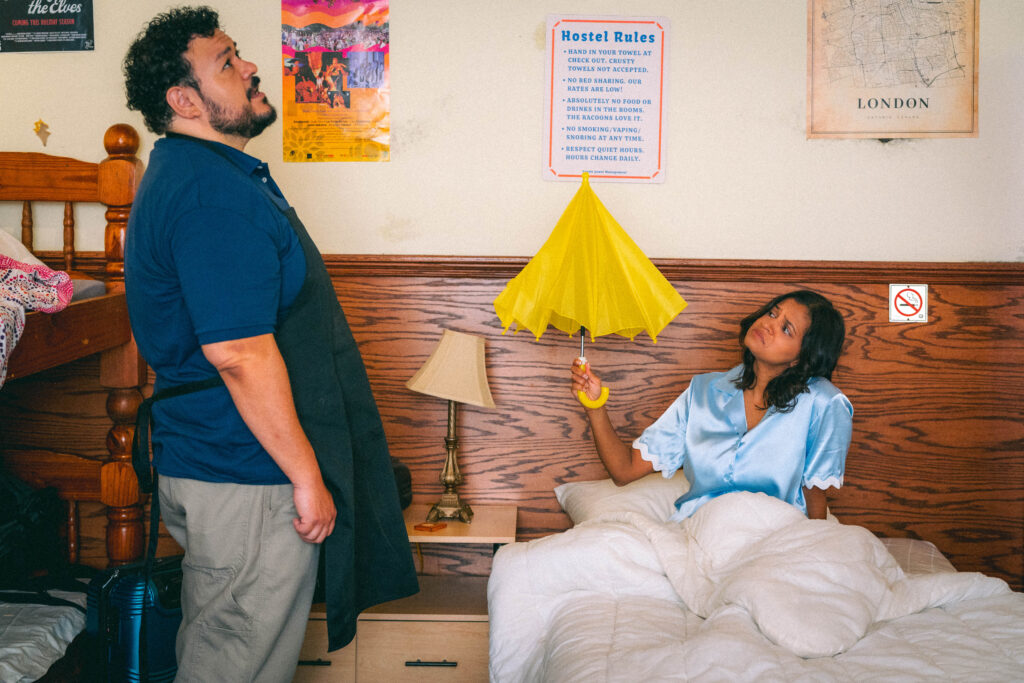
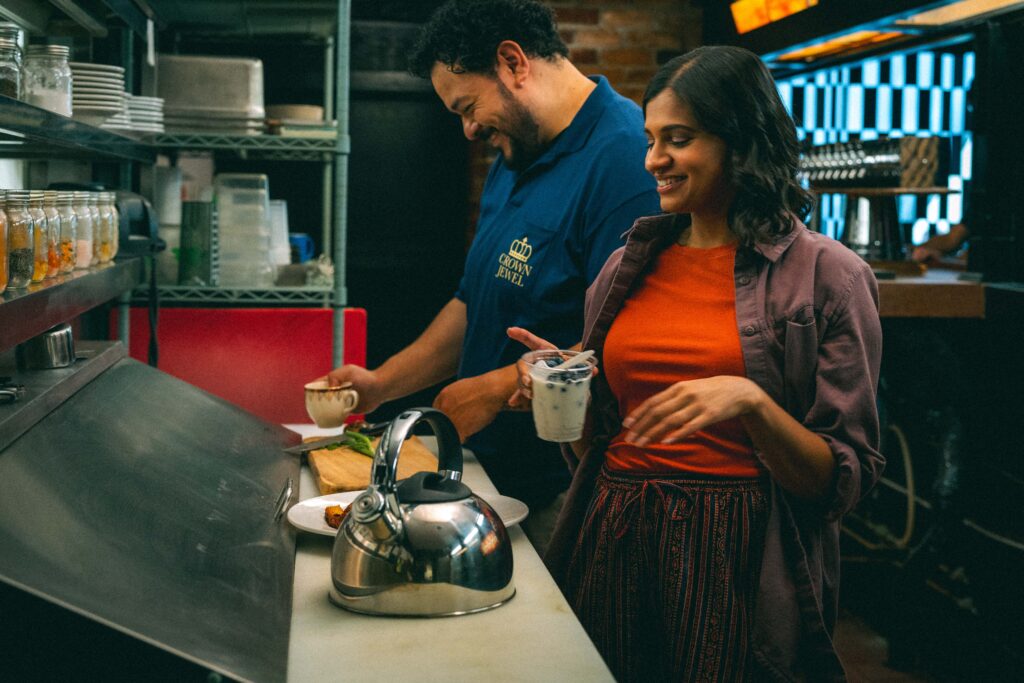
Carlos Albornoz (Dani): I remember getting the audition for Dani, reading the breakdown, and thinking, “Oh wow… this kind of sounds like me.” He was described as an inspiring chef with a visa problem. Someone warm, loyal, hardworking, with this excitable puppy-dog energy. I immediately connected to that. Then I read the sides, and I was laughing out loud, which, to me, when text can trigger an emotion, is always a sign you’re holding something special.
Dani holds a really special place in my heart because we’re both dreamers and big feelers. He dreams of becoming a world-renowned chef, and I’m chasing my dream of becoming a full-time working actor.
Natalia Gracious (Misha): The main draw for me was my character Misha; she is so funny (often unintentionally), pretty neurotic, but so loveable. Most importantly, I was excited to see a script that featured a brown girl as the lead in a quirky workplace comedy; something that is hardly ever seen.
Jean Yoon (Harriet): My former castmate, Andrew Phung reached out to me, and I trust his judgement and his comedic instincts. The scripts for ‘18 to 35‘ were excellent, bold, specific, and funny as hell. I loved that I was being offered Harriet, a character so grumpy and wacky she couldn’t be more different from Mrs Kim. I’m so glad I said yes.
Landing the Comedic Timing
Carroll Chirmel: My director Rahul shared the script with me early on and told me it was a workplace comedy. That immediately set the tone, something in the world of ‘The Office’ or ‘Brooklyn Nine‑Nine’, where the humour comes from quick reactions and spontaneous energy. The cast of ‘18 to 35‘ delivered such strong performances that the rhythm revealed itself naturally. For me, the first episode was the foundation. We spent time shaping its tone and pace so the rest of the season could follow that blueprint.
Most jokes landed right away, and the actors’ improvisations often made them even better. But in Episode 5, our Halloween episode, there was one scene that was intentionally shot very straight, with the idea that the comedy would emerge in the edit. It relied on jump cuts, deadpan reactions, and even crossing the axis. The timing had to be exact. That entire comedic beat was essentially built in the edit suite.
On Set: Challenges & Memorable Moments
Carlos Albornoz: The most challenging scene for me was in the final episode, when Misha tells Dani she’s leaving for New York. At that point, Dani is already hurt. He feels forgotten by someone he deeply cares about. What made it difficult was holding those two emotions at once: the hurt and frustration, but also the love and fear of losing someone who means so much to him, almost like a friend or a sister
I remember going over the scene the night before, and it hit me harder than I expected. I ended up in a fetal position, just sobbing. It opened up something in me that I hadn’t fully processed before. Safe to say… that scene had me booking a session with my therapist. But honestly, that’s also what made it so rewarding, being able to access something real and bring that truth to the character.
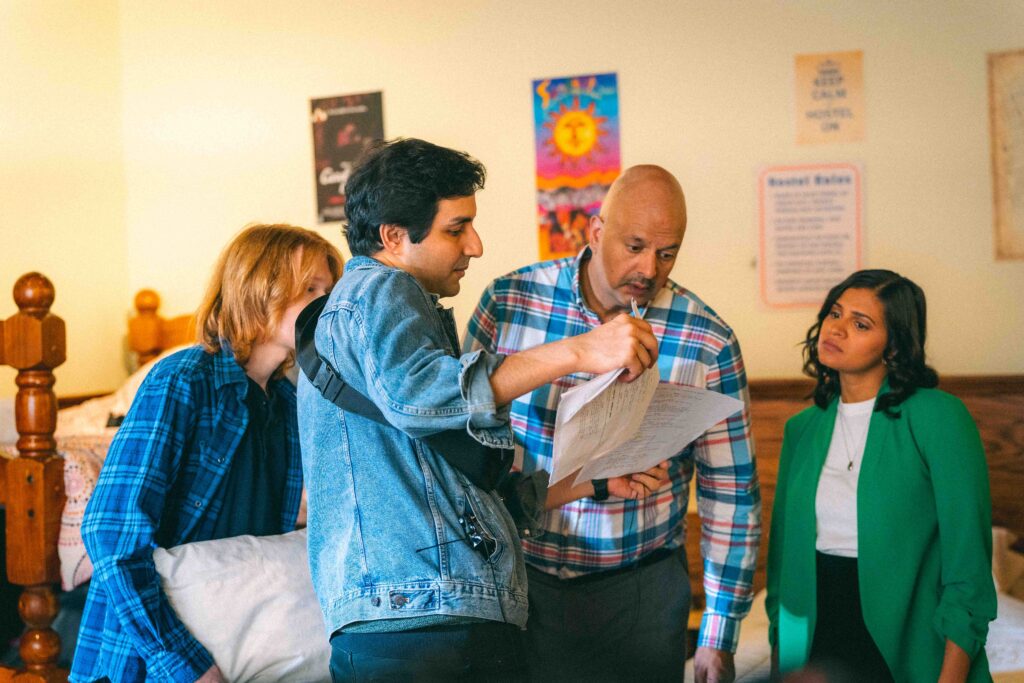
Carroll Chiramel: Each episode centres on one character, but the ensemble is powerful, so balancing everyone while keeping the pace tight was the real challenge. My focus was always to keep the story moving, let the reactions breathe, and make sure the humour landed without losing momentum. Episodes 4 and 5 required more intentional shaping in the edit. Episode 4 has a big competition sequence with a lot of crowd energy, so pacing was everything. Episode 5 had that jump‑cut‑driven scene where the humour depended entirely on how the cuts were placed.
Natalia Gracious: The Halloween episode was both the most challenging and the most rewarding scene to shoot. It was a deviation from the regular comedy of the show & required a bit of a different feel since the genre was shifted. It’s an emotional one for my character. I think the result was great, and it gives us a heartwarming glimpse into Misha’s life and relationship with her father.
Jean Yoon: It was very hard to keep a straight face, especially in scenes with Buck Mustang, aka Sean Cullen. I mean, the man’s a mad genius.
Carlos Albornoz: At the start of filming, I had this one pair of pants, and the zipper had completely broken. So for basically the entire shoot, there was this ongoing, low-level panic of “Is my fly open right now?” Between takes, it became this team effort, people subtly checking, giving me the heads up, or trying to fix it with whatever we had on hand. It was equal parts stressful and hilarious. So if you’re watching closely, there’s a chance Dani is delivering an emotional moment while also unknowingly airing things out.
Jean Yoon: We shot in an abandoned multilevel pub in a mall in downtown London. Most of the properties around the pub were vacant, except for the Good Life gym downstairs and a CAF recruiting office across the hall. When it got hot, we’d stand in the air-conditioned hall and stare at people working out. I wonder what they thought of us…
Representation & Impact
Carlos Albornoz: What I love most about ‘18 to 35‘ is that the main cast is made up entirely of people of colour, and it’s not treated as something unusual. It just is.
That reflects the real Canada we live in. We’re a deeply multicultural country, and when our screens don’t reflect that, it creates an imbalance and reinforces harmful narratives about who gets to be seen and whose stories matter.
What makes this show even more powerful is that it doesn’t point to representation, it normalizes it. These are just people living their lives, chasing dreams, making mistakes, loving each other. That kind of visibility matters.
Natalia Gracious: Growing up, I knew I wanted to be an actor, but I never imagined I could be a lead actor, simply because it wasn’t something I ever saw on film/TV. I have met people whose only reference for an Indian person was the minimal representations they watched on screens, and as a result, they often buy into classic stereotypes. Especially as an immigrant who grew up in Canada from a young age, I usually don’t see myself in the ’traditional’ depictions, and I think the importance of presenting minorities with rich, full and varied lives is so essential. Since the series came out, I have had so many women like me tell me how happy they are to see themselves represented in Misha, which reinforced to me the need that exists in our community.
Jean Yoon: Canadian cities, even smaller cities like knock-off London, Ontario, are overwhelmingly diverse, but that level of diversity is not usually reflected in our media, especially in larger budget projects. “18 to 35” is a Canadian workplace comedy with the level of diversity that I see every day on Toronto public transit. In other words, a world of working-class immigrants, or children of immigrants. The unexpected white male who wanders in usually means trouble.
Collaboration & Creative Process
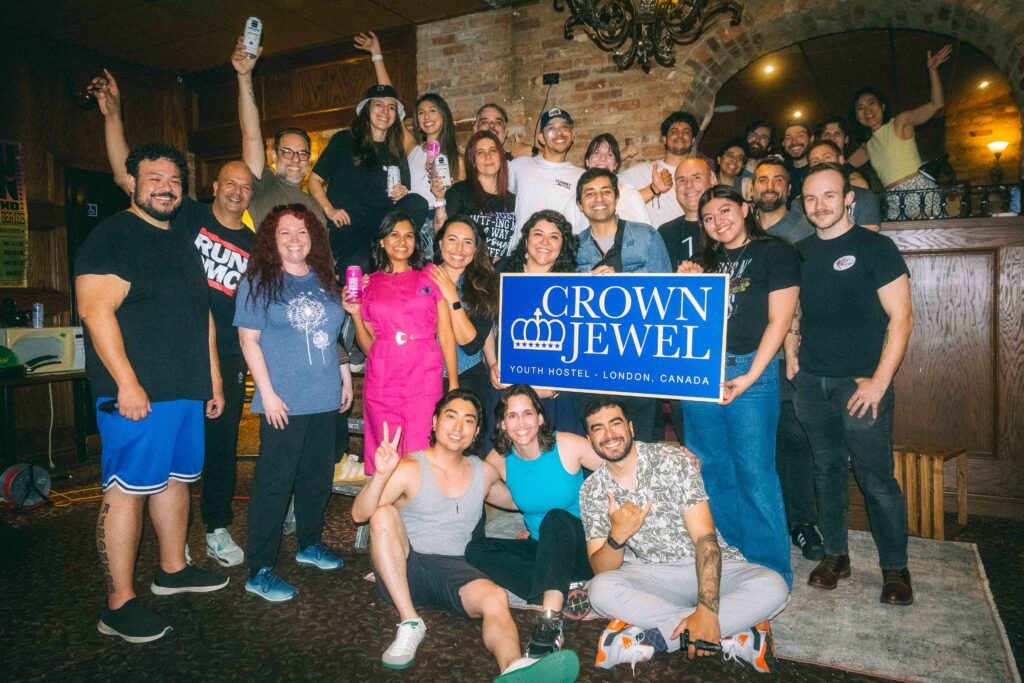
Carlos Albornoz: We shot the entire season in about two weeks, which is kind of wild when you think about it. But the amount of love every single person poured into this project. You could actually feel it in the air. It felt like being wrapped in this warm, fuzzy blanket the whole time.
Working on ‘18 to 35‘ was honestly a dream come true for me. I’d go back to my room at the end of the day and just cry…not from exhaustion, but from gratitude. Being surrounded by such talented, generous, and passionate artists was really special.
The production was small, and the schedule was tight, but no one ever let that take away from the care we put into the work. The love we poured into this project could probably fill the world’s oceans twice over.
Natalia Gracious: I’d say the most challenging part was that we were on a very tight budget, which made for a tight shoot schedule. This could certainly create some stress, but I think we managed it well by having open communication and by trying to keep things light and fun, even when we were on a time crunch.
Jean Yoon: What a brilliant team. Smart, fast, fun, prepared, professional. Writer/director Rahul Chaturvedi and his producer/writer Luisa Alvarez Restrepo are artists with so much talent, integrity and heart, they naturally draw good people into their circle. Expect great things.
Building the Series: Producer Insights
Luisa Alvarez Restrepo: We had a small budget and were filming in an area where we did not have a large network of contacts. The low budget made me get creative, including reaching out to local businesses for sponsorship, in-kind support, and even product placement in the show. This was the first time I did something like this, so at times I was unsure if my approach was the right fit, but we were able to get some local businesses on board, which felt really great. We were excited to be able to showcase local brands and businesses for a series that is very much rooted in London. We were also really lucky to have connected with Paula and Fede from Half & Half agency at the Forest City Film Festival pitch. They ended up joining our production team and really helped us to connect with the local industry.
Charlie Whalley: Personally, I didn’t try to budget any differently. It’s mostly just scaling up or down with the budget you have. We still worked with unions, negotiated with gear houses and worked with a post-production studio. The only difference was that we had less money. Everyone coming on board was aware of what our budget was, as we felt it best to be transparent so that people understood we were stretching every dollar as far as we could. Our team was smaller, and as producers, we were also doing the jobs of a PA, Art Assist, Driver, etc etc, just as any producer does on projects with budgets like these.
Audience, Success & the Future
Charlie Whalley: We were so grateful to have so many industry members support us, and we would be remiss not to acknowledge the fact that we had some names in our cast who audiences were excited to see on the screen. We knew this would be a part of our strategy to reach out to all the industry members we’ve managed to get to know in our careers and also highlight the cast that would draw people in, thankfully it was successful and we had a great time at the screening hearing everyone laugh along to our show and getting some real time feedback of how audiences like all the hard work everyone has put in. You don’t always get that on TV unless someone posts a comment on your socials. Usually, everyone is just enjoying the show at home.
Luisa Alvarez Restrepo: I wear a lot of different hats in the industry, so I was able to tap into different audiences through that. I also focused on social media, reaching out to influencers who were speaking about Cancon or comedy, people who had covered TIFF in the past, and critics. It was a lot of manual labour, and I’m sure there’s a great tool for this, but with such a low-budget show, we had to do the work ourselves. We also made sure that our entire cast and crew knew that this was their show as well and could invite their friends, family, and industry contacts.
From Digital to Industry: The Power of Online Storytelling
Charlie Whalley: There have been a number of creators who have started a YouTube channel, found an audience and managed to use that to get into traditional filmmaking. That’s how ‘Broad City’, ‘High Maintenance’, ‘Insecure’ and ‘Letterkenny’ got their shows. It’s also how directors of ‘Talk to Me’ and, most recently, ‘Backrooms’ also managed to make their first features. We’re now seeing a push from Tubi to find TikTok creators who will bring them their next projects and the creation of microdramas built specifically for watching pure entertainment on social channels and digital streamers. While you usually don’t have as much money to create something in the digital storytelling sphere, it is a place where you can hone your skills and find your unique storytelling point of view with no ‘money men’ to tell you how you must do it. It’s a place where you have complete creative control. Once it’s someone else’s money, you’ll always have someone who is included in that creative process, whether you see eye to eye or not. That is something maybe that is hard to remember when you are working in digital storytelling, you’re always wishing for the money to come so you can do something, bigger, grander, but you may wish for those simpler times later
Creating Without Limits: Innovation Through Constraints
Luisa Alvarez Restrepo: The lower budget makes you get creative and strips down the production so that it’s really clear if you don’t have a good story. Every department had to bring its A-game because we had limited takes, limited days, and limited budget. You see some incredible work from creatives that haven’t had as much access to industry opportunities, and I hope it makes people wonder why they’re not on their team – they should be! And while this is not a new medium, it continues to show itself as a medium where creatives can cut their teeth, skip waiting to hear back from big broadcasters or streamers, and just show what you can do, and that there’s an audience for it.
Photo Credits: Khai Tran