We will always consume, we will always create, and we will always watch. We leave off our conversation here with all that and hope in these challenging times. Our cover story is my conversation with Jenn Kuzmyk, Executive Director of the Banff World Media Festival and the Publisher of Playback Magazine. She brings psychology, distribution, and production experience all to the table, all along with a lot of heart and soul.
Asis Sethi: I’m going to start from the beginning of your career. What first pulled you into this film and TV landscape, and did you always imagine this kind of career for yourself?
Jenn Kuzmyk: I actually wanted to be a psychiatrist, and I have a psychology degree. I was very interested in drug action on the brain and in schizophrenia. I did an internship at the Clark Institute which is now CAMH. So I was actually in the process of applying to medical school at that point, and I just had a big moment of, ‘oh my goodness, is this what I want to do?’ No, I don’t think it is. I went to my parents, and my mom happened to know somebody she worked with. Their daughter was a producer at the CBC, and she’s like, ‘well, that sounds like a nice job, sweetheart. Why don’t you see if that’s something you would like to do?’ I was 20 years old at the time and I went and spoke with this woman. She was a radio producer at CBC. The broadcast center was brand new, she took me all through there, and I was like, ‘whoa, this is like Disneyland. This is so cool!’
I thought maybe this is a new direction for me. I have creative abilities, and I think I could focus on this sector without having to define exactly what I’m going to be doing, because I could go into business, or I could go into the creative side.
After I finished my degree, I applied to TMU; it had a different name at the time. I ended up getting a job in international distribution selling Canadian films and TV series all over the world, which was the coolest thing ever. The company at the time was called Malofilm International. Noah Segal at Elevation was my first boss. Natalie Vinet, who’s at Boat Rocker, was also my boss at the time.
It was an awesome job; I did marketing and support for international sales, and I got to travel all over the world to all the film markets, all the TV markets, meet all the people, I handled all the trade publications and advertising. It was just such a great way to learn the industry and make lots of contacts and understand the international scope.
I did that for a while, then I ended up getting a job as a journalist for one of the trades, which was called C21. I worked there for a decade. Being a journalist, reporting on the international industry gave me what I like to call a virtual PhD in understanding how it all works, who the players are and how financing works. Then I went into production; I was in development and production at Cream Productions in Toronto. We did big-budget, international co-productions, science, history, and unscripted. The last project I did there actually was one of the first Canadian projects ever to be nominated for a Primetime Emmy. That was the last show that I co-created; it was called ‘Wild Things with Dominic Monaghan’.
Then I had my own production shingle for a little bit, working with a showrunner partner. And then to this job, so that’s a long-winded way of saying how I got here.
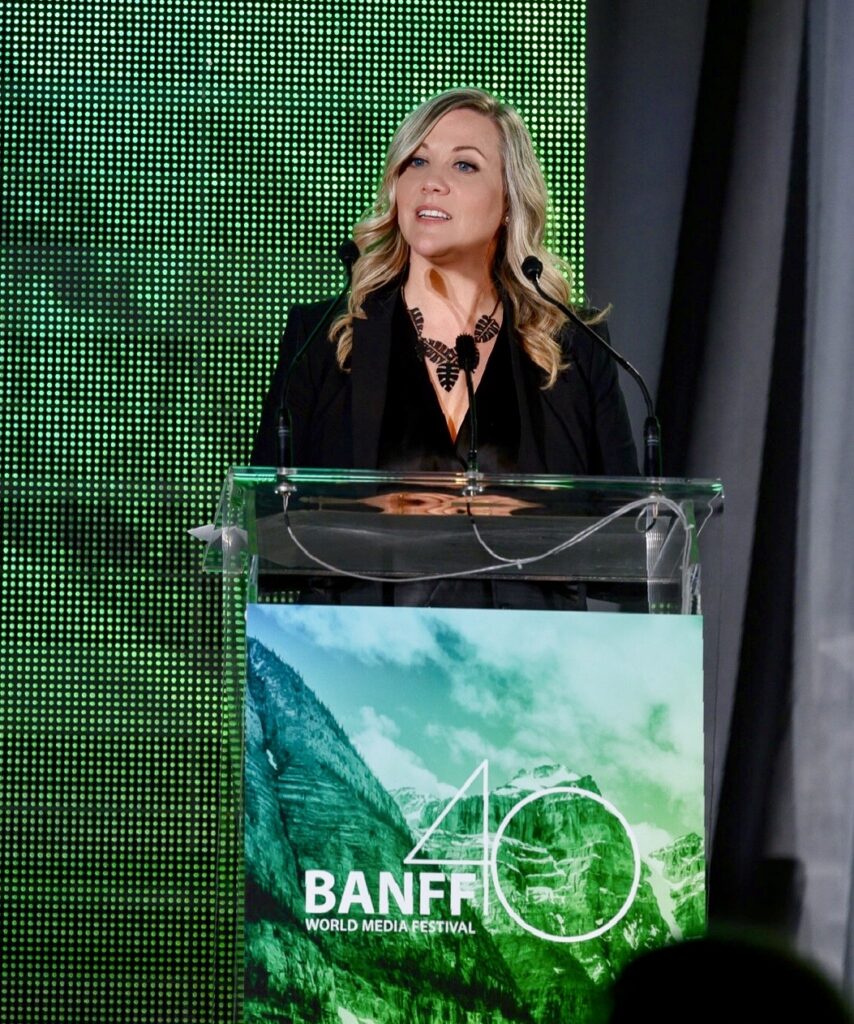
Photo Credit: Kristian Bogner
Asis Sethi: Wow! You went through development, you had production experience, you also did distribution, and then you did international markets. It was an obvious fit for you when it came to Playback and BANFF. You’ve spent a lot of time in global markets; have you seen the industry evolve over time, especially when it comes to becoming very internationally developed or driven, especially with certain Canadian productions now in huge demand.
Jenn Kuzmyk: I’ve seen a lot of change, I’ve been doing it for a while.
That is one of the through lines; every job I’ve had has had a big international component to it. There’s really no production, film, or TV series of scale that is made without international financing. There’s always an international piece, whether it’s a pre-sale, or rights against international distribution. In terms of changes on the co-production front, I was doing development financing back in 2008 to 2015 and we did many international co-productions with Germany, the UK, co-production with a U.S. pre-sale and a Canadian broadcaster, that was really common. I think we had 7 partners between pre-sales and co-productions in one project to finance it. Canadian producers have always done that, as far as I’ve known.
Asis Sethi: I see elements of being a psychiatrist that you bring to your work. I still remember the two programs I was a part of, especially BANFF Spark, you were in every session, and you showed compassion; there was so much dedication when it came to supporting women and supporting BIPOC creatives. So I can now see how you bring that to film and television.
Jenn Kuzmyk: That’s nice. I was well prepared to be dealing with a lot of the ridiculousness in our industry (chuckles). That’s very kind of you to say, but I think it’s not just me; it’s our whole team that has that perspective. We have the festival, we have a platform to do things like that, and why wouldn’t we if we can, and we can, and we do.
Asis Sethi: Coming from an educational perspective, when you think about a Canadian project which needs to travel, what gives a project that global appeal?
Jenn Kuzmyk: I’ve heard this from many commissioners, distribution executives, and studio heads. The worst-case scenario is when you’re trying to make a project fit. And it doesn’t really fit, and you’re trying to inorganically draw in stories or characters or locations. From international partners, that doesn’t really make sense, and it has to make sense in order to do co-productions, both creatively and from a business standpoint, and there are ways to do that.
The thing we always hear is that local is global, right? It sometimes can be pretty challenging when you’re in a meeting and the executive will say, well, we want universal stories, but we want hyperlocal. And trying to figure out where your project might fit on that continuum is about understanding the market need. Most local stories are often the things that are the biggest hits. ‘Heated Rivalry’ is a very local story about hockey in Canada. It’s international hockey too, but it is a love story that has not been told in mass media in that way. That’s not something that was tailored for international sales necessarily, but it’s that story that needed to be told. And so, I think it’s really just a question of being true to the project, and excellent work is excellent work, and stories that travel don’t need to be universal; they can be so very personal and so very local, as long as they’re well told and, and have something that people connect to.
It’s such an international industry. With the pandemic, I think we all started watching shows that have subtitles in North America. People all over the world have done this for a really long time, either dubbed or subtitled. I will mostly credit Netflix with this, that we all started watching shows that are not in the English language, and they don’t speak the language that they’re in, and I think that has been incredible. That has opened up so many options, opportunities and global partnerships with shows. One of my favorite ones that I’m watching right now is called ‘Drops of God’ and it’s on Apple. And it is in Japanese, I believe, French, and English. All of those languages are spoken in it, uh, and even other European languages. It just flows from one language to the next, and then there’s subtitles, and then there isn’t, and I think that’s amazing.
Asis Sethi: That is brilliant! And having it on a platform where global audiences can have that reach and watch it. I’d love to talk about the Banff World Media Festival. I’ve been fortunate enough to attend it twice. The country of honour this year is Spain, which is so fascinating because they have an attractive tax incentive. What other incentives attracted you to have Spain this year as a guest of honour?
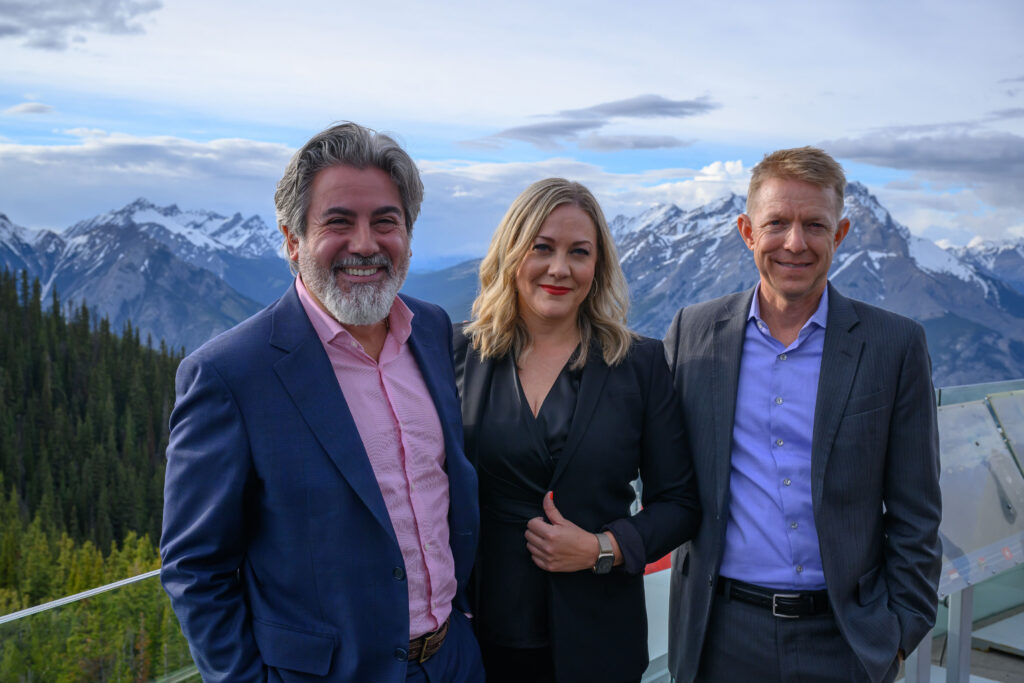
Jenn Kuzmyk: Spain in the past few years has really risen to the top in terms of some of the films and TV series that have come out of the region, and I think that’s super exciting. We have a significant Spanish-speaking diaspora here in Canada. They’re a European territory that has been doing incredible things, and I think there’s more opportunity to be doing partnerships between Canada and Spain for sure.
Credit: Kristian Bogner
Asis Sethi: Absolutely! And what else is new this year at Banff? What should attendees look forward to?
Jenn Kuzmyk: All the things that everyone loves about Banff are still going to be true about Banff. First and foremost, it is an intimate gathering of people who are at the top of their game in whatever they do. It is truly not like any other conference that I’ve been to in the world, and I’ve been to most of them in our industry. In many ways, it’s much more relaxed. There’s a lot going on but it really does help cultivate quality relationships. It’s a very special place, and I think that does play into how people feel when they’re there, and how they react and interact with each other. The festival is going to be what it’s famous for, which is curating a really unique group of thought leaders, business leaders, and creative talent.
We have international delegates. With our Rockie Awards, we have 45 countries that entered. The festival sees people from all over the world attending, and that’s special. We have significant U.S. attendance, UK attendance. We are going to have a European commissioners panel and a Co-ProConnect program. We have facilitated networking; our team facilitates close to 1,300 opportunities for people to meet, either in groups or together, or one-on-one. In addition to that, there’s another 25,000 meetings that take place over those four days.
One exciting thing that we’re doing on the final closing day is Fandom Wednesday. This year it’s fandom and community. We’ll have a couple of panels and a networking event all around fandom and building community that’s looking at existing IP. The big projects that are hitting now in the direction of the entertainment industry are with social media integration and all of that is hyper-focused on fandom. It is always part of the conversation, whether it’s brands, entertainment properties, unscripted, social; it is all about interaction, community engagement and fandom.
Asis Sethi: That’s very exciting. For anyone who’s attending for the first time, what is your one piece of advice that they should really take into consideration when attending?
Jenn Kuzmyk: I have a few pieces of advice. One is to book your hotel early, because the hotels are the most challenging thing sometimes at the festival. It is one of the top tourist destinations in the world in high season, and we joke, but it’s like the Hunger Games of hotels. Secondly, if you’re just starting out in the industry, definitely be enthusiastic and friendly. Go into it with a plan and understand if there are people that you really want to meet; do your very best to secure meetings before the festival. If that works out, great. If it doesn’t, don’t be too disappointed because sometimes it takes multiple industry events to get to know people in order to book meetings.
I never like to say this, but manage expectations a little in terms of going in and expecting to get a meeting with a studio boss or Netflix, or Crave, or top CBC execs. There are only a few people, and they only have so many meeting slots, and it’s hard, which is why we do try and do those programs but the great thing about Banff is there are so many opportunities to meet people, even organically at our events, at the Rockie Awards, while hanging out, getting a coffee, in the elevator, up the gondola, whatever it is. I would say prepare, plan your time there, and wear comfortable shoes.
Asis Sethi: Yep. That’s a big one. That was my biggest mistake I made the first time – I wore the wrong shoes.
Jenn Kuzmyk: Yeah, it’s a castle, we’re running around it, so dress appropriately. It’s mountain weather, it can be sunny one second and a blizzard the next, so bring layers. Those are practical things.
Our programmers make sure that the people that are speaking are absolute authorities, they have a global outlook. It is possible to go to Banff and just go to the sessions and come away with such a fulsome understanding of where the industry’s at, who the players are, both in Canada and internationally, how deals happen, how they work. For someone who’s emerging, I would say lean into that, lean into the networking pieces, try and set some meetings. If it happens, great.
Sometimes you’ve got a project, and there can be such a focus on that one project. Most people have a slate. If you have one project that’s well-developed and has some third-party funding in it, fantastic, that’s becoming real. You have a bunch of other ideas, you have some one-pagers, you have a couple of sizzles; the idea is to work towards having a slate of projects.
If you’re in a meeting with somebody, and you pitch your big project that you have, and they say that’s not really for us. A fast no is always the second-best answer. You’re just walking away from that meeting, having formed a relationship. At least you know that person, and then for your next project you can call them and say we had a great meeting, and I’ve got a new project.
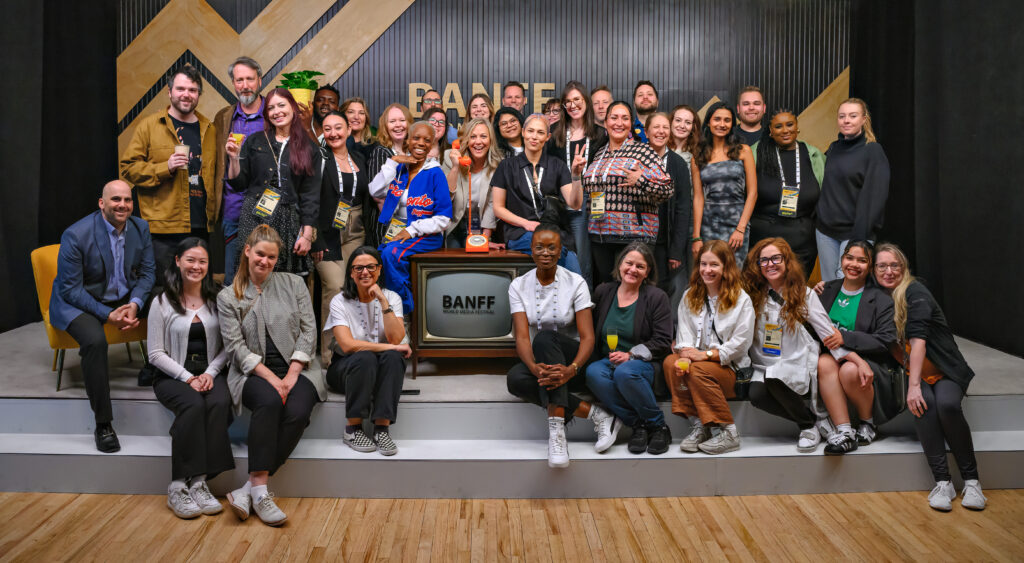
Think about being really focused on building relationships, because that is what Banff is the best at.
Photography by Kristian Bogner
Asis Sethi: Many young women look up to you as a leader in the industry. What does strong leadership look like to you in our business?
Jenn Kuzmyk: Thank you. I’ve been doing this for decades, and you always think that people know everything, and maybe they are a few years ahead of you. We don’t; we’re still figuring it out in many ways ourselves but I have learned, especially in this role, that I’m not great at everything, but I have learned how to work with people, how to work with teams.
In many ways, there are a few things that I try and I don’t always achieve, but one of them is “Clear is Kind” (Credit due to Brené Brown on that). People just want clarity. They want to know where they stand, they want to know what the direction is, they want to know what the decision is. We run a live event with people flying in from all over the world, and we’ve dealt with the pandemic, and threats of wildfires, and industry consolidation, helicopters in and helicopters out, there’s a lot that goes on. It’s just like a production, there’s a lot that’s happening, and you do have to make decisions quickly and be okay with that and sometimes there’s a bit of decision-making fatigue, but you have to really rely on your team. They’re giving you the information that you need, trusting them to make decisions, and being okay if it’s the wrong decision. Sometimes being okay with, for lack of a better word, failure, because then you learn. I’ve learned to be kinder to myself.
I learned how important relationships are. There are a lot of great people in this industry. We didn’t choose to be in real estate, or selling cars, we chose this. And why do we choose this? Well, probably at some stage in our life, we were sitting in a movie theater, or sitting at home watching a TV show, and thought, that’s a career, I could do that. And so we do it. It is a really great industry and community.
Asis Sethi: I think we need some kind of craziness in ourselves to be in this industry and be sustainable in the industry for a very long time.
Jenn Kuzmyk: Yeah, it’s where many of us are creative people and that actually leads to why we do some of the programs we do, which you’ve even participated in. As many of us come from an arts background, we weren’t necessarily trained in how to run a business.
Asis Sethi: There’s a lot of conversation happening around Canada not having a star system. What are your thoughts on it, and how do you think media and markets like Banff can help strengthen it?
Jenn Kuzmyk: I have a lot of thoughts on this topic. I was a journalist a few decades ago and then I was writing about why doesn’t English Canada have a star system, and we’re still talking about that, which is really frustrating. But the other thing is, we do have a star system, and in French-speaking Canada, in Quebec, there is a massive star system, and it works well, and that is a culturally cohesive region and it’s a little easier there.
But I would actually say we do have a star system. We’d already talked about the ‘Heated Rivalry’ environment. Right now, at least one or two of the talents in it that are Canadian, are stars. Mae Martin, Andrew Phung, lots of amazing actors, and we’re talking about on-screen talent because we certainly have directors that are stars, and writers that are stars, and producers that are stars.
When you look at YouTube and TikTok, there are Canadians that are globally famous and half the time people don’t know that they’re Canadians. So I think we actually do have a star system. I think that our domestic press does a great job. I honestly think it’s somewhat of a generational thing. If you’re talking to Gen Z, they could probably name loads of Canadian TikTokers and YouTubers. These creatives have massive social media followings. So I think we do (have a star system), we just need to talk about it.
What’s the measure of success? For the Canadian Screen Awards, there will be people on the red carpet who are amazing actors, and so is it a public consciousness thing? Do you need to be able to go down the street and say Supinder’s (Wraich) name and have people know who she is? Well, people do.
I think there is currently this moment of Canadian pride and the world is looking to Canada in many ways, and I think this is a time of opportunity for Canadian talent. I think much of the world is quite warm to Canada and Canadian things.
So, how that comes to fruition at Banff; we are an international festival, it’s a world media festival and we have lots of international content, but we know we’re in Canada, and we love that, and we want to make sure that we highlight Canadian projects, Canadian talent, the Canadian industry, and so you will see that as part of the festival, as part of the Rockie Awards. It’s something that we are very committed to, and even on the Playback side, it is about the Canadian entertainment industry.
Asis Sethi: After everything that you’ve accomplished so far, what still inspires you to keep pushing forward in the industry?
Jenn Kuzmyk: It’s a fun industry at the end of the day. I love the entertainment industry. I love film, TV, and digital media. I love creative people, and working with creative people, I have created content before and I love that. I also really like helping other people make their stuff happen and we do that in a really big way at the festival, and also with Playback, and with our programs that we do.
I am fortunate to have this job. It’s a cool job. At the end of the day, I joke with our team that when it feels like a lot, our job is to throw a party in a castle, in the most beautiful place on the planet. That’s our job. We are not saving lives, but we are changing them.
I love the festival. I’ve been going to it since I was in my 20s and it is a really unique thing. I think it’s important, and it should be supported by our media industry, by our governments, and by the people that work in the industry, because today I’m feeling very optimistic.
There are a lot of things of concern happening right now, and I know it is not an easy time. This is a time of massive transition. The mergers and consolidations that are happening in Canada, the US, and internationally have affected people in many ways. There are lots of changes and layoffs, and changing of priorities and mandates that are making things really difficult, not to mention the rise of social media and the challenges that AI is throwing at us. But if there’s one thing that I have learned, it is that our industry can adapt. People who are in the business of telling stories, there are three things that I know to be true that these people know in times of challenges. One, humans will always be driven to make things, in our case, art, or entertainment, or self-expression. It’s just gotten easier with cameras and phones, etc. Two, along with the human drive to create, we have a desire to watch things, regardless of whether it’s on a phone or on a screen in our living room. Three, people are always going to buy things. We are consumers. There is an economy around this, and yes, that’s changing massively. But we are consumers of things, and that is a piece of the pie, and if those 3 things are true – that people will always make things, people will always watch things, and people will always buy things, it will get figured out.
Asis Sethi: Thank you so much, Jenn, for this wonderful conversation. And it’s always great to be in your presence. You’re a humble human being. When you meet certain people, you feel this positive energy. I’ve always felt that with you.
Jenn Kuzmyk: I’ll say, likewise, and I’m so excited for you and all of the projects you are working on.
Asis Sethi: Thank you!