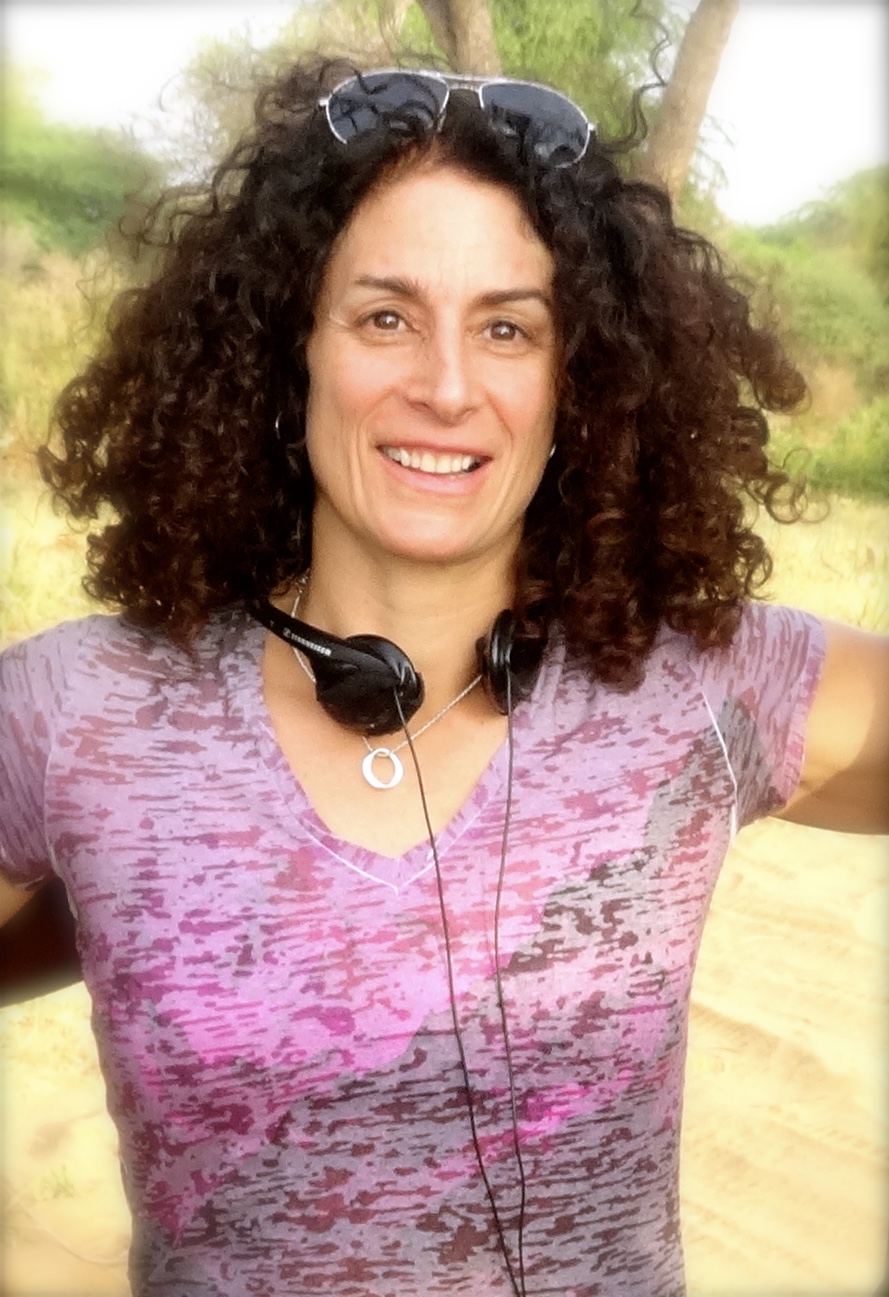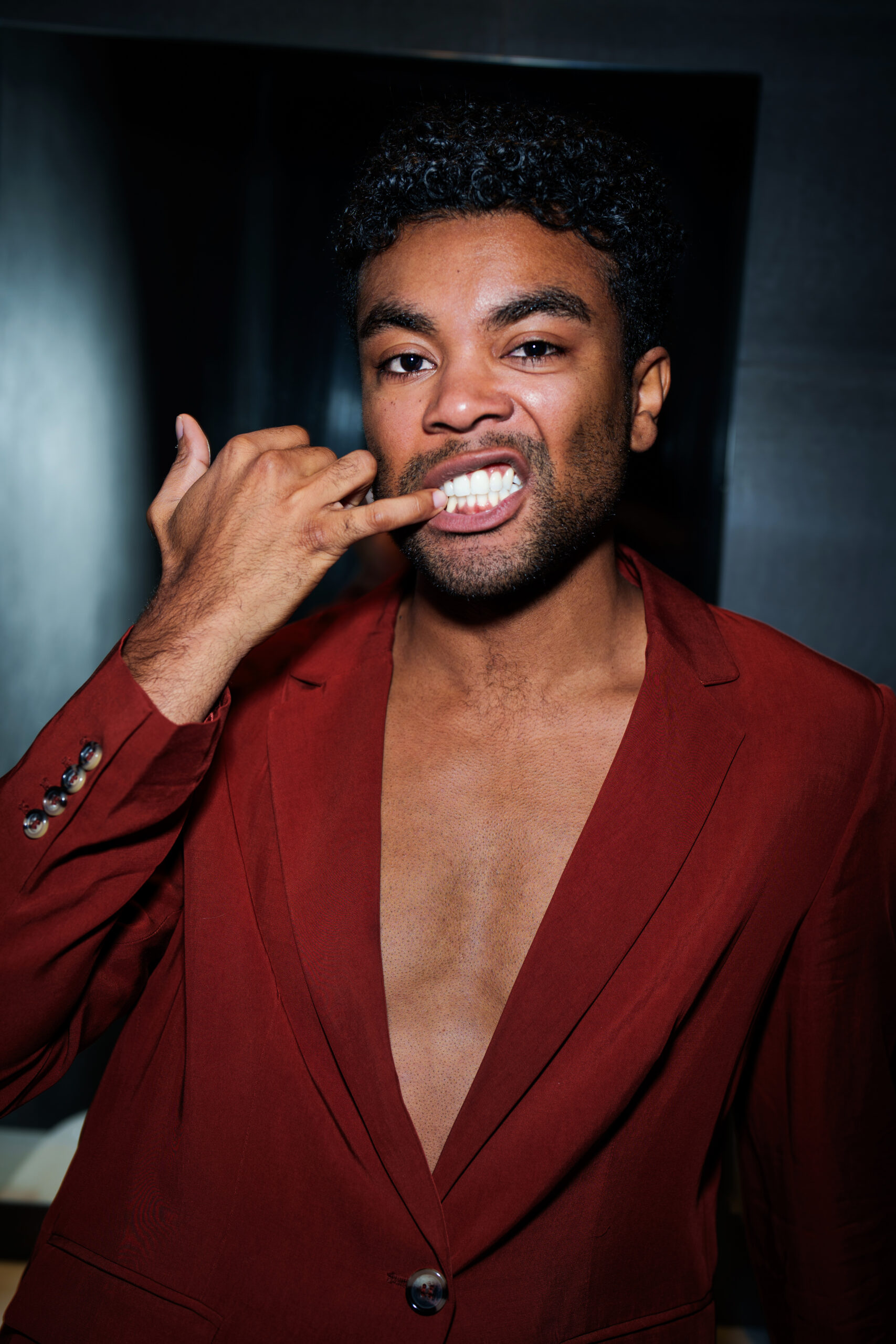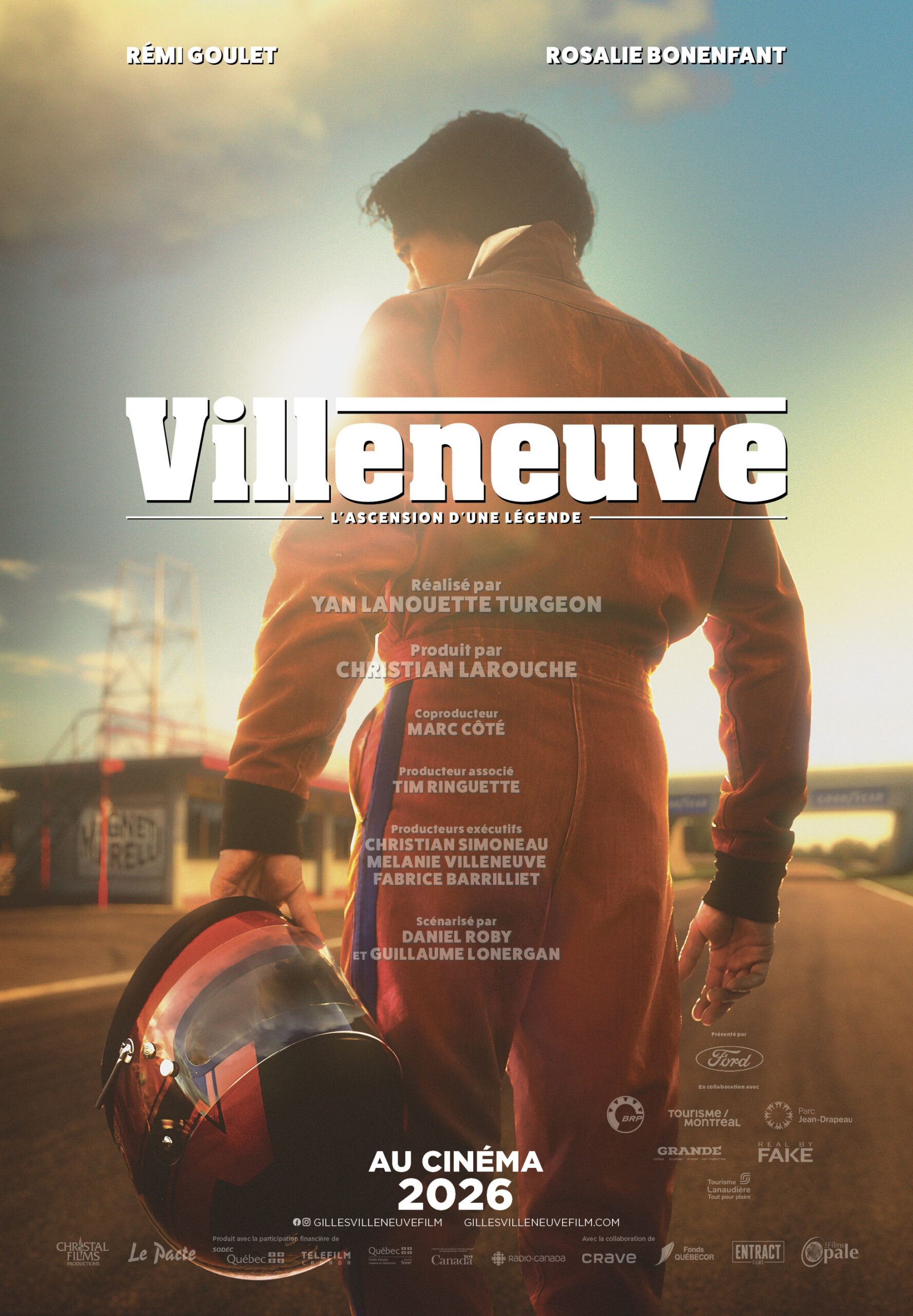
From a small-town Quebec boy racing snowmobiles to becoming one of Canada’s most celebrated Formula One drivers, Gilles Villeneuve’s rise was anything but ordinary. Directed by Yan Lanouette Turgeon and written by Daniel Roby and Guillaume Lonergan, ‘Villeneuve: The Rise of a Legend’ chronicles the career of the racing icon, played by Rémi Goulet, while also looking at the family and relationships that helped fuel his extraordinary journey. The film traces Villeneuve’s path from modified Mustangs and snowmobile races to his Formula One debut and eventual partnership with Ferrari, capturing both the fearless determination that made him a legend and the sacrifices that came with it. At the heart of that story is his wife Joann, played by Rosalie Bonenfant, whose unwavering support became an integral part of Gilles’ success. During the Toronto International Film Festival, Goulet and Bonenfant spoke to Kavita Musty about bringing the legendary couple to life, filming the high-speed racing sequences, stepping into the shoes of real people, and discovering the deeply personal story behind the legend.
‘Villeneuve: The Rise of a Legend’ was the Closing Night Gala film at the 51st Toronto International Film Festival.
Kavita Musty: First of all, congratulations. I will start with a fangirl moment. I just watched the film. It was the first film I watched during TIFF, and for about 10 minutes after the screening, I just couldn’t shake it. I was in my feelings. It was such a beautiful film. So, congratulations!
The first question is for Rémi. So, you went from racing, stealing, and crashing your dad’s car, to the Skoda, to the snowmobiles, to the McLaren, to the Ferraris. Tell me about how you got behind the wheel. Which cars did you actually drive? What was the filming process for the races themselves?
Rémi Goulet: I drove everything! Of course, I had the stunt double and everything, but I also had the opportunity to drive the cars. The shots that you can see me in, it’s me. I’m driving. I’m driving for real. So, that was pretty nice. That’s the thing that I wanted to do the most. When I got into Gilles’ shoes, I enjoyed it a lot. I like speed in life. My first car was like a little Acura Integra.
Rosalie Bonenfant: Your first car was an Acura?
Rémi Goulet: Yeah, an Acura Integra.
Rosalie Bonenfant: That’s like a mom car.
Rémi Goulet: No, no, it was like a little rascal car. (chuckles)
Kavita Musty: Was there a favourite moment in the film? A favourite car? A favourite scene?
Rémi Goulet: With all of the cars, even the F1 and the one from Atlantic, they were all the same cars. We had a couple of them, and we were just switching up the body on it, but it was all the same inside. So, there was no preferred one.
But, I mean, one scene that was very cool to film was the one when Gilles built the car, and he goes on the road where the police officer stops him. It was cold. We were shooting, and it was November. But just driving a car like that on a regular road, not on a closed circuit, it was sick!
And I remember that there was a car in front of us that was doing the speed check. Our director, Yan (Lanouette Turgeon), rode in the car with me as well. I remember I was driving, and after the shot, he came to me and asked, “So, you were driving fast?” I was like, umm…? Because, you see, there’s no speedometer in the car. You can’t see how fast you’re going. Turns out we were doing 100 kilometres an hour. It was like, oh shit!
Kavita Musty: Wow, no speedometer? That’s crazy! (laughs) I would like to turn it over to Rosalie. First of all, just the way that you portray your emotions through your eyes, I was in love. I’m an actor as well, so there was that extra little bit of love there.
Rosalie Bonenfant: Then I really take that compliment!
Kavita Musty: Yes, you must! In the film, your character Joann and her husband Gilles are almost moving like one body. You are so close. You understand each other so well. And yes, there are a couple of blowups here and there when you come home, and you find out that the house is no longer yours. But you come around so quickly.
Tell me about understanding yourself before you played the character, the dynamic between you two, and how you can just believe in Gilles so much, whereas you yourself have such a strong identity in the film. You know yourself that you are not a side character. And Gilles, he is nobody without you. You were fully there supporting him, and you were very quick to get over certain humps and be like, “All right, this is the next thing we’re doing.”
Rosalie Bonenfant: Joann was really like that. I was lucky enough to meet her.
Kavita Musty: Oh yeah?
Rosalie Bonenfant: She told me there was no other choice than moving on, and I think she’s holding back a lot because she has to be the backbone of the family and has to make sure everything goes round. But she’s not a victim. This life wasn’t imposed on her. I mean, she loved him. She was with him. And she was, I think, very rational.
She was thinking, I’m not gonna be able to stop this crazy guy from doing what he does. So, what can I do to make it easier for the kids and me? And I think this was always in the back of her mind, thinking, it’s not my first choice, but this is what I’m in right now. So, let’s make the most of it.
And I think this is what went through her head when she decided to follow him and say, “Let’s go all in.” This is my life now, and I’m not gonna have a pity party for myself.
Rémi Goulet: She was so avant-garde. Seeing an F1 driver, just a car driver, being this close to the family, having the family there, living on the circuit, and it was great to see that part. It was not something we would see then, and it’s not something we see nowadays either, and it was thanks to Joann.
Rosalie Bonenfant: It might sound like a humble brag, but knowing I’m not really Joann, I think I can say it for her. I think without her, Gilles would maybe not have gone this far. He was truly supported at all times, and I think she plays a part in his success as well.
Kavita Musty: A huge part, because there are points where you hit a ceiling.
Rosalie Bonenfant: Yeah.
Kavita Musty: You can’t go any further unless you have your family’s support, your wife’s support, your father’s support.
Rémi Goulet: Yeah.
Rosalie Bonenfant: We don’t want to antagonize her as well because, no, she’s not a villain.
Kavita Musty: My God! No!
Rosalie Bonenfant: Who hears that in a lifetime? “Honey, I sold the house.”
Rémi Goulet: Gilles’ part in that, I feel like, was his ability to make people want to follow him. He had so much charisma and such a strong personality that people just wanted to follow him.
So, being like this small-town boy, with all the people that rallied behind him, it was a huge part of his success. I think it’s one of the great things when it pays off, making the people you love, that were there for you, proud.
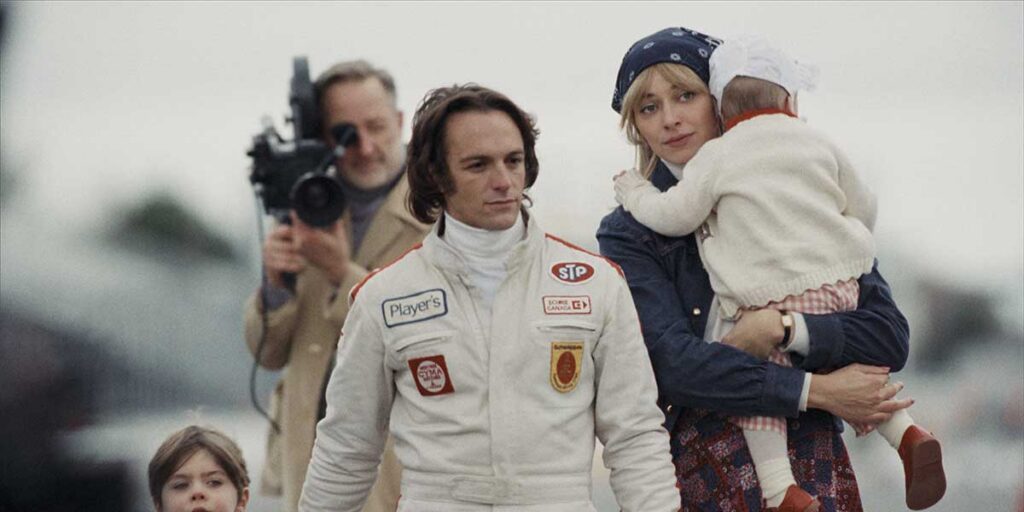
Kavita Musty: Definitely. So, talk to me about charisma, the body language, the gravitas, the stillness, because there’s a lot of that. So, we’re off the racetrack now. How did you bring Gilles to life? Because I know the director, Yan Lanouette Turgeon, was saying that you look very similar, but there is more to playing the character than the visuals.
Rémi Goulet: Yeah, I mean, I didn’t want to do an impression of him or anything. That’s something we talked about early on. So, it was mostly about getting that essence.
Sometimes you try, and you end up trying a little bit too much. I wanted to find a way that worked and figure out why he thinks the way he does. And then it just came to me. It’s all simple. He just loved it.
It was all about loving what he was doing, loving his family, loving the sport. He just wanted to push it and keep pushing.
And after that, of course, it was a lot of listening to Gilles, watching videos, and everything. I was just trying to catch a little bit of that essence and that charisma.
It’s something that you can’t try to play. It’s just like, you gotta go along with this scenario and trust all the actors around you. It’s not something that you can just be. It has to come from how the people perceive you and treat you as well. So, it also comes from all the other actors.
Kavita Musty: It also comes from the writing.
Rémi Goulet: Yeah!
Kavita Musty: And it comes from your co-actors.
I’d love to know what was a difficult scene or the most challenging one for you to film.
Rosalie Bonenfant: Oh, I think the most difficult part is not even a big emotional scene. I think it was a very technical one we shot in November with the rain rig, so we had a bit of a delay. We had to shoot out some of our summer blocks in November.
It was very cold here in Montreal, and we had to pretend it was summer. The props guys were dusting off the snow on the car, and we had to go about our day in skirts and all. And that day, I remember being very cold. It was technically difficult to speak because our lips were straight-up trembling.
Rémi Goulet: I was holding hot shots, hand warmers, on my nose. It was just crazy, and there was a rain rig, and the rain rig was forming like icicles. Icicles all around us.
Rosalie Bonenfant: I didn’t see it in the movie either.
Rémi Goulet: No condensation while we’re speaking because of the special effects, all the costumes and everything. They did a great job.
Rosalie Bonenfant: But I think the most satisfying for me was one of the final scenes of the movie with Ray, played by Joe Camden, the comedian.
He said, “This is a once-in-a-lifetime opportunity,” and when he said his line, I felt it as an actress as well because it truly was a once-in-a-lifetime opportunity for me.
I felt like I did not play much in that scene. I just felt it. It was very satisfying. You know, I couldn’t stop crying after. Like, I went home and was like, this is not my emotion, but I carried it for so long.
We met five years ago, when we got cast, so I grew to be proud of him equally as a mom and a wife. I’m just so happy for him.
Kavita Musty: Wonderful. Well, I just met you guys, but I’m very proud of both of you. You did an incredible job. Thank you so much for your time!
Rémi Goulet: Thank you so much.
Rosalie Bonenfant: Thank you.