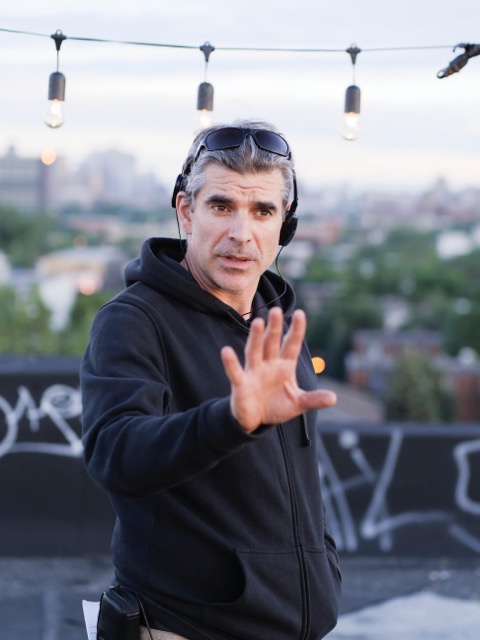
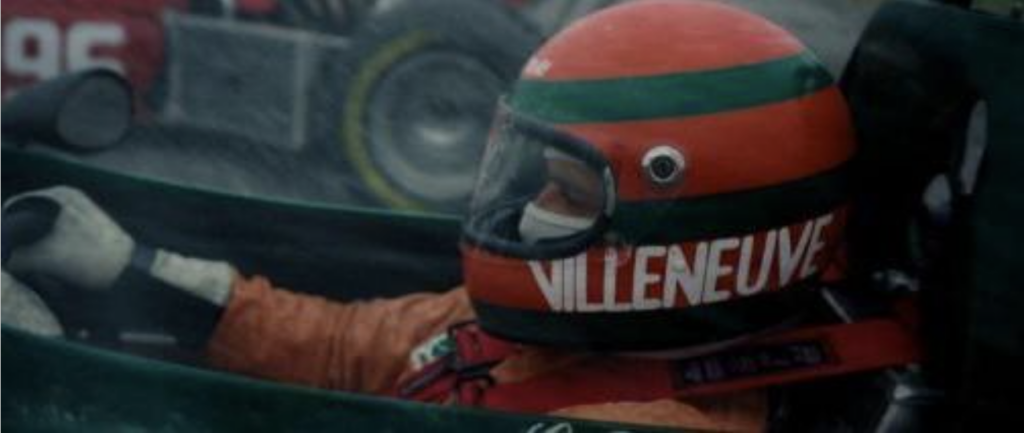
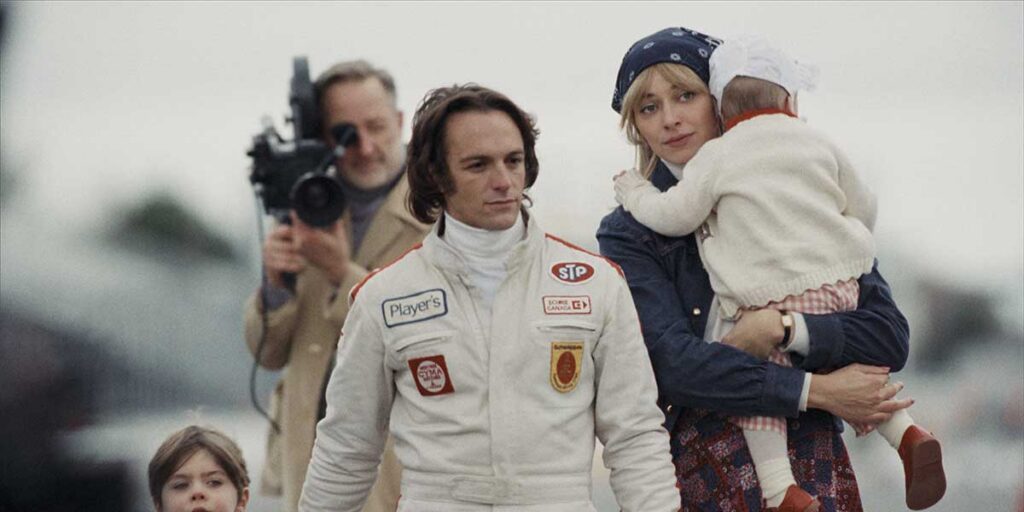
For director Yan Lanouette Turgeon, ‘Villeneuve: The Rise of a Legend’ is not simply a film about racing. The Toronto International Film Festival (TIFF) closing-night film looks at the determination, sacrifices, and relationships that shaped Gilles Villeneuve long before he became a Formula One icon. Starring Rémi Goulet as Villeneuve and Rosalie Bonenfant as his wife, Joann, the biopic follows the Quebec racing legend’s journey from humble beginnings and snowmobile racing to the world of competitive motorsport.
Speaking with Kavita Musty at TIFF, Turgeon opened up about the extensive research that went into recreating Villeneuve’s world, including access to family photographs, archival footage, and personal details about the racer’s life. He also discussed the challenges of bringing the racing sequences to life without an F1-sized budget, filming the movie across three separate blocks between 2024 and 2025, and working with Goulet to capture Villeneuve’s physicality and spirit without turning the performance into an imitation. At the heart of the film, however, is something Turgeon says became deeply personal to him: the quiet partnership between Gilles and Joann, and the sacrifices they made together in pursuit of his dream.
‘Villeneuve: The Rise of a Legend’ was the Closing Night Gala film at the 51st Toronto International Film Festival.
Kavita Musty: Thank you so much for taking the time! So, the first thing I noticed when I watched the film is that it is stated that this is not the final cut. This is just for the TIFF audience. I want to know, first of all, what made you feel like the film is ready to show to an audience to begin with, but at the same time, what’s incomplete about it?
Yan Lanouette Turgeon: Here’s the thing. When we were offered our film to be the closing film at TIFF, we had to get together as a group and talk to each other and figure it out. Obviously, we’re going to accept. This great big deal. So, we got together as a group, and we were like, “Okay, can we make it? Can we get there in a decent enough shape to make a good impression?” So, we went for it. We dove in.
Kavita Musty: What was the timeline?
Yan Lanouette Turgeon: We were offered this in mid-July. So, we had like a week to decide. And after that, we sort of just dove into it and tried. Well, there were a few things here and there. The movie is still at a sound-mixing stage. There are a few visual effects in the first version. There is still a bit of work to be done. But then again, it makes the screening unique. It will never be shown again. Not this version of the film.
Kavita Musty: And you will also attend the premiere tonight. So, you get to gauge the audience’s reaction as well by being in the room.
Yan Lanouette Turgeon: Totally. Usually, we have test screenings. But test screenings aren’t necessarily, you know, TIFF!
Kavita Musty: So true! What a platform.
Kavita Musty: The film is a biopic, which was the biggest seller for me. This is a real story. I’d love to know: how did you go about making sure that the story is being portrayed as authentically as possible? What was the research process?
Yan Lanouette Turgeon: Yes, a ton of research. The family was there. We were in touch with Melanie Villeneuve. Her door was always open for us. If we had questions about anything, like what type of music he was listening to, what car he drove, or what his hobbies were and stuff, we had access to that.
Kavita Musty: Any video footage you had access to?
Yan Lanouette Turgeon: Yeah, a lot of footage, actually. We got pictures from the family. Pictures from when Gilles was a young man and how he got through the different stages of racing. We had beautiful references of what their house looked like, and how they decorated it, and what type of trophies he had.
We dove right into it. He was a fascinating character to study. He was a fascinating character to explore. I enjoyed it immensely. And you’re always finding new stuff. And whenever I told people that I’m working on this film, people were like, “Oh, dude, you gotta hear this!”
Kavita Musty: What was the most interesting story then that really took you by surprise?
Yan Lanouette Turgeon: Well, so obviously you saw the movie. One thing that surprised me is the story about how he decided to try his car in the streets of Berthierville. You know, like, to me, that was just nuts. And how the police actually stopped him. I don’t know if it’s true, but I love it. So…
Kavita Musty: So it’s in there.
Yan Lanouette Turgeon: So it’s in there. The police stopped him. And they knew Gilles because he had done so many crazy things before in his car. And they were like, “What the hell are you doing?” And he’s thinking, “Well, I have to try my car.” They’re like, “Well, tell us next time. We’ll close the streets.”
So, I just thought it was awesome. And it needed to be in there.
Kavita Musty: Tell me about the most difficult part of the film to shoot. What was the most challenging? It could be technical. It could be emotional.
Yan Lanouette Turgeon: There are many different stages. I think the most difficult part wasn’t actually shooting. It was the few financial difficulties. It was a hard process. The difficult parts were in between shoots.
Every time we would start shooting, we were really well prepared. I mean, the races were a challenge, right? Obviously, because we needed to find creative ways of shooting our races because we didn’t have the F1 budget, or we didn’t have a Ford v Ferrari budget. We were far from there. So, we needed a way of doing things creatively.
And so, with our VFX team, we designed our races, and we made sure that we were going to have everything we needed to construct those scenes. Those were really technical. They were a technical challenge.
And then the most important thing to me was to be true to Gilles’ spirit. There was always that tone that you need to take and grasp. And you don’t want to do too much, and at the same time, you want to enhance the persona. So, for me, I wanted to be right on the tone. That was also a challenge. And the shoot went on for such a long time.
Kavita Musty: So, did you do it in blocks?
Yan Lanouette Turgeon: Yeah, there were three shooting blocks, and so you want to always land on your feet whenever you’re starting again and be on that same tone.
Kavita Musty: And so, how much time went in between those blocks?
Yan Lanouette Turgeon: The first block was in February of 2024. The second block was in August 2024. And the last block was a year later, in October 2025. So, yeah, it went for a long time.
Kavita Musty: Well, you can’t tell at all. The continuity of the emotions, of the story, of the arc. Everything is there.
Yan Lanouette Turgeon: Good.
Kavita Musty: I know that you had footage and you had pictures. But how did you specifically work with all of that and with Rémi Goulet to capture Gilles’ driving style, his instinct, his body language? What was that process?
Yan Lanouette Turgeon: Well, the first thing that we talked about with Rémi was that there’s such a physical resemblance there. You know, it’s as if he’s born to play Gilles.
The first thing that I said to him was, “I want you. You’re going to have to just be Gilles. Don’t try to imitate him. You look like him.”
At some point, we needed him to wear a driving suit, but they weren’t made yet. So, he wore one of Gilles’, and it fit perfectly. He’s the same stature, same build.
The one thing that we made clear to him is just be as honest as you can, and it’s going to sell. You have as much as you need in terms of research. We always had our noses in pictures of him or movies of him.
And as much as you need to do those to be like a sponge for Gilles’ world, you also need to step away and just live the moment as you think it needs to be lived.
And so, Gilles’ story became our story. The financial struggle, everything that happened on set, somewhere along it all, we all became Gilles Villeneuve at some point.
Kavita Musty: That was shown beautifully, by the way. This is not even a question. It’s just a moment.
I’m an actor as well. And as you said, all of us, we’re going through a certain journey, and sometimes it gets really tough. But the way that he went about his struggles, it seemed it was so silent in the film. But it was just so resounding.
Yan Lanouette Turgeon: Ah, nice.
Kavita Musty: Those sacrifices, those quiet decisions. There weren’t, like, these big speeches. He just knew what he wanted to do. And that’s it.
Yan Lanouette Turgeon: He became an inspiration to me too. In many different ways. You know how, at some point, you need to put all your chips in and go all in. That’s what he did.
I really love how he went all in and how he just went for what he wanted. I really like how they’re a duo. They’re a team.
You can be as perseverant as you want, and you can have all the determination in the world. But at some point, your partner is going to have to make you see, and they’re going to have to push you in the right direction. And that’s what she does.
Because if she wasn’t there in 1975, he wouldn’t get where he got to. And then perhaps nothing else would have happened for him. But he did because of her.
I always enjoyed their complicity. It’s a silent complicity. Sometimes it’s just a look.
Kavita Musty: Beautiful. Well, thank you so much. It was such a pleasure. I am honestly saying, when I watched the film, I couldn’t shake it. I was very emotional. That final scene where he’s doing this in front of all of his supporters, and he’s, what, 10 seconds ahead or something?
Yan Lanouette Turgeon: Yes, he was 10 seconds ahead of the best F1 drivers in the world. That was amazing.
Kavita Musty: Well, thank you so much for your time.
Yan Lanouette Turgeon: Thank you as well.