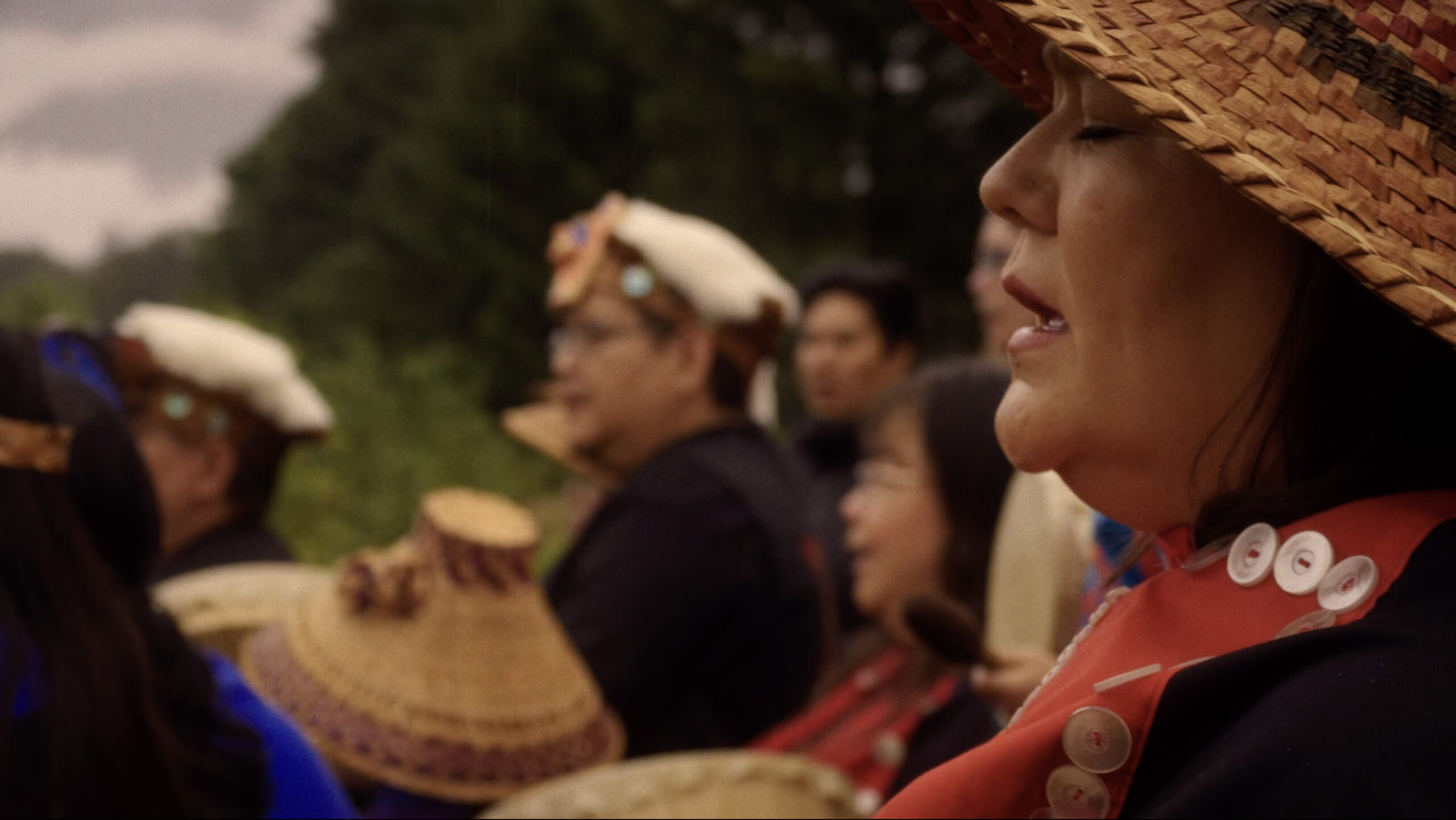
Fresh from winning the Audience Award at SXSW, Canadian Documentary Ceremony is a story of Indigenous resilience and awakening. Ceremony centres around a remote Nuxalk radio station in British Columbia’s Bella Coola Valley. The story unfolds when the radio station reports on the disappearance of the ooligan, a sacred fish, which uncovers a deeper history of Indigenous struggle and survival. Through the Nuxalk radio station, voices from the community begin tracing what happened to the fish that once was so plentiful. They fed families, supported trade, and marked every year a season of renewal. What unfolds points to colonial violence, the exploitation of natural resources, and the disruption of ecosystems.
In this conversation, with Shwayta Sharma, Director Banchi Hanuse opens up about the importance of this story, approaching the retelling of a painful history with the responsibility of authentic storytelling.
Ceremony screened at the Hot Docs Canadian International Documentary Festival on April 30th.
What called you to tell this story, and why did it feel important to bring it to screen at this moment?
I made this film because my community asked me to tell this story. The process began in 2014 and once I started, it became a responsibility I couldn’t shake. I felt accountable to Nuxalkmc and to our ancestors to bring forth what wasn’t possible to be brought forth at the time, to tell our truth, and to help heal our past. It was important to bring it to the screen at this moment because it was as though the universe felt after 12 years, it, and we, are finally ready.
“I felt accountable to Nuxalkmc and to our ancestors to bring forth what wasn’t possible to be brought forth at the time, to tell our truth and to help heal our past.”
How did the disappearance of the ooligan become an entry point into a much larger story? How did you approach representing absence, particularly something as significant as the ooligan?
It felt as though I couldn’t tell the story of the ooligan without telling the story of ourselves. What happened to the ooligan is not an isolated disappearance. It reflects broader patterns of colonial violence, environmental disruption and extraction. The absence of the ooligan becomes a doorway into everything surrounding it and into understanding how interconnected these losses are.
“What happened to the ooligan is not an isolated disappearance, it reflects broader patterns of colonial violence, environmental disruption and extraction.”
What does the title Ceremony hold for you in the context of this film?
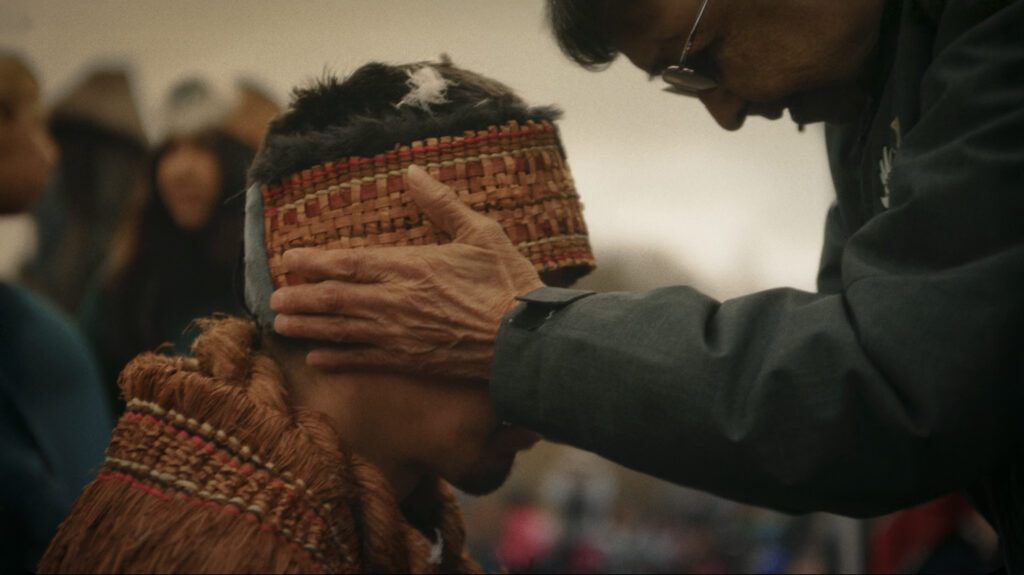
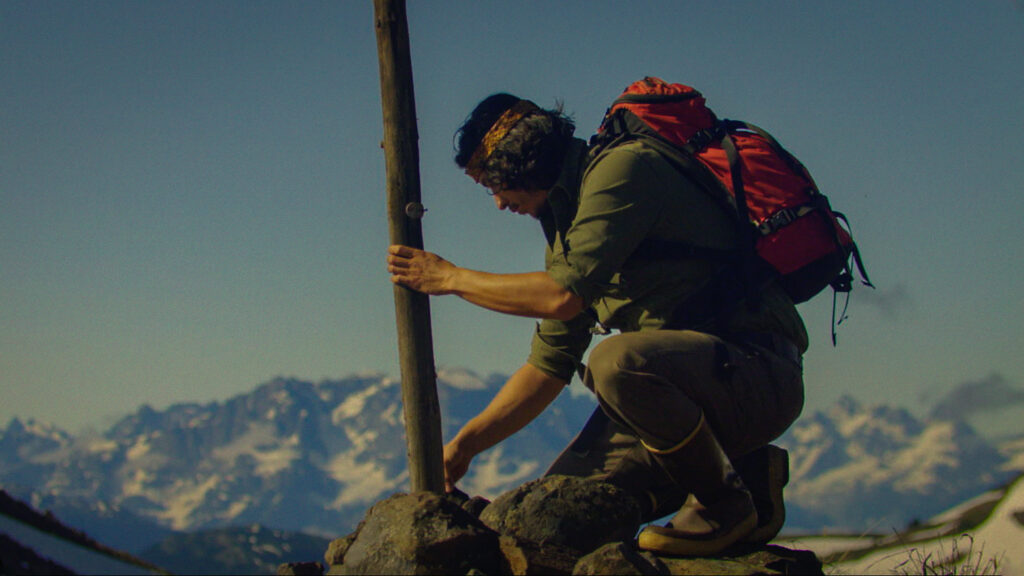
The title has layered meaning. Ceremonies run throughout the film from the daily practices at Nuxalk Radio to the sputc pole raising. It took taking part in ceremony after ceremony myself, to understand what the film needed to become. In that sense, the film can be seen as an act of ceremony in itself.
How did you approach your responsibilities as a filmmaker working within Nuxalk stories, knowledge, and territory? What did it mean to build this film in relationship with community, rather than simply about it?
I learned that my role is just to be a vessel for the story that needed to be carried forward, to learn to listen and receive and to be accountable to the territory, our ancestors and the Nuxalk community in which the story belongs. This meant committing to an ongoing layered process rather than just an act of documentation.
“I learned that my role is just to be a vessel for the story that needed to be carried forward, to learn to listen and receive and to be accountable to the territory, our ancestors and the Nuxalk community in which the story belongs.”
Were there boundaries around what could or could not be shared – and how did those shape the film?
There were self-imposed boundaries of just knowing what was safe and appropriate and what was not meant to be shown. The editors and I were especially mindful of how pain is represented, keeping the history to what was essential and focusing the film on active work and healing. Cultural representatives viewed earlier cuts, and the Bella Coola community gathered to watch and respond together.
The film weaves together radio, archival material, and animation. What was the inspiration behind interweaving three different elements into this film?
We were essentially weaving together over 200 years of history across multiple worlds, including the spirit world and supernatural realms, and the perspectives of critters and other beings. To create all of that, the film needed different forms.
For example, having Nuxalk Radio let the film speak from inside the community while engaging with historical records, some of which are over 100 years old. The animated sequences bring us into ancient times and ground the film in Nuxalk ancestral worldview.
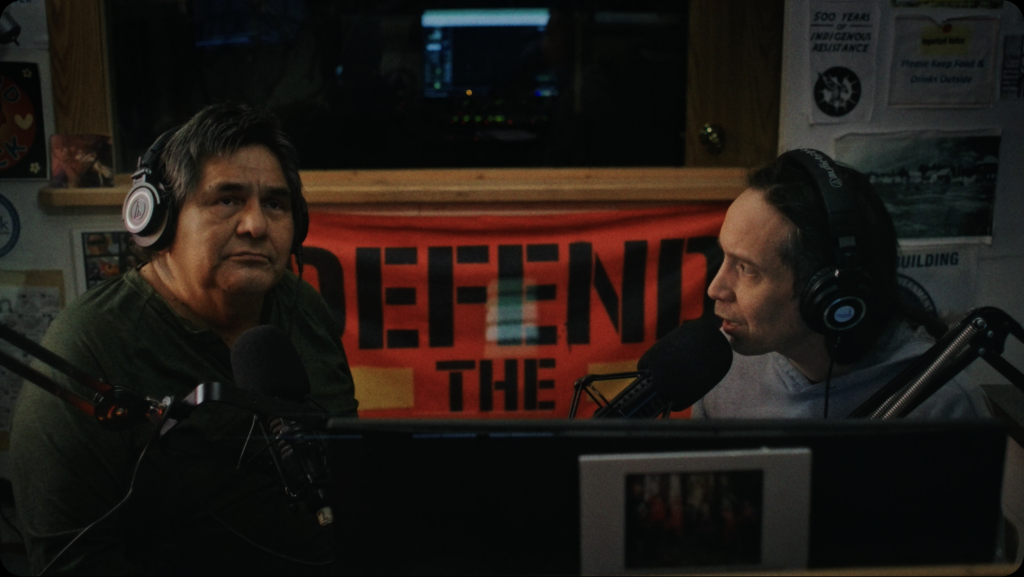
What role does sound, particularly radio, play in shaping the film’s voice and perspective?
Nuxalk Radio broadcasts Indigenous music from our territory and throughout the world. It has been a source of strength for our community, and that runs throughout the film. That is woven together with an original composition by Jesse Zubot. Archival voices of ancestors surface quietly at key moments through a sound design created by Joe Watts, while animation soundscapes built by Mike Paprocki help bring in other realms.
The film traces forces “no one was meant to uncover”. How did you navigate telling truths that may be difficult or sensitive? How do you connect environmental loss with colonial histories and policies in the film?
In terms of care, we were mindful of how pain is shown, keeping the history to what was essential and focusing the film on active work and healing. Cultural representatives viewed earlier cuts, and the Bella Coola community watched a cut together, which helped ensure we were being accountable to the people most affected. Nuxalk Radio was also part of that care; it’s a space our community uses for healing and strength, and the film reflects that.
How do you hope the film contributes to ongoing conversations about land, sovereignty, and restoration?
I hope the film leaves viewers with the sense that we need to return to a spiritual way of living where the lands, waters, and other beings are not seen as separate from us, but a part of us; and that it leads conversations that challenge the idea that Canada and BC can allocate Indigenous territory and manage fisheries. What happens in Nuxalkulmc (Nuxalk Territory) impacts us all.
What does it mean for you to premiere this work at Hot Docs?
Hot Docs has been so generously supportive of my previous films. I’m deeply grateful that Hot Docs is helping bring a film that doesn’t necessarily fit the traditional documentary mould to a larger audience.
Photo Credits: Smayaykila Films.