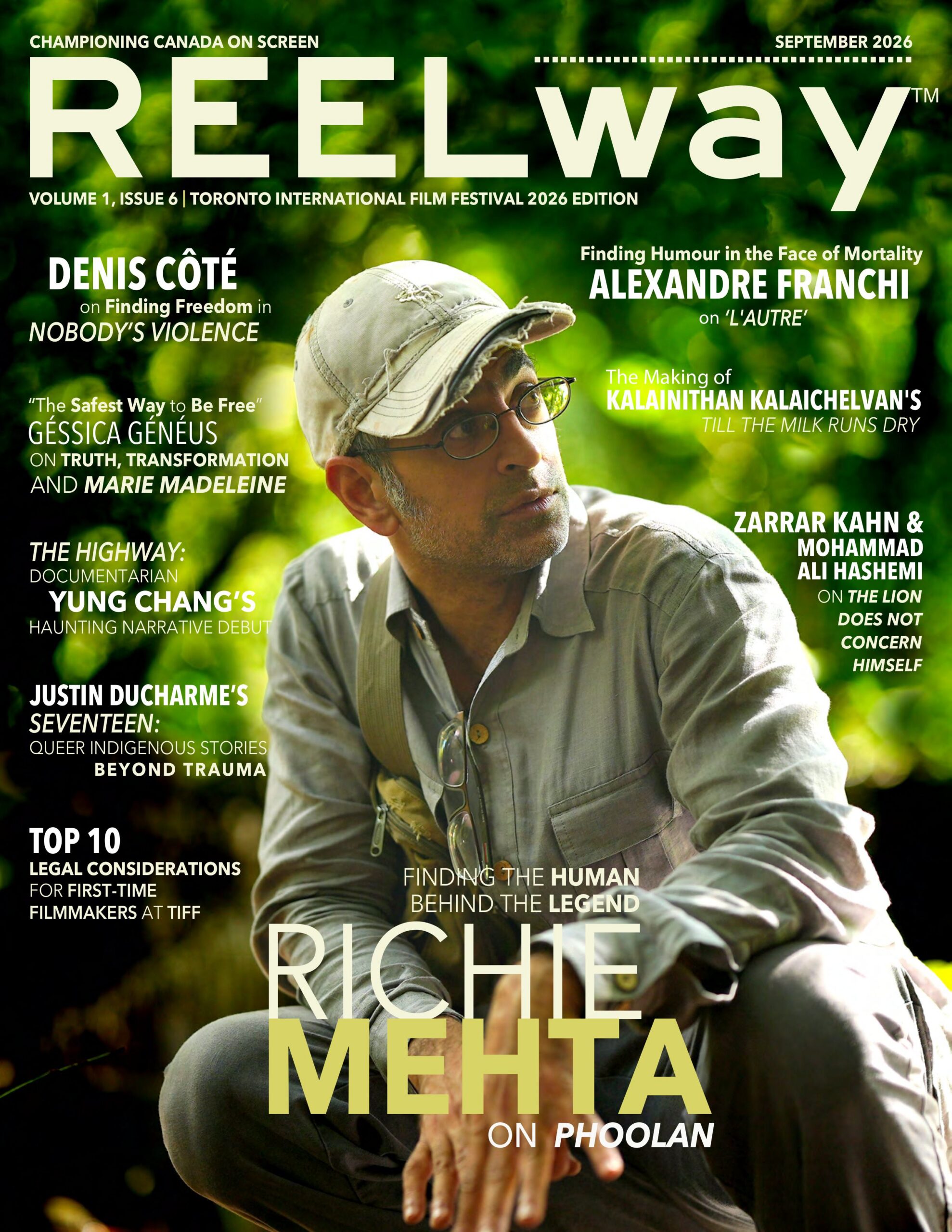
From ‘Amal’ to ‘Delhi Crime’, Richie Mehta has established himself as one of Canada’s most compelling storytellers- an acclaimed writer and director with an extraordinary talent to find humanity within complex stories. His work is marked by a thoughtful sensitivity, emotional depth, and a fearless commitment to exploring the people behind the headlines.
Now, with Amazon MGM Studio Film and Namah Productions’ ‘Phoolan’, Mehta turns his lens toward one of India’s most legendary figures, Phoolan Devi. The film seeks to uncover the young woman at the heart of the legend – a human being shaped by extraordinary circumstances, resilience, and an unwavering will to survive.
Ahead of the world premiere of ‘Phoolan’ at the Toronto International Film Festival 2026, REELway Magazine’s publisher Asis Sethi sat down with Richie Mehta for an exclusive conversation about bringing Phoolan Devi’s story to the screen, navigating violence without losing the film’s humanity, shooting in the Chambal region, and the responsibility of telling someone else’s story.
Asis Sethi: I’m so glad to be almost face to face again. I have to say, before we begin, what a beautiful film. I enjoyed every scene, every performance, every visual detail you incorporated into the scenes. You’ve taken a life that’s almost impossible to contain in a feature and reduced it to those forty-eight very important hours. What did you discover about her, about Phoolan Devi, by staying within those forty-eight hours of her life? Did that limitation help you understand the character more deeply, or was it more of a challenge, because of the limits you put on those hours?
Richie Mehta: No, it wasn’t a challenge as a result of those limitations. The challenge, of course, is that I only had her words in her autobiography to go on, and obviously the legend around her. But I’ll say what I learned through the depiction of it, the creation of it, the shooting of it, and because we shot on location in Chambal, in the region, was the world she was in. That world, from a landscape standpoint, hasn’t changed. It’s modernized and evolved in many ways, obviously, but being in that space for the months and months we were there, I started to understand more and more how difficult it is for a human being to deviate from everyone else in the various regions and villages, to decide you’re going to go live in the wilderness and go village to village enacting your own interpretation of justice. It would take reaching a breaking point that’s so beyond comprehension for you and me that it’s almost beyond depiction, in a way. And certainly, as you saw, I couldn’t depict the worst things that happened to her. I don’t think they should be depicted; I just put them into words. She’s speaking: this occurred to me.
The more time I spent there, the more I saw how difficult it is to be in that region. I think it’s one of the most difficult places on earth for human beings, honestly. So that gave me a sense of how easy it is to be hopeless there. I tried to embody that in the moment when she considers committing suicide, and the boatman says, if you’re going to do it, you have to tie her hands, and there’s not enough rope. It’s cynicism upon cynicism upon cynicism. It’s just par for the course for people living there, in a way. And yet somehow she perseveres. Somehow she finds hope. Somehow she latches on to some sort of optimism. In each scene, I tried to show, from what I understood and felt from her words, that it was her spirit that allowed them to survive, because she kept saying, “Let’s just get to the next thing. Let’s get the bottle of water. Let’s just keep going. And the men just want to give up. They keep saying, no, no, no, let’s surrender, let’s give up, let’s just take ourselves out.
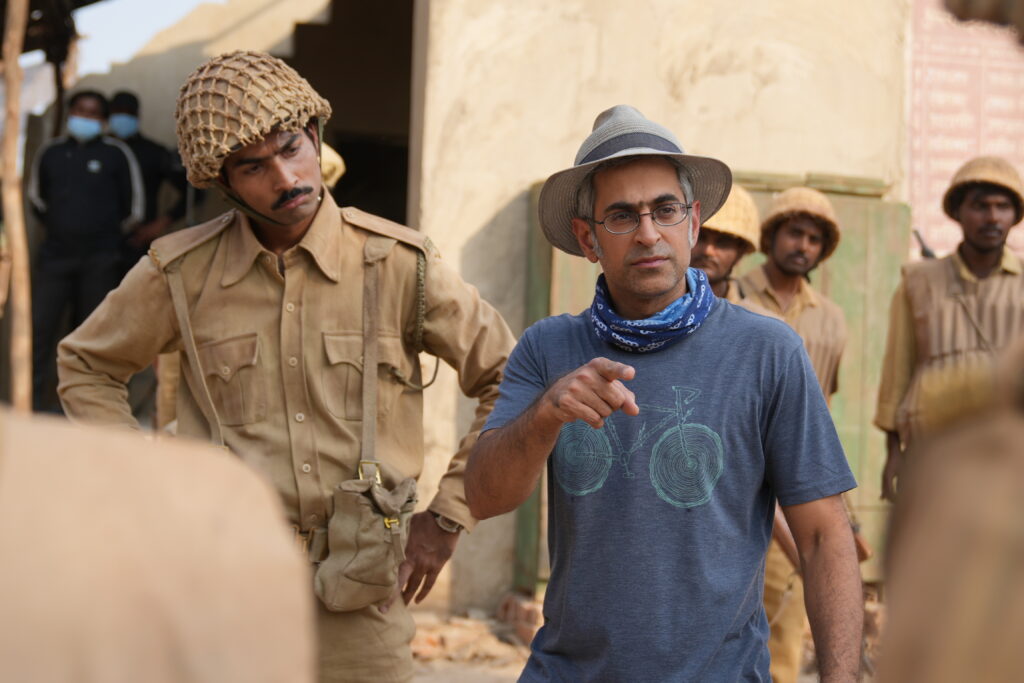
Photo Courtesy of Amazon MGM Studio Film and Namah Productions.
Asis Sethi: Amazing. There’s this question the film asks; it’s almost as if: how dangerous does a teenage girl have to become, or even be perceived to be, for an entire system to decide to destroy her? Was that question guiding you while you were writing the script?
Richie Mehta: Very much so, because I don’t think people realize she was nineteen when she surrendered. So we’re describing her teenage years, roughly eleven to nineteen, over the course of the story, in a way. Again, I think it’s incomprehensible for us to ask: is this a lived teenage experience of the world? What levels of tragedy are even possible in one person’s life? With that in mind, I also kept thinking: is it the same situation for everyone? I believe that if, especially as a certain gender, you resist every aspect of patriarchy in every aspect of your life without exception, you will eventually hit a wall of steel. That’s certainly not a “no.” In this case, she resisted every aspect of patriarchy in every aspect of her life, and she hit a wall of steel: an army sent to decimate her. And it’s true. That’s why I don’t think it’s shocking only in the context of India; I think it’s shocking in the context of recorded history.
Asis Sethi: Yeah. Something in your notes from the press kit stood out: you said you were very careful not to turn her into a symbol before allowing her to be a person, a human being. What did you learn about her that surprised you, especially through your research, through writing, and then also being on set? What was the one thing that gave you the image of Phoolan Devi before you even started making the film?
Richie Mehta: The one thing was that some of the happiest moments of her life were swimming with her sister in the river, which is obviously what I started the film with, as the first image. I felt that’s where we’re talking about Phoolan, not “Devi,” not the Queen of the Bandits, which is why that’s the title of the film. Because that’s not what I thought about her before I started this project. I never thought of her as a little girl, an innocent girl who just wanted to be a little girl. What surprised me most was that she might have just disappeared into history as another little girl who swims with her sister and lives her life. That would have been the case if the world hadn’t picked her as the person to pick on. That’s where I started to see that this isn’t necessarily a singular life experience contained in this story; it’s something that can apply to all of us, in a certain way. Because what she desired, that moment of happiness she had, is something we can all relate to. Which means every aspect of her life is something we can relate to.
Asis Sethi: Absolutely. You open the film that way too, from the first shot to the last; it was incredible how you opened it and then wrapped it up. It all made sense. The first scene establishes everything that’s going to happen next, which was very beautifully done. Even that first scene draws you into the moment; just by looking at her, without her even saying words, you connect with the character. It was really well done. When exploring real people like Phoolan Devi as characters, sometimes we romanticize them as rebels, or think of them as victims. But you walked that fine line without hitting either extreme. How did you manage that creatively?
Richie Mehta: That’s a tightrope you walk at every stage, every moment, every scene. But it was very important to me that the legend of who she is, the label of who she is, comes from other people. She herself is just a little girl trying to survive, led by her sense of justice. A little girl who, by that age, in her teenage years, had already decided she had nothing left to lose. So much has happened in her life that she feels she has nothing to lose, which, again, is very difficult for you and me to relate to; we always have things to lose. So she’s already reached that point by the time the story begins.
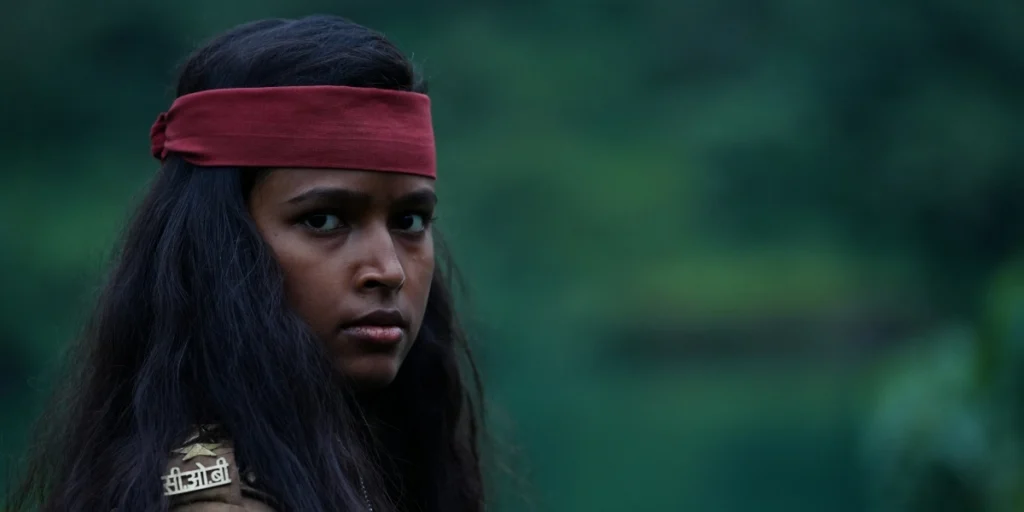
Photo Courtesy of Amazon MGM Studio Film and Namah Productions.
Asis Sethi: I also felt that sometimes when you’re watching films with violence, you can only watch until a certain point. But this film didn’t feel that way. There was a lot of humanity and heart in it, without the romantic gloss, and you balanced that well. Was there a particular scene where you realized you might be pushing too far or too extreme with the violence, and needed to pull back? In terms of production, how did you manage that balance, not too violent for an average viewer who maybe doesn’t like violent films, but violent enough to show what happened and justify her story?
Richie Mehta: Thank you for saying that. I consider myself very sensitive to gratuitous violence; I can’t handle it in films either. Again, it was about finding a balance: not overstaying our welcome in certain action scenes, and always keeping the action rooted in a very simple, straightforward premise: that they’re trying to snuff this girl out. The intensity of each action scene grows bigger and bigger, because the oppression against her increases as the pressure among the men increases. So you actually understand the trajectory.
By the time most action scenes start, they’re usually over within a minute or two; they’re just bursts. That was an editorial choice too; we spent a lot of time making sure we didn’t overstay our welcome in those scenes. But we’re also talking about a moment in time, a circumstance, where there’s so much violence being put upon one person, one young woman, different types of violence: verbal, political, social, and physical. Yet each incident I show, cinematically, is by and large nothing you haven’t seen or heard before in a film. I was very aware that I didn’t want to pass your tolerance threshold, because if you look away, I’ve lost you. I need you to see this, including the scene about three-quarters of the way into the film, which is obviously a unique scene of violence. But by that point, my hope is that we’ve earned your allegiance to stick with this person, and this team, and see what they’re all about.
Also, I think in the earlier scenes of violence, if we haven’t established a point of connection with this little girl, if you don’t already empathize with her, you won’t want to see it through. But if you do, you’ll want to see how she responds to this violence.
Asis Sethi: Yeah, absolutely. For a film like this, did you have to storyboard the whole thing before filming?
Richie Mehta: No, we didn’t storyboard any of it.
Asis Sethi: Wow.
Richie Mehta: The reason is that we shot on a real location, so we planned the action scenes very methodically, but based on the geography of the space. We were meticulous in staging it: where are they jumping over the walls, where are they under fire, where are they hiding, what’s happening here. Then we’d stage the entire sequence when we actually shot it, with the explosions and squibs. It wasn’t shot by shot; it was: okay, they’re going to come here, the explosion happens, they come out the door, they fire, they run. We’d run the whole thing even if the camera didn’t necessarily catch what’s around the corner at the beginning; it would catch it later. So you have a moment in time actually occurring in front of you, and then my job was to figure out where the camera goes so that we’re a bystander, and each time, that bystander experience gets more and more intense.
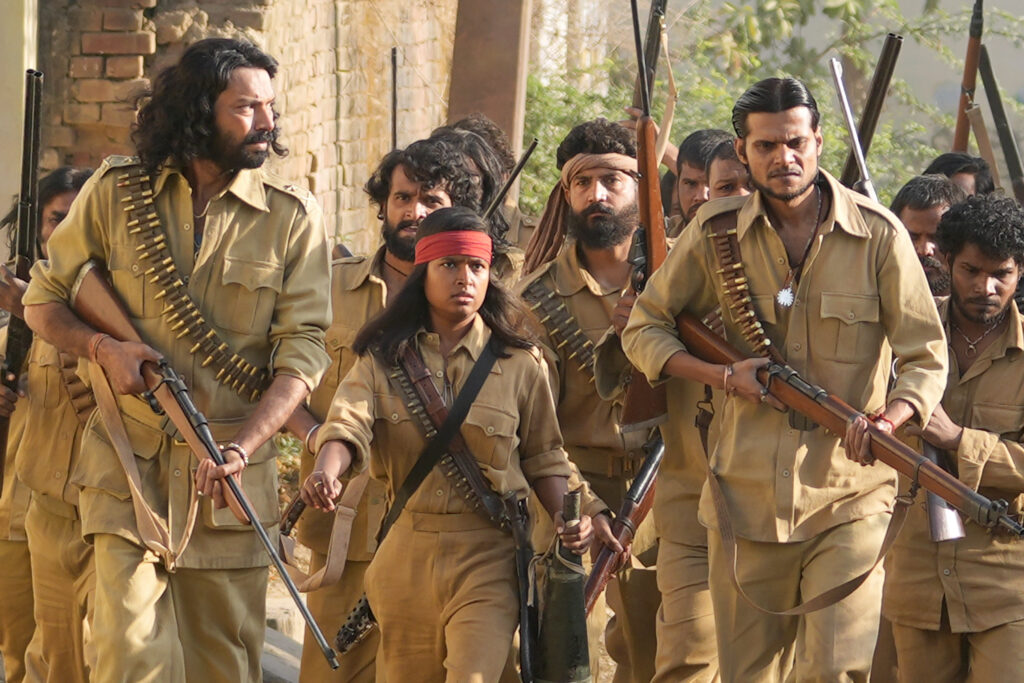
Photo Courtesy of Amazon MGM Studio Film and Namah Productions.
Asis Sethi: For those complicated scenes with explosions and multiple actions happening at once, during blocking, did you have more than one camera, or just the one camera capturing everything?
Richie Mehta: No, we had two cameras capturing. Oftentimes, most of the time, one camera was leading, either near or following one character or another. Then we’d find a place for the second camera, but sometimes it was crisscrossing, and it became a choreography exercise in a really interesting way. The film is a complete amalgamation of the two cameras.
Asis Sethi: Amazing. Going back to the character, Sneha Kumari has done a very good job getting into the skin of Phoolan Devi. When you were filming, sometimes actors bring something new to the character that you hadn’t thought of. Was there anything she brought to the character that made you rethink a scene, or rethink something within that moment in the script?
Richie Mehta: Oh gosh, so much. She brought life to it, to every scene she was in, because she brought lived experience. She’s from the region; Bundelkhandi is her mother tongue. Once we cast her, we did some acting workshops just to get her used to the space she’d be in, and some commando training to make her comfortable with her movements and her ability to handle weapons, since the person she was playing had that. But beyond that, she became the person; she had more life experience, having been born and raised in the region, than I did. So I was learning from her. All I could say was, this is the text, these are the general movements, but this is also a world you know better than I ever will, so guide me. It wasn’t just a single moment of “wow, that’s amazing, we should adjust.” It became about giving her the floor and saying, okay, this is where it needs to go, this is where I think you could jump in, but what would you do if you were in this situation? And she started to take ownership of that.
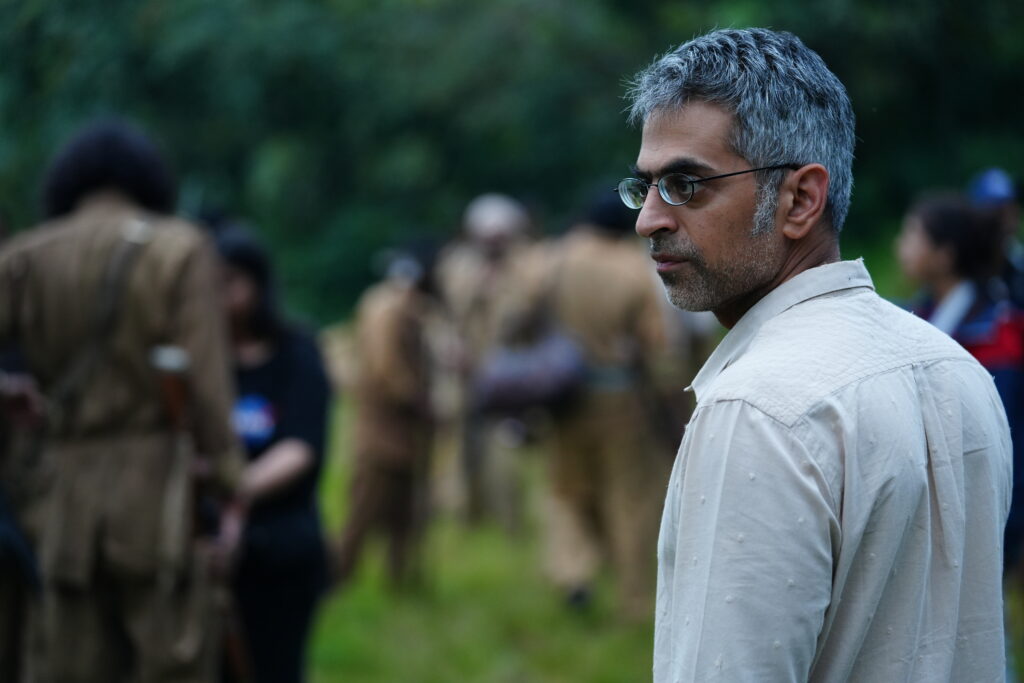
Photo Courtesy of Amazon MGM Studio Film and Namah Productions.
Asis Sethi: You mentioned when we started speaking that you initially thought you weren’t the right person to make this film, and I think that was in your notes as well. After spending years with Phoolan’s words, her history, all the research you did, do you still feel that way after making the film? Or do you think the film changed what you believe your responsibility is, as a filmmaker, when telling someone else’s story?
Richie Mehta: Look, I don’t necessarily think I’m still the right person to have told the story. And I feel that if somebody else would have, or could have, or should have, I would have happily not done it. To be honest, I don’t seek out these types of stories; I just feel compelled to do them if nobody else is doing them. So I’m still not sure I’m the right person to have done it, truthfully. It exists now, and I’ll do everything to support the film, and to support why I felt it could or should be made this way, and how we, as a massive team, made it together. But I’ll never quite be sure I was the right person. The only thing I can be sure of is my intention, the reason I set out to make it, which I still hold on to. I’m sure it was the right reason. I don’t know if it was the right achievement.
Asis Sethi: Well, you’ve crafted a very beautiful film; congratulations on that. I’d like to watch it again, but on the big screen at TIFF, and I’ll probably see you there.
Richie Mehta: Yes, I look forward to it. Thank you very much, and thank you for your support.