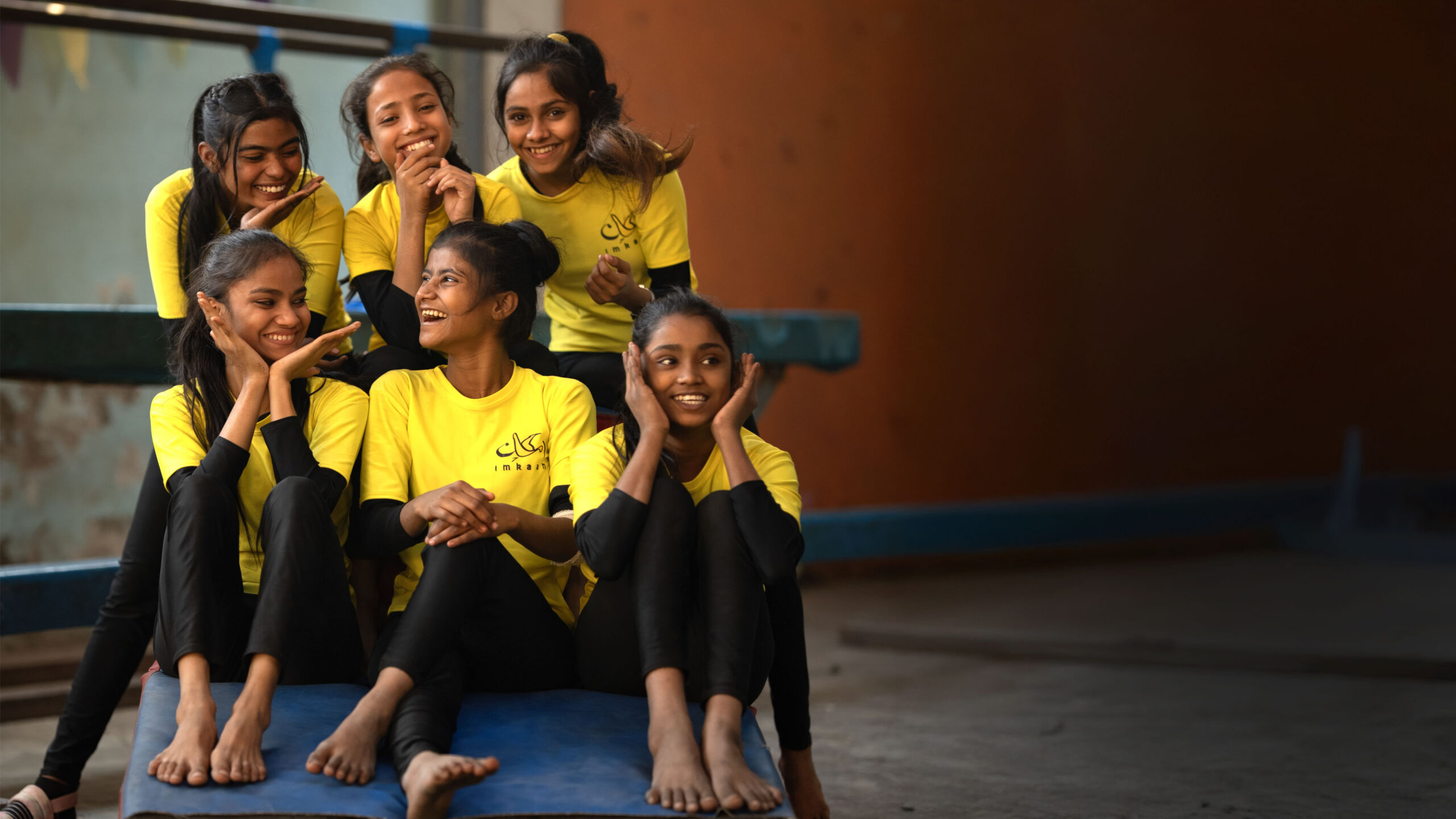
In ‘The Gymnasts of Fisherman Colony’, Pakistani-born filmmaker Habiba Nosheen takes audiences into the world of young girls in Machar Colony, Karachi, who are finding strength, opportunity, and a sense of possibility through gymnastics. What began with an unexpected connection to human rights lawyer Tahera Hasan, who works with the community, grew into a deeply human documentary about statelessness, education, gender, and the power of change from within. With care and sensitivity, Nosheen moves beyond the conventional sports documentary to tell a story rooted in the girls’ own experiences, dreams, and determination.
As the film makes its way to the Reel Asian International Film Festival, Nosheen speaks with Armin KS about the journey behind the film, the importance of telling nuanced stories about brown Muslim girls, and her hope that audiences see them in all their complexity, joy, and humanity.
Where did the idea to feature gymnasts in Pakistan and follow their journey originate from?
I first met one of the film’s participants, Tahera Hasan, ten years ago when I adopted my daughter from Pakistan. Tahera was my adoption attorney. But at the time she was working on our adoption, I knew nothing about this other life she lives as a human rights lawyer working with a stateless community.
Years after I adopted my daughter from Pakistan, I came across Tahera’s social media posts about young girls in Pakistan doing gymnastics in Machar Colony (Fisherman Colony). I was immediately drawn to them. The next time I went to Pakistan, I asked if I could visit the school, meet the girls and their families, and hear their stories. As soon as I did, I knew I had to make this film.
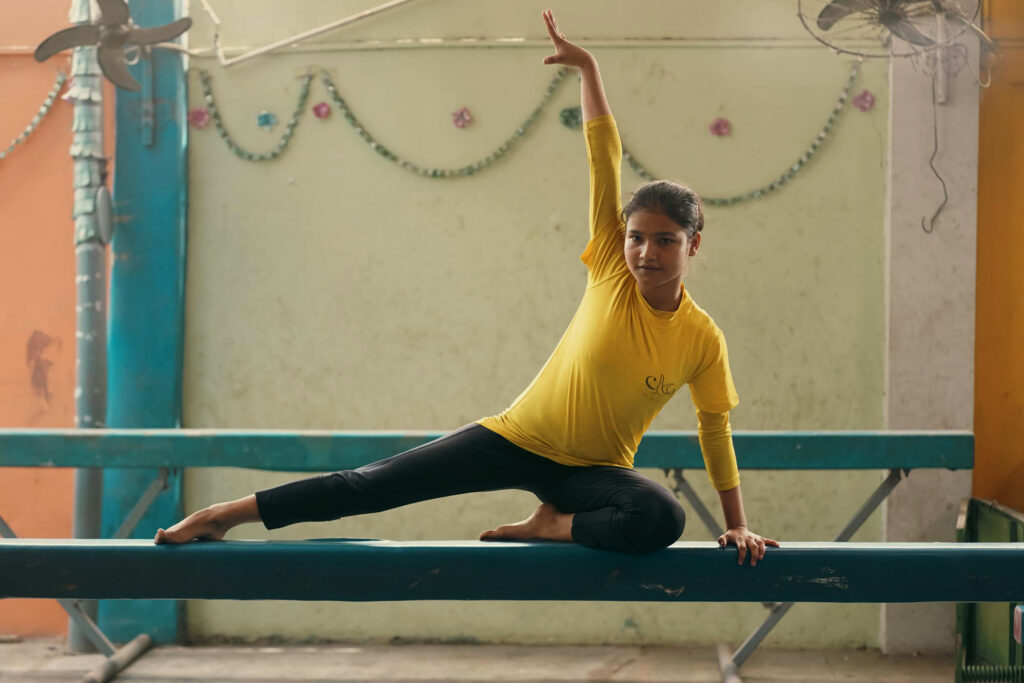
Pictured: Gymnast ‘Anwara’ on the Balance Beam.
What was the process like for connecting with the crew in various locations? How did the chemistry form between the crew here and the team in Pakistan, two different worlds, if you will?
Each story requires a unique approach to finding the right team to bring the story together. We were lucky enough to have a crew in Pakistan and Canada that came together to make this special film happen. We were also able to lean on filmmakers in Pakistan who helped us find the right people to help tell this story with care and sensitivity.
We often hear about the resilience athletes develop over years of practice. What were your observations of the girls in your documentary, especially given their limited access to resources (such as ID documents) compared to many athletes pursuing sports elsewhere (for example, North America)?
I think we never set out to make a typical sports film. I also don’t think I ever tried to make a film where I was ever comparing the experiences of North American athletes with the realities of the girls. I think when you try to do that, there is no way to tell the story that isn’t from a Western gaze. So ‘The Gymnasts of Fisherman Colony’ is very much not a comparison between the experience of being an athlete in North America versus Pakistan. It is about transporting the audience, with care and dignity, into this world that they may never encounter. I hope that comes through for the audience.
At one point in the documentary, they discuss how participating in gymnastics opened the door to formal education. How did these kinds of conversations impact you?
As I learned when I set out to make this documentary, one of the reasons this school exists is that children who are stateless have a hard time accessing any type of formal education. Obviously, it’s hard for your heart not to hurt when you hear that, if you care about the well-being of children. But I also witnessed the amazing opportunities this one little school in a corner of the world was able to provide for so many children, and that’s where I find points of hope for me.
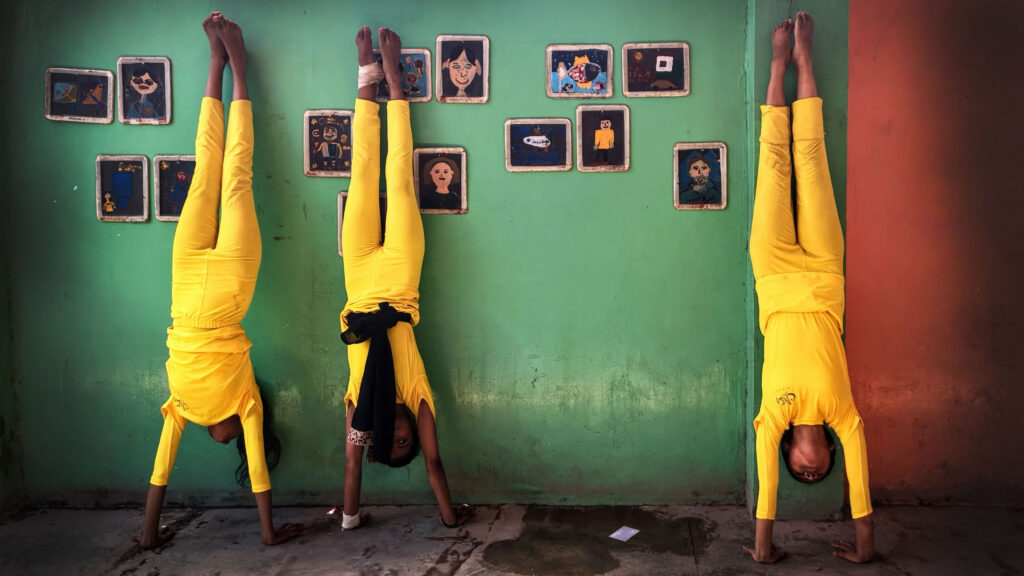
Pictured: Gymnasts Doing a Headstand.
There is also a discussion that the girls participating in gymnastics are looked down upon, as the majority of coaches are men. Were these conversations difficult to initiate? How did they happen?
I’ve been doing this work for two decades, and most of my work looks at how gender dynamics play out in different spaces and communities. So no, those weren’t hard conversations to have, but I think they are important conversations to have. It’s important to talk about the perspective people have and what they expect from both men and women, and how we, as storytellers, might be able to shed light on those issues to peel away and expose the anxieties that exist underneath that. That’s how I look at filmmaking. It’s bringing to the surface conversations that are happening within communities or families but might not be happening in front of the camera.
What do you hope viewers and the audience alike gain from this?
What I hope audiences take away from the film is a more nuanced and human understanding of brown girls and of social change in places like Pakistan.
As a Pakistani-born filmmaker, this film is important to me because it depicts social change in a Muslim country through a nuanced and authentic lens. It shows Muslim girls who are inspiring, complex, and creating real change that comes from within their own community.
I am very troubled by the ways brown people have been dehumanized over the last few decades, through one war after another. This film is part of a larger effort to correct those narratives. It asks audiences to see brown Muslim girls not only in moments of death, war, and tragedy, but in their full humanity: laughing, training, dreaming, fighting for space, and imagining a future for themselves.
We so often see images of brown children when they are suffering. I hope audiences come away understanding that they also deserve stories that show their joy, complexity, ambition, and dignity.
What’s next for you?
Next, we are looking forward to a theatrical release of the film in North America and hopefully all across the world. But I am most excited about the opportunity to take this film back to Pakistan. We want to show this film in the community where it was made, but also all across Pakistan; we are going to have free public screenings. We have received so many emails from schools and organizations that want to partner to show the film. I think that’s where the most impact of this film is going to happen, and when young girls and people of all ages across Pakistan see how the circumstances of your birth do not necessarily have to dictate your destiny.