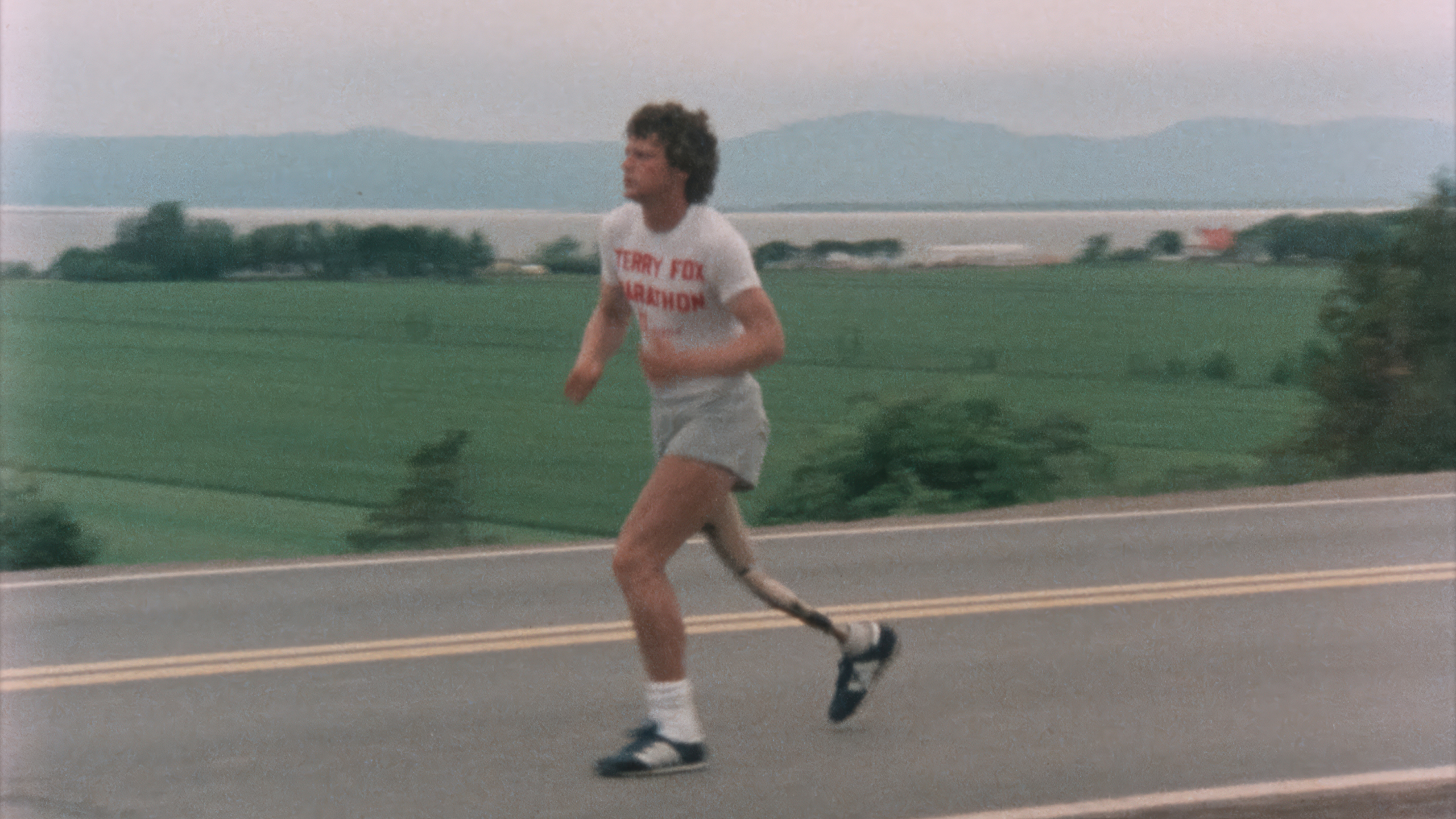
Award-winning documentary filmmaker Sean Menard set out to capture an intimate portrait of one of Canada’s most beloved heroes.
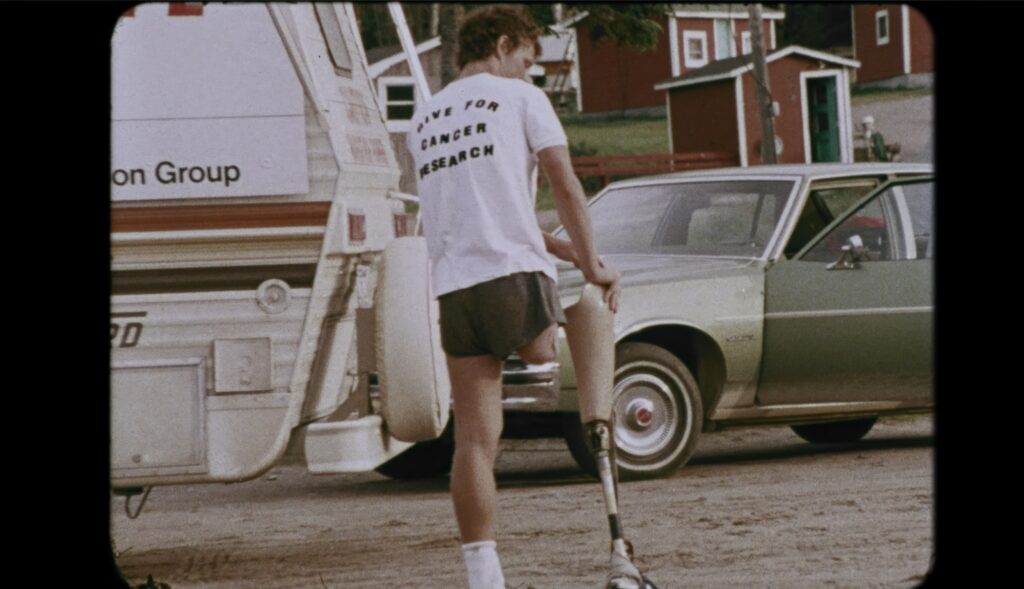
Menard sought interviews with those closest to Terry Fox during his Marathon of Hope, and uncovered nearly 100 reels of never-before-seen footage, offering audiences a personal perspective on a story Canadians know well.
With its release this weekend in 152 theatres across the country, ‘Run Terry Run’ is another success in Menard’s larger ambition: ensuring Canadian stories are told, preserved, and seen “on the biggest screen possible.”
In this interview with Rachel Martin, Menard opens up about the responsibility of telling the story of Canadian heroes.
‘Run Terry Run’ had its world premiere at the Toronto International Film Festival on September 19th, 2026.
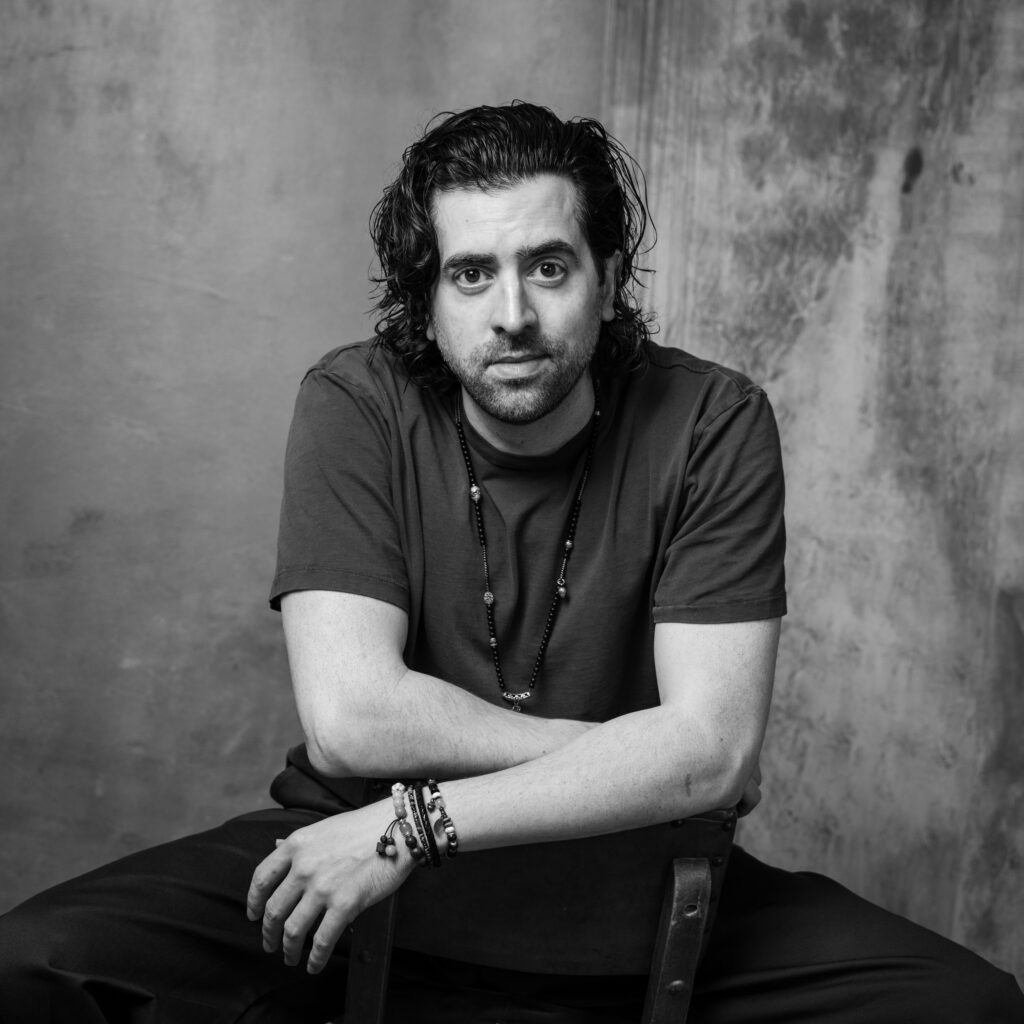
Pictured: Director Sean Menard.
Q: You created this film exclusively using archival footage and, in the process, found footage that had never been used before. What was the process of accessing those materials and building the story?
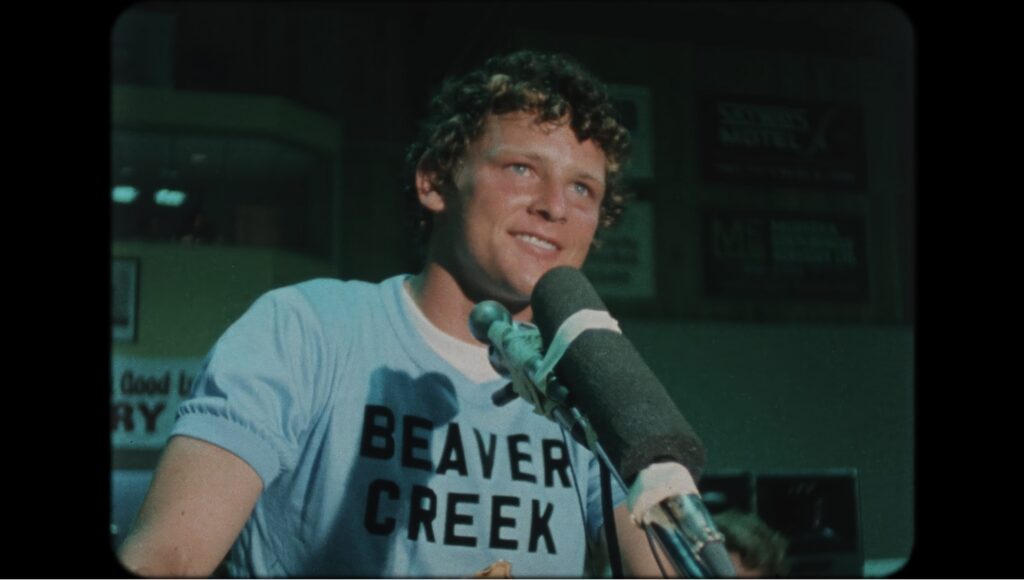
Sean: First, it was figuring out what was there. I was trying to create the definitive Terry Fox movie, and I felt the way to do that was to bring everyone back to the summer of 1980. So, it was just about tracking down that footage. And I was able to find over 90 reels of never-before-seen audio and video. We were able to start digitizing it, and the beautiful part about film is that you can transfer it into 4K.
I was trying to create the definitive Terry Fox movie, and I felt the way to do that was to bring everyone back to the summer of 1980.
Then it was just a big task of thinking, okay, where do I begin once I have all this stuff? You hope that there might be some stuff that people haven’t seen or heard. It’s another thing when you start to realize that you have video and audio of Terry talking in a way that most Canadians, if not all Canadians, have never heard before. You might’ve seen him on CBC and some clips, but not casually and amongst his best friends.
It’s another thing when you start to realize that you have video and audio of Terry talking in a way that most Canadians, if not all Canadians, have never heard before.
Putting it together, it was a large weight of responsibility, but a beautiful one. I was just happy that it was me, not from a sense of arrogance, but I just knew that I would do the story justice, and I was just excited.
It’s like a giant puzzle piece, and you start to think, ‘okay, I’m just going to start gathering all the sky over here, and now I’ll start building the trees’. And then eventually you step back and go, ‘oh, that resembles a movie’. And then it’s chiseling it down to the best parts… It’s hard to describe.
Q: You directed and edited, which is no simple feat and not something that many directors take on. Once you got into the editing process, was there anything that surprised you, whether it be about the footage or how things came together, that caught you off guard or changed how you understood the story of Terry Fox?
Sean: Well, I think a lot of the story is always shaped around my interview subjects, and on this one, we didn’t go with a lot. So it was actually those conversations that started shaping the story for me. I knew very little, and I always try to go in very naive and just curious. And then as they start telling me their stories, I find myself in my head editing…
… You know, when someone tells a great story, or you’re asking them questions, they’re telling you stuff. It’s almost like you’re being brought back with them on that ride. And, for this one in particular, when I would sit with his brother Daryl, and he’s reliving these moments of a 17-year-old in the van with Terry, I feel like I’m there. So, it really just becomes my job to find footage to support these [stories].
When you’re editing documentaries, I find it very similar to screenwriting. Like it’s reversed, right? So, when you’re making a narrative film, you write the script, then you go out and try to execute that and shoot that; here is a little different. You’re filming, and you’re getting all this material, and then you kind of sit down to do the writing.
Q: You’ve consistently come back to stories of athletes and the journey of athletic pursuits. What about that excites you?
Sean: I just think that there’s a lot of inspiration from anyone that is trying to pull off something, you know, unique. I think a lot of times we attribute these incredible feats not just to sports, but to everything – you’re like, ‘oh, they’re just a genius, or they’re just born with this gift.’ And I always want to dismantle that and show that, no, there’s actually a backstory and a tremendous amount of effort that went into this. And I think with Terry in particular, he was always built to be this big superhero and I just wanted to humanize him. And I think that comes off. I mean, that was the experience I had while making it.
Terry in particular, he was always built to be this big superhero and I just wanted to humanize him. And I think that comes off.
Q: I read in another interview recently that you had said that you feel like Canadians should be bolder about celebrating their heroes. And I would just love to hear you speak a little bit more about that.
Sean: I just, I’m not sure what it is, but it shouldn’t have taken, you know, over 40 years to find this footage. You know what I mean? And on a lot of my projects, on the last one, I did on the history of MuchMusic. Why did it take me seven years and having to put up my house to convince people that 30 years of groundbreaking music journalism deserve to be told and shared with the world and put into context? And my thing is, in this country, if we don’t do a better job telling our stories, the details and these heroes will be forgotten… You can put a statue up, you can put a name on the side of a building, but if people don’t really know who that person was and what their story was in life, how they got to that, to be in that iconic place, they’re going to be forgotten.
I want to just like shake people and wake them up to saying, ‘hey, if we don’t do a better job preserving our history, we’re going to lose our culture’. And I feel – because this is what I do for a living – a large sense of responsibility to jump in there and do it. Cause I want to see it. Otherwise, I worry that some of my childhood experiences or even things that I saw walking down the street in Toronto [seeing], I’ll need more context. Someone needs to tell me that story.
Hey, if we don’t do a better job preserving our history, we’re going to lose our culture’
I just love being able to drive home our Canadian heroes and try and put them on the biggest screen possible. And on this one, you know, getting theaters and distributors to believe… it all started for me with renting out Roy Thomson Hall and bringing the Toronto Symphony Orchestra. And they played the music live. They have never done that for a documentary. And I had all the distributors there. And then for them to see … how many people came, sold out, seven-minute standing ovation, and then Cineplex saying, yes. Now, opening today across the country, 152 screens, 152 theaters – documentaries have never done that up here before in Canada. At least not a Canadian one. And certainly, it’s been over two decades.
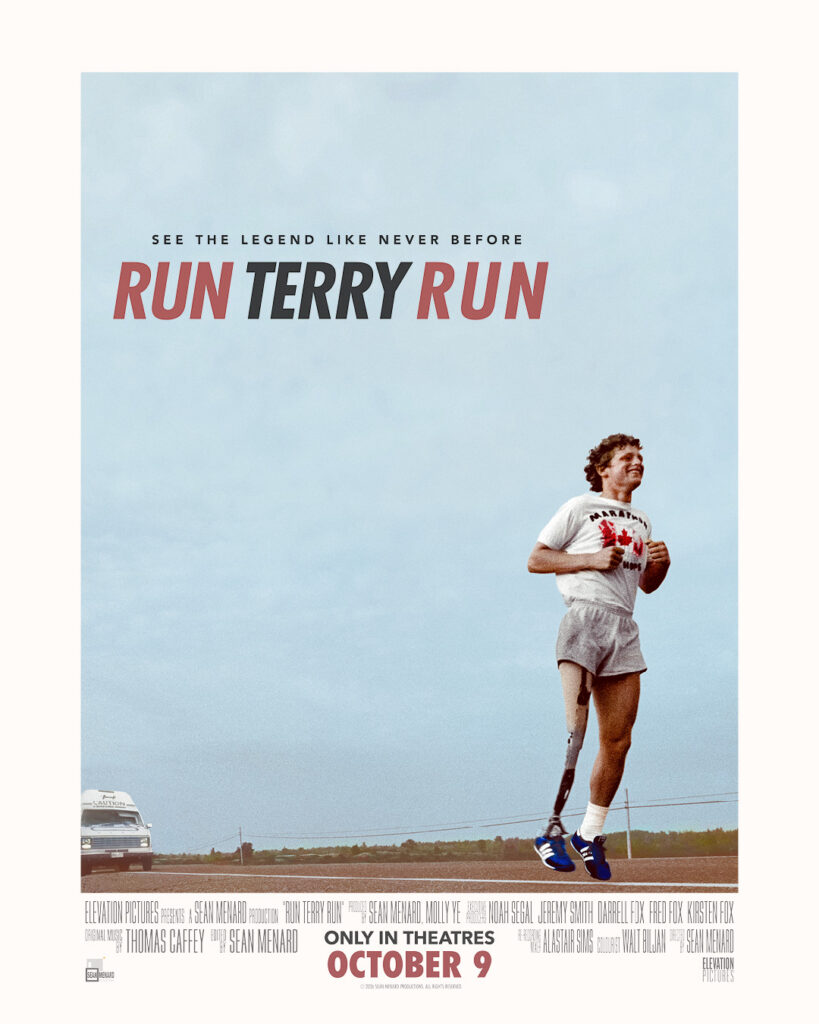
Pictured: Theatrical Poster of ‘Run Terry Run’.
To see that it’s happening for an independent documentary in a historic way is a testament to Terry Fox and his remarkable ability to bring the country together.
Q: Can you talk about how it felt for you and what it meant to have a red-carpet premiere at TIFF for this project?
Sean: We had an advanced screening [a year ago] that we ran for all the proceeds from the ticket sales go to the Terry Fox Foundation, and then I was still kind of working through the cut and then TIFF said, this thing deserves a Gala event at Roy Thompson. So that red carpet, that moment in particular was very special for me personally, because I really got my start there at TIFF. You know, I did a film called ‘The Carter Effect’ nine years ago, and that changed my life and trajectory in my career. And so, to be able to be embraced by TIFF again and … to not have to rent Roy Thompson all myself was amazing.
And it’s just – it was like a full-circle moment. It’s the biggest film festival in the world, and it’s my hometown. So, for me personally, it didn’t get any better than that.
Documentary ‘Run Terry Run’ opens in over 150 screens across Canada this Friday, October 9th, the widest theatrical opening for a non-concert documentary in the country since Michael Moore’s ‘Fahrenheit 9/11’ in 2004.
Proceeds from the film will support Cancer research across Canada through the Terry Fox Foundation. To continue Terry’s dream of a world without cancer and honour his legacy, donations can be made by visiting terryfox.org.