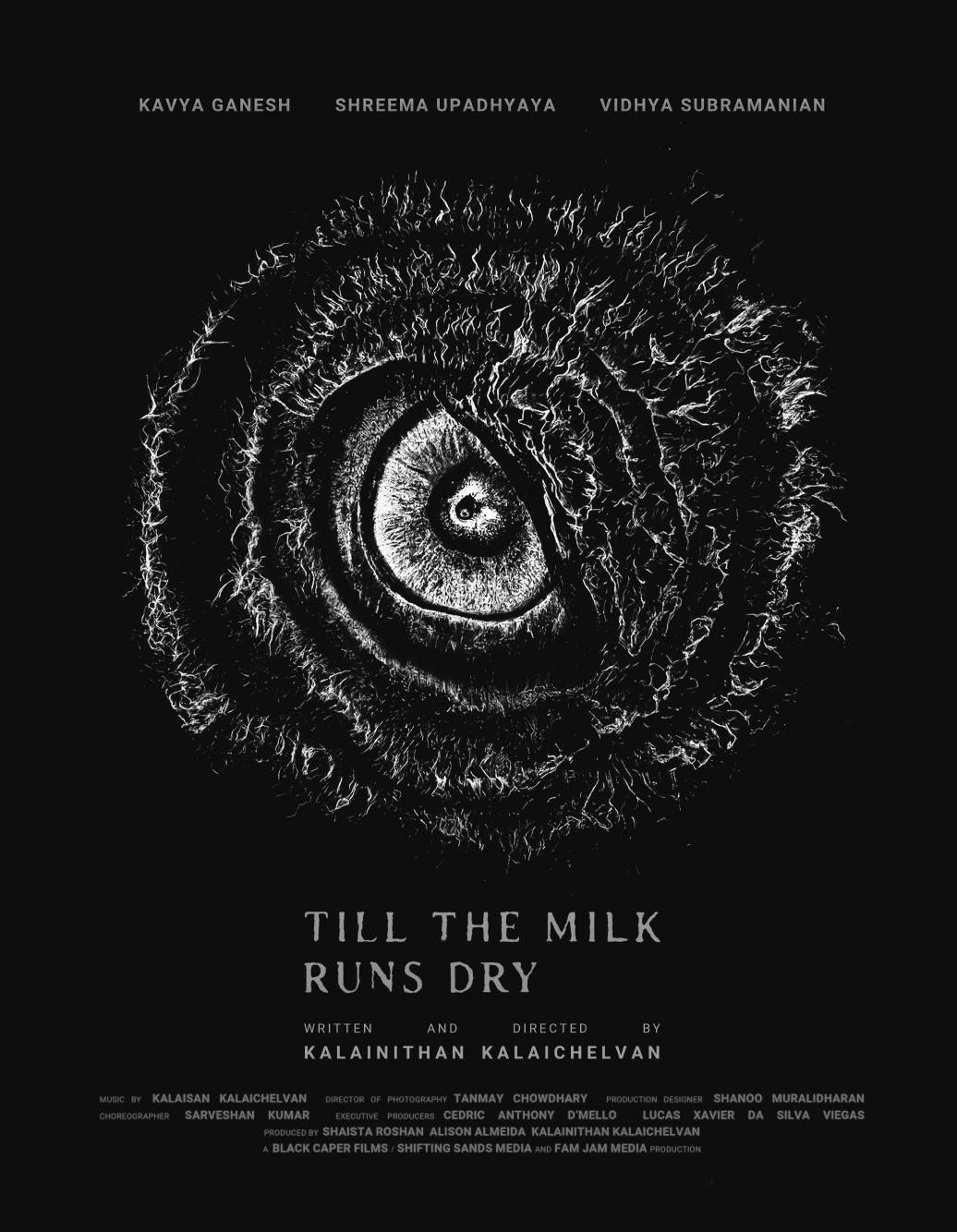
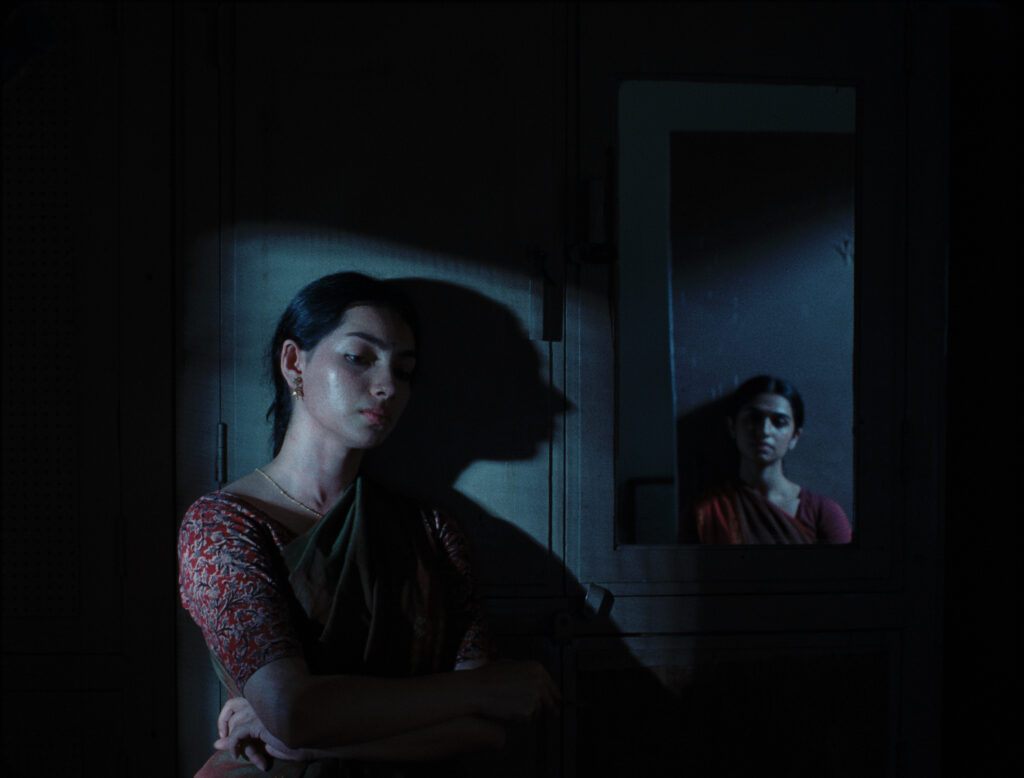
‘Till The Milk Runs Dry’ explores what happens when devotion to an art form, a culture, and an institution begins to collide with an individual’s desire to choose their own path. Written and directed by Kalainithan Kalaichelvan, the film follows Madhu, a Bharatanatyam dancer whose carefully constructed world is disrupted, forcing her to confront the future she has always imagined against the future she may actually want.
Following ‘Karupy’, which premiered at TIFF (Toronto International Film Festival), Kalaichelvan returns to the festival with a deeply interior story that relies on movement, performance and atmosphere to explore questions of identity, tradition and autonomy. Shot in Chennai with professional Bharatanatyam dancers, the film also marks an important collaboration between Kalaichelvan and producers Alison Almeida and Shaista Roshan, who previously worked together on ‘Karupy’.
In this conversation with Shwayta Sharma, Kalaichelvan, Almeida and Roshan reflect on the cultural specificity at the heart of the film, the physical language of Bharatanatyam, their creative evolution since ‘Karupy’, the challenges of filming in India during the Chennai floods, and what returning to TIFF means for their growing body of work. The world premiere of ‘Till the Milk Runs Dry’ premiered on September 14th, 2026 at TIFF.
Finding Madhu
Kalainithan Kalaichelvan: I was interested in the uncertainty. All the competing thoughts that can exist in someone’s mind when they genuinely don’t know what to do. I was interested in devotion, particularly the kind of devotion that asks for sacrifice. Madhu has spent her entire life becoming a dancer, so when the world she’s built for herself is suddenly disrupted, she’s forced to choose between the person she has become and a future she wasn’t prepared to confront.
I grew up around South Indian classical art forms, so I’ve seen that level of discipline and commitment up close. There’s something incredibly beautiful about it, but I also wanted to explore what happens when that commitment becomes expectation, and when an institution that has given you so much begins to dictate what your life outside of it should look like.
I don’t know that I thought of the film as something that was important to tell specifically now. I was more interested in a conflict that feels timeless. We inherit traditions and institutions that can give our lives meaning, but eventually we have to decide for ourselves what parts of that inheritance we want to carry forward.
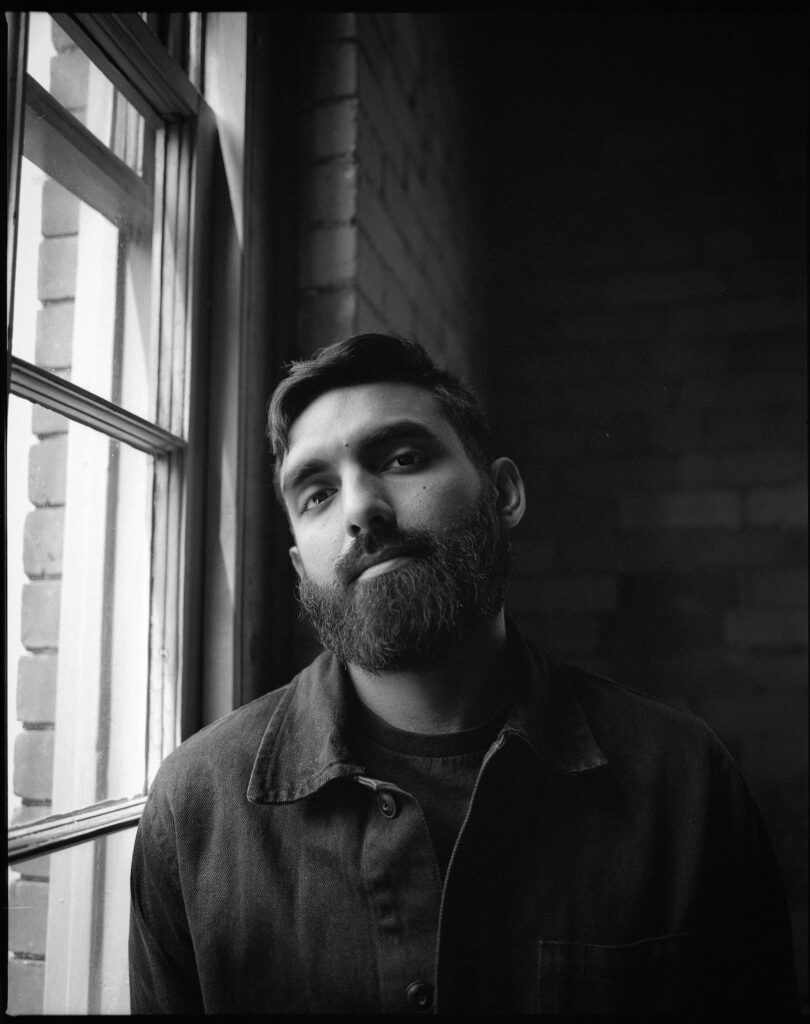
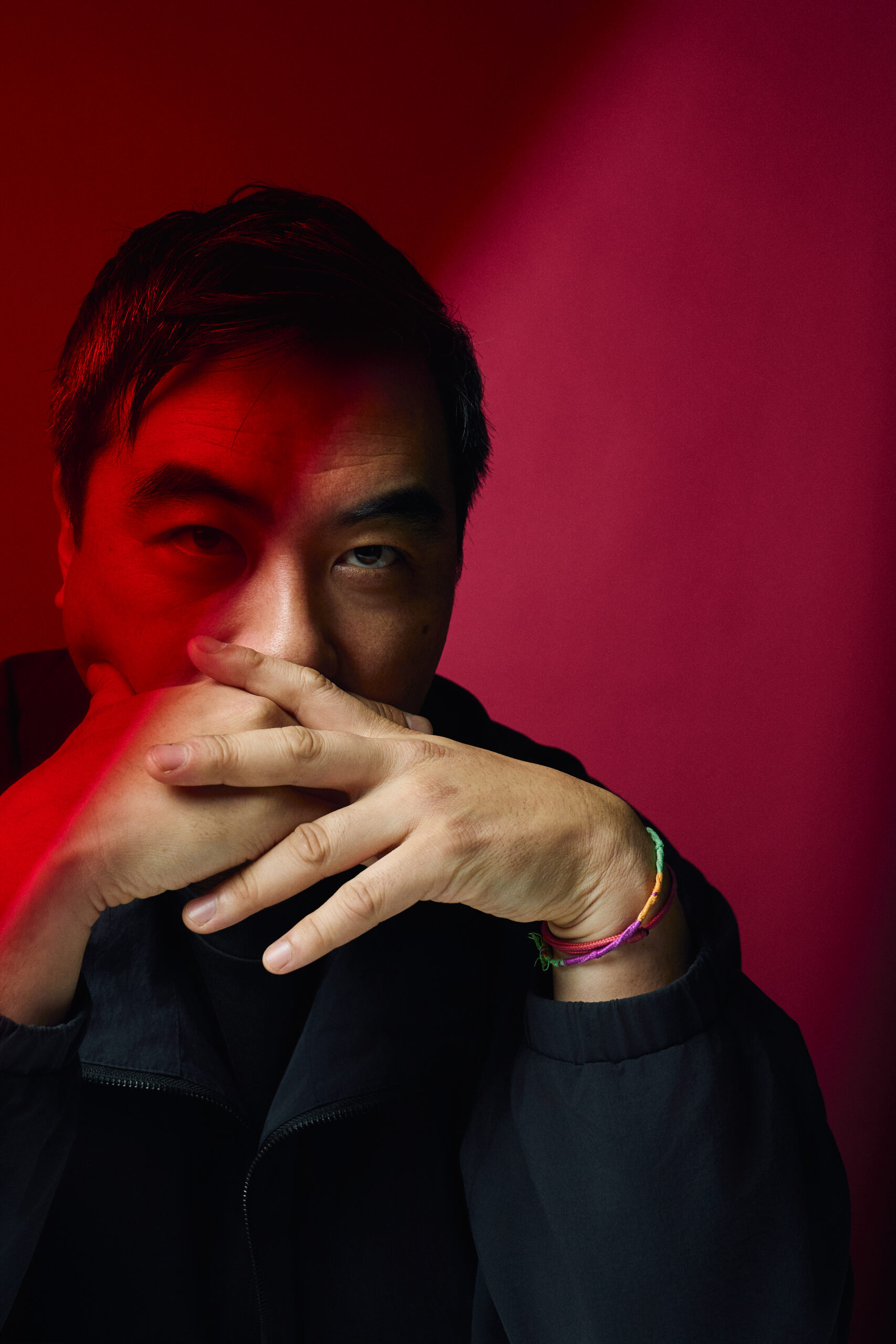
In Photo: Kalainithan Kalaichelvan.
Tradition, Culture & Choice
Kalainithan Kalaichelvan: I think questioning a tradition can actually be a way of taking it seriously. If something is meaningful to us, we should be able to interrogate it rather than feeling like our only options are complete acceptance or rejection.
I care deeply about Tamil culture and the things I’ve inherited from it, but I don’t want to treat culture as something fixed or untouchable. Traditions are carried forward by people, and each generation inevitably develops its own relationship to them.
For Madhu, the difficulty is that she loves this art form. Walking away would be much easier if she didn’t. You can love something deeply and still question what it asks of you. Those two things don’t have to cancel each other out.
Alison Almeida: At the heart of Madhu’s journey, I saw a woman asking whether she is allowed to belong to herself. Her ambition is not simply about professional achievement. It is connected to her identity, her autonomy, and the life she has spent years building. The expectations surrounding her may come from tradition, responsibility, and even love, but they still require her to consider surrendering an essential part of who she is.
What moved me most is that the film does not simplify that conflict. It never dismisses the importance of tradition, but it is honest about the cost of those expectations when they are placed on a woman’s future. Madhu is trying to reconcile her love for where she comes from with the possibility that the life imagined for her may not be the life she wants.
For me, her journey is ultimately about a woman’s right to desire something different and how much courage it takes to honour that desire when it risks disappointing the people and institutions that have shaped her.
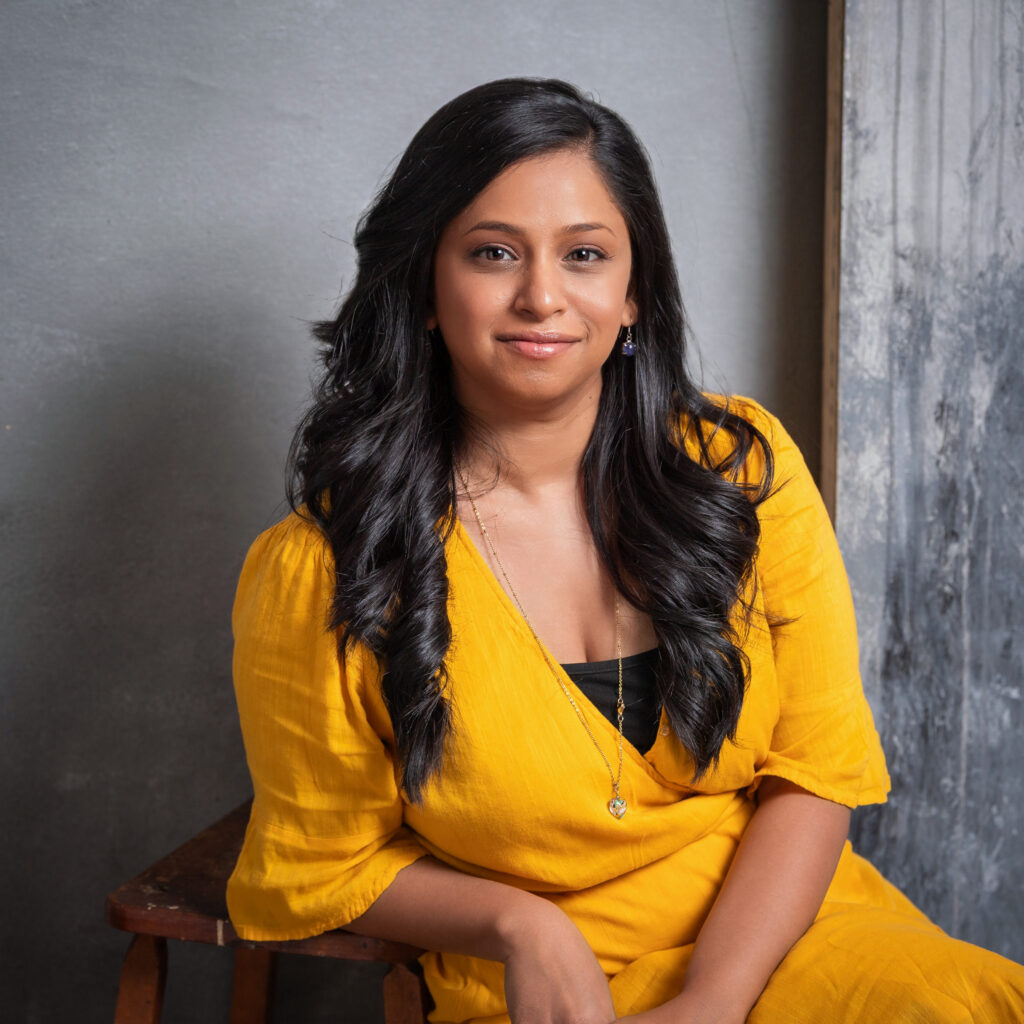
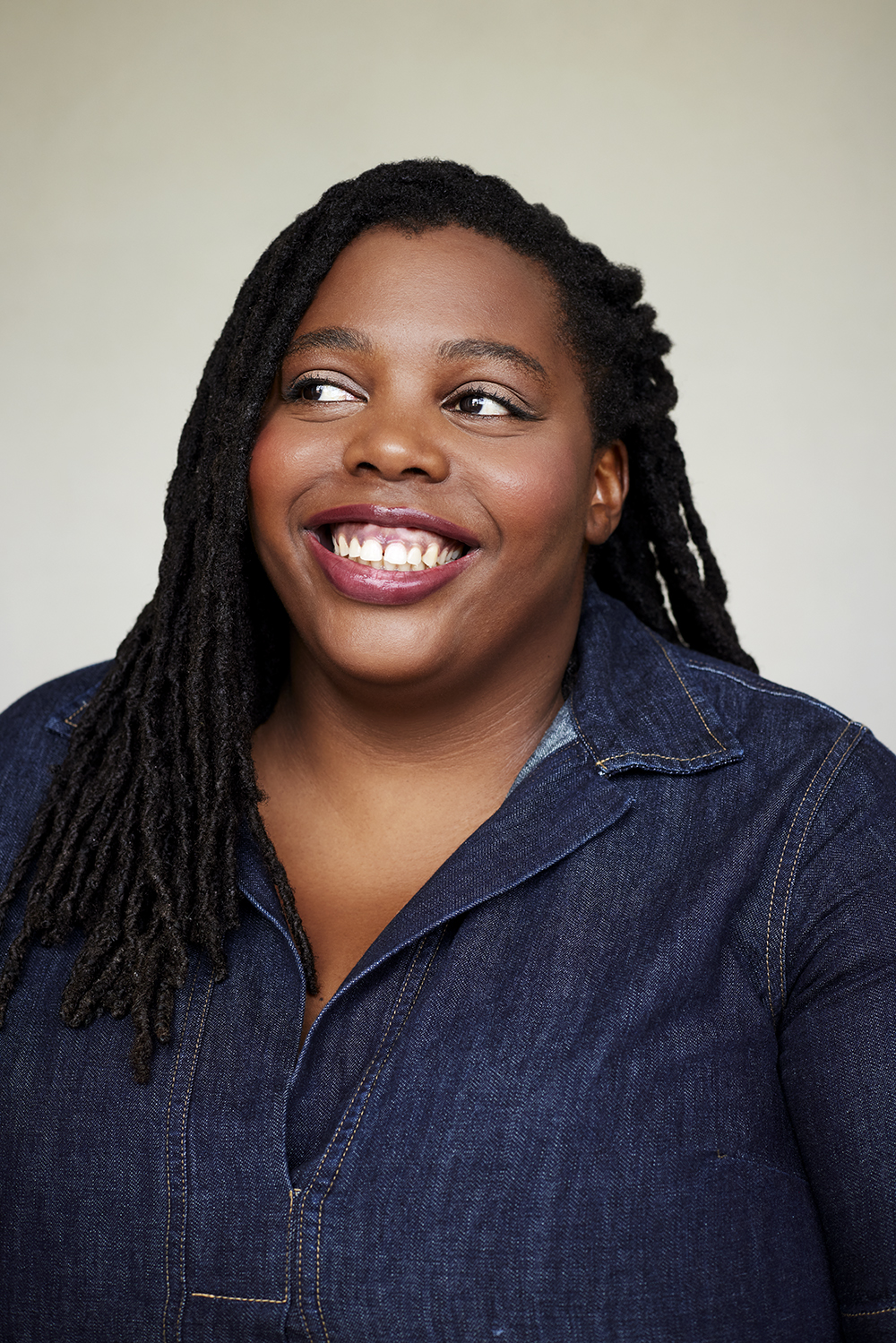
In Photo: Alison Almeida.
Creating Through Movement
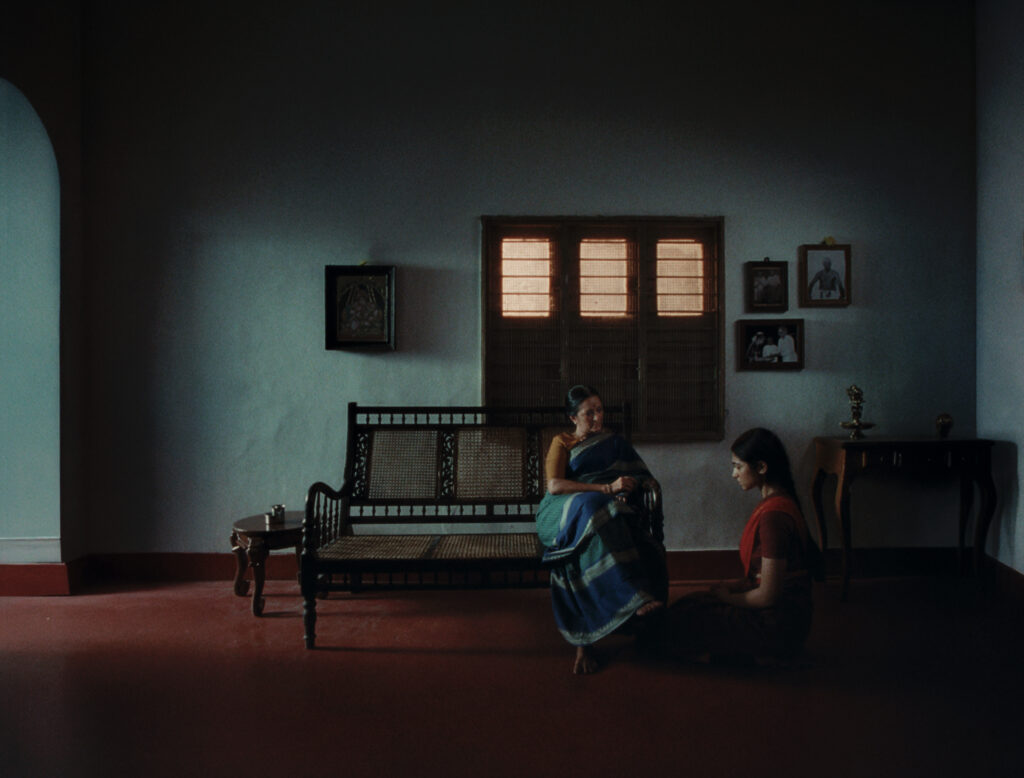
Kalainithan Kalaichelvan: We wanted the visual language to begin from a fairly grounded place and gradually become more fragmented as the pressure on her builds. Bharatanatyam gave us a natural starting point. It’s so precise and controlled, and Madhu’s body has been trained to move in very specific ways, so we were interested in putting that control against moments where her emotional state becomes much harder to contain. A lot of the film is shot in static compositions. Rather than having the camera constantly respond to Madhu, we wanted to find frames that could hold her and let the scenes unfold within them. We shot on 35mm and spent a lot of time thinking about the texture of the film. We didn’t want the images to feel overly pristine. There’s a physicality and imperfection to them that felt right for the story. As the film progresses, the distinction between what Madhu is experiencing physically, emotionally, and almost subconsciously starts to blur.
Kalainithan Kalaichelvan: It gave us something we couldn’t have manufactured. Bharatanatyam is so physically specific that I knew very early on I wanted dancers who had actually lived with the form. You can teach an actor choreography, but it’s much harder to replicate the physical memory that comes from years of training. The dancers carried that discipline in their bodies without having to perform it for us.
That changed how I directed the film. In so many ways, they knew that world better than I did. My job was to build the emotional circumstances around that foundation, and then listen when something didn’t feel authentic. That lived experience gave the film a specificity we couldn’t have achieved otherwise.
The Evolution from ‘Karupy’ to ‘Till The Milk Runs Dry’
Kalainithan Kalaichelvan: I suppose I don’t want every film to speak the same language. I’d rather each story force me to learn a slightly different one.
The films still feel connected to me, but formally they’re quite different. ‘Karupy’ is very dialogue-driven and built around an ensemble. A lot of the tension comes from people sitting in rooms together, talking around what they’re actually feeling. ‘Till The Milk Runs Dry’ is much more interior. We’re essentially attached to one person, and there’s very little dialogue, so I had to find other ways of communicating what was happening inside her.
I actually wrote ‘Till The Milk Runs Dry’ years before I made ‘Karupy’. I came back to the script afterward, and by the time I was directing it, I was less concerned with making sure every idea was understood exactly as I intended it.
Maybe that’s not an evolution from ‘Karupy’ specifically, but something that’s happened gradually across all the films I’ve made.
Alison Almeida: Watching audiences embrace ‘Karupy’ at TIFF and around the world was incredibly moving. It reminded us that people do not need to share the exact circumstances of a character’s life to recognize their humanity. We never had to dilute the film’s identity or explain every cultural detail. We simply had to remain truthful.
That experience taught me that specificity is not a barrier between a film and its audience. It is often the very thing that draws people closer. When filmmakers honour the world of their story with confidence, audiences feel that honesty and find their own emotional way into it. We carried that belief into ‘Till The Milk Runs Dry’, trusting its silences, its cultural language and the physical expression of everything Madhu cannot say aloud.
Going Straight to the Source
Alison Almeida: We all travelled to India to make the film, which was an enormous undertaking for a short. It required a great deal of preparation, adaptability and trust in one another and in our local collaborators.
Filming in Chennai was pivotal to us. Bharatanatyam is so deeply connected to the cultural and artistic history of the city, and we wanted the film to emerge from a place where that history continues to live and evolve.
Working with professional Bharatanatyam dancers allowed us to capture something that could not have been manufactured. They brought years of discipline, knowledge, and physical memory into every movement.
Shaista Roshan: This was the first time all three of us decided to go straight to the source and film in India, where Bharatanatyam actually comes from, a dance form that’s over two thousand years old.
We were trusting artists who already carried that discipline in their bodies, and who understood exactly what we needed without having to explain it.
The real challenge ended up being the one nobody plans for: we were shooting through the Chennai floods and had to rework one of our most important days with almost no notice.
What got us through it was the crew on the ground, who handled it without losing a beat. A film like this doesn’t come together because everything goes right. It comes together because the people around you refuse to let it fall apart.
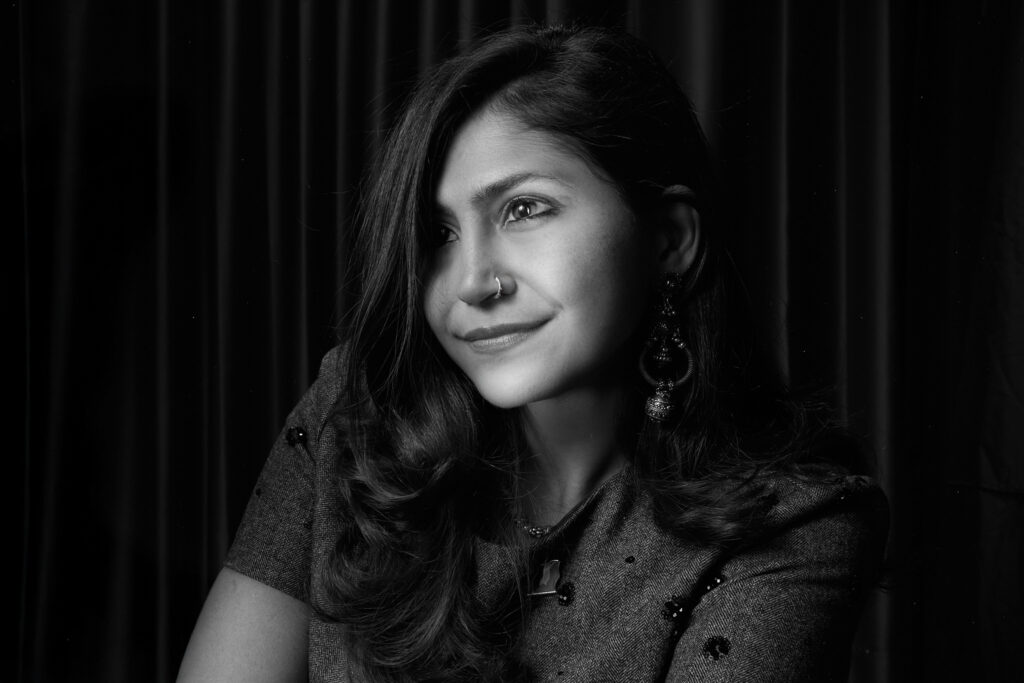
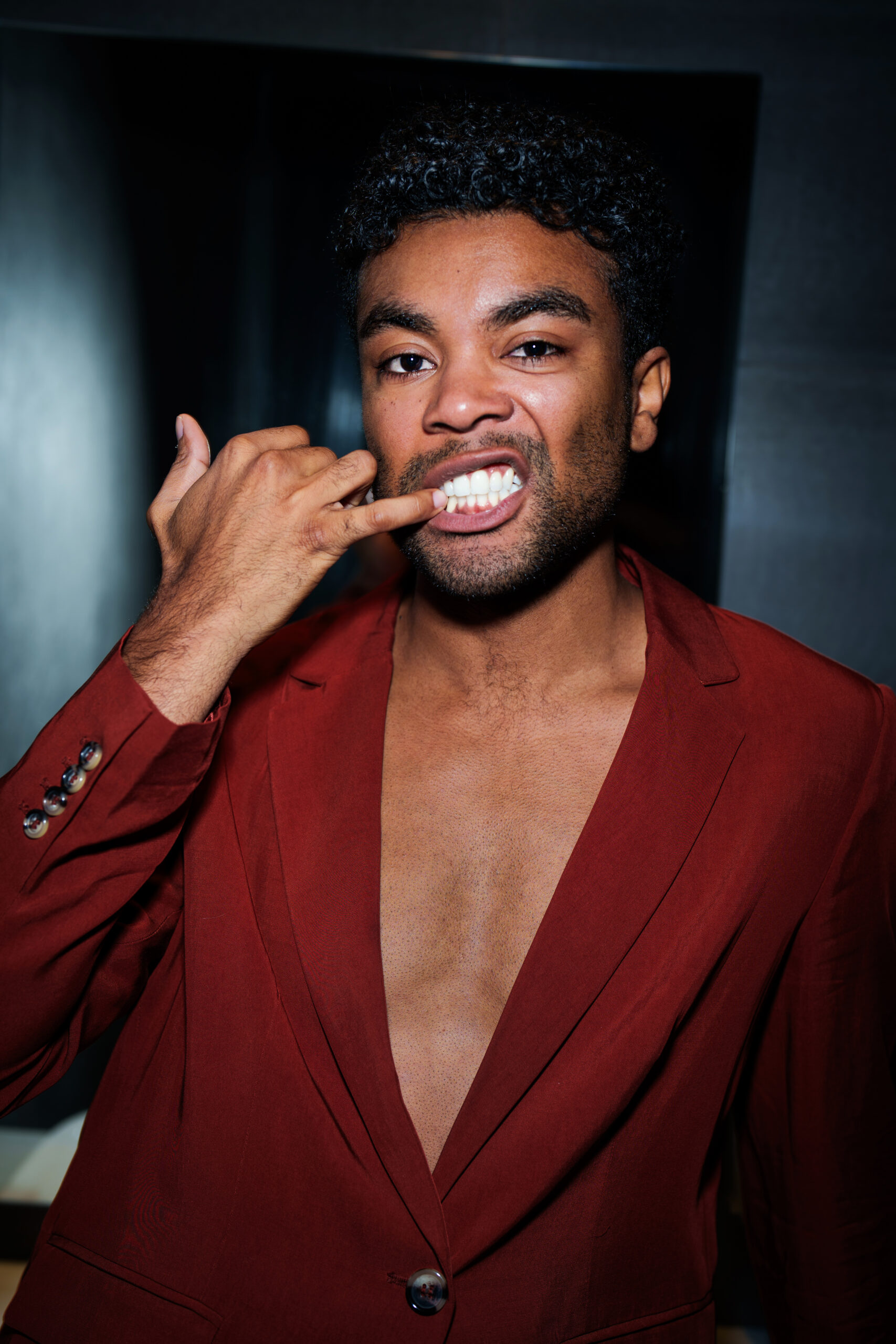
In Photo: Shaista Roshan.
Producing Stories That Matter
Shaista Roshan: Having produced ‘Karupy’ with Kalainithan the year before, I had a pulse on what he does best: he doesn’t just write characters, he builds entire interior worlds around them, and he does it for South Asian women in a way I hadn’t seen before, without ever reducing them to the usual tropes. That’s one of the things that keeps pulling me back to his work.
When I first read the script, it felt very personal. I recognized Madhu immediately, and I think so will anyone who has tried to build a life in the arts while an institution, a family, or a tradition quietly decides what that life should look like. As a South Asian woman who has spent her career straddling that same line, coming on board wasn’t really a decision. It was recognition.
We need more South Asian female producers in these rooms, deciding which stories get told, and how hard we fight for them. Madhu’s story was one I knew off the bat I wanted to fight for.
Shaista Roshan: To be honest, in my mind as a producer, my job wasn’t to make the film accessible. It was to make sure no one asked us to.
There’s often an unspoken pressure to explain a culture for an audience assumed to be unfamiliar with it. Bharatanatyam isn’t just a backdrop in this film, and we never treated it like something that needed translating or softening for people outside it.
Having spent my career between multiple cultures, I’ve come to realize that specificity travels further than people assume. Audiences don’t need a story explained to them to feel it. They need to trust that what they’re watching is real.
When you tell a specific story honestly enough, anyone, from anywhere in the world, can recognize themselves in the parts that aren’t even specific to them. To me, that’s the real win.
A Creative Partnership
Shaista Roshan: Kal, Alison and I met while we were residents at the Canadian Film Centre’s Norman Jewison Film Program in 2024, before any of us knew we’d end up making two films together, with another feature in the works.
‘Karupy’ became our proving ground, teaching us each other’s instincts under real pressure: what to protect, what to push, and where not to. By the time we wrapped, we’d built a bit of a shorthand. But more than that, we’d realized we were making something magical; something that actually mattered, and we wanted to keep that momentum going.
What’s carried through on all our films is that all three of us share the same instinct: love and a kind of servitude to the story itself. The only question that’s ever mattered is what best serves the story being told, and that instinct shapes every team we build.
It really does take a village, and we’ve never treated that as a saying. I think that’s why both films so far feel like they were made by people who cared about them, because they were.
Returning to TIFF
Shaista Roshan: Coming back to TIFF for a second year in a row means a lot. The first time felt like a door opening. The second time feels like proof it isn’t a fluke, that stories like ours don’t just belong in rooms like this; they can travel into rooms we haven’t been welcomed into yet.
Personally, it’s validation of a specific kind, not that I made the right choice, but that trusting my instincts on a story this quiet and specific was worth the risk.
Professionally, it’s momentum I can actually build on. Two years running with the same collaborators tells the industry this wasn’t a one-off; it’s a body of work.
Independent South Asian cinema still gets a bit lost, squeezed out by the commercial world on one side and boxed into the same handful of tropes on the other. Coming back with a film this specific shows that independent work doesn’t have to compromise to find an audience.
Every time a story like Madhu’s gets a stage like this, it becomes a little easier for the next filmmaker with something this personal to make it, and for someone to take a chance on an idea they thought may never work. That’s the part I’m proudest of.
Alison Almeida: I hope audiences see themselves in Madhu, even if they have never entered her particular world. Most of us understand what it means to love something deeply and to fear losing the part of ourselves that love has created. I hope the film gives people permission to consider their own desires with greater tenderness and without shame.
I also hope audiences recognize Kal’s extraordinary growth as a filmmaker. ‘Karupy’ and ‘Till The Milk Runs Dry’ are connected by his sensitivity and precision, but they are their own emotionally distinct story. The confidence with which he moves between different cinematic visuals is remarkable.
Canadian cinema becomes richer when Canadian filmmakers are given the freedom to tell stories that reflect the full cultural and geographic complexity of who they are.