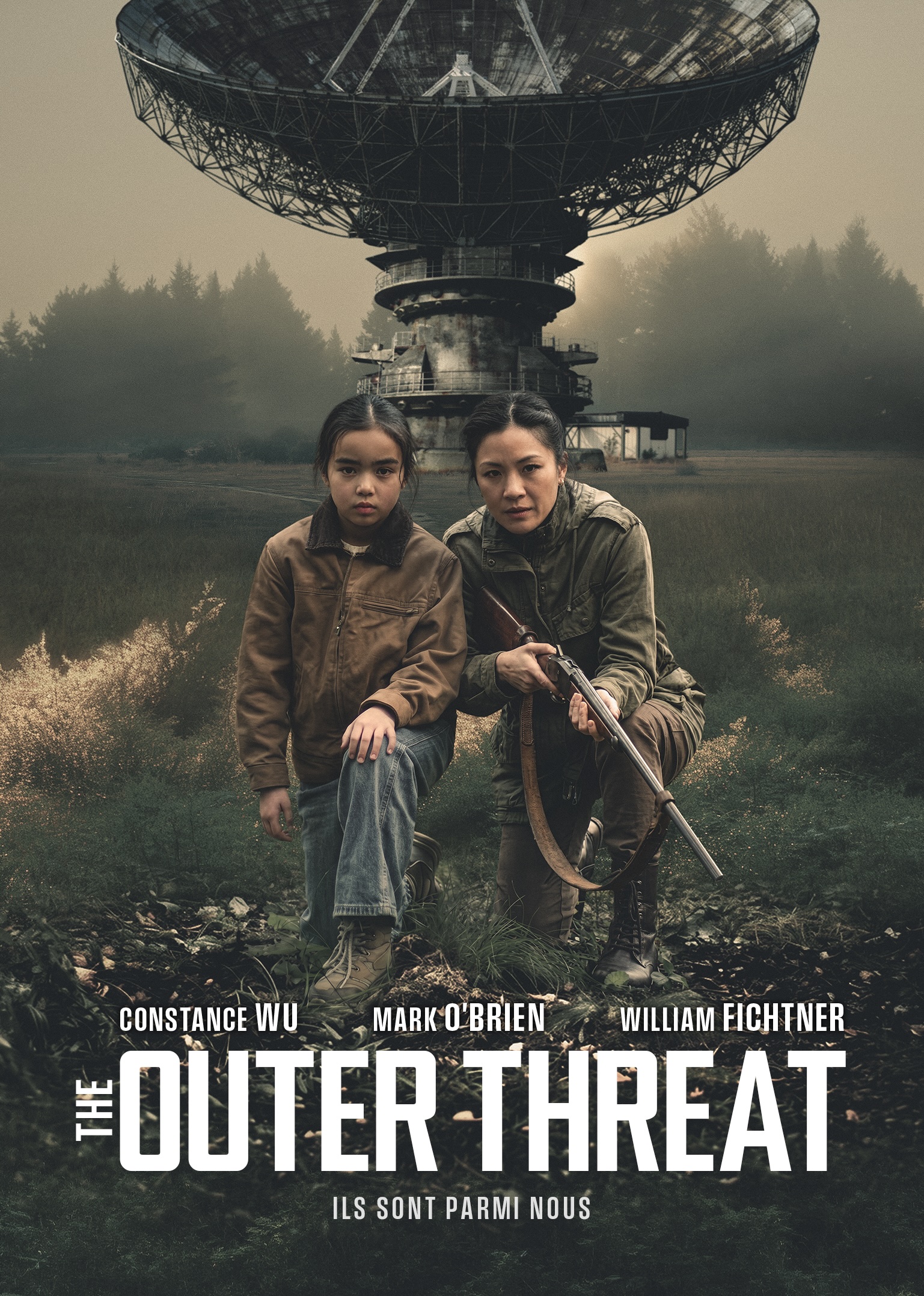
Throughout the years, Canadian science fiction has proven that compelling storytelling doesn’t require blockbuster budgets. ‘The Outer Threat’ is a testament to that. Written and directed by Will Woods in his feature directorial debut, the cerebral sci-fi thriller trades explosive alien invasions for a grounded, thought-provoking exploration of humanity’s first contact with extraterrestrial life. Following its digital and VOD release on July 10 and its Canadian theatrical release on July 24th, the film invites audiences to contemplate isolation, survival, and humanity’s place in the universe through a distinctly Canadian lens. Shwayta Sharma sat down with writer-director Will Woods and acclaimed actor William Fichtner to discuss crafting ambitious science fiction on an independent budget, the philosophy behind the film’s restrained approach to alien contact, and what drew Fichtner to this quietly gripping Canadian production.
Shwayta Sharma: We’re diving deep into the gripping new Canadian sci-fi thriller called ‘The Outer Threat’. My first question is for Will. We can all agree that Canada has incredible filmmaking talent, but ambitious genre films can be very difficult to finance here. Did the limitations of, say, an Indie budget ever force creative decisions that ultimately made the film stronger in the end?
Will Woods: Well, if I’m being totally honest, I knew that it was going to be the first time I was directing a feature. So I actually had gone to a couple of my friends, Patrick Vypond and Jared Blaichman, to ask them to put in some money, and then I went to some other friends, Ben Stranahan, Tom Spriggs, Rob McGillivray and John Hansen. So I was going to people that I knew and loved to ask them to invest in me and in this vision. And I didn’t want to take on too big of a risk. So I knew that the scope was going to be smaller when we started the financing process with the producers, Maddy Falle, Albert Shin, and Allison White. But I think that I wasn’t really interested in the spectacle of it all. There are much bigger films that can do spectacle a lot better than I ever could. I really was just interested in the family and sort of this period right after communication going down, the grid going down, and you didn’t know why. And how long would it take for you to start to get nervous, or start getting scared, and start thinking about how you’re going to behave differently now? And I think that just being able to keep the movie more grounded and explore the larger philosophical ideas is what I wanted to do. I wanted to explore the idea of humanity’s place as the shepherd of our ecosphere and the paradox of loving individual human beings, but having a mistrust of humanity as a whole. So that was always the intent. So I never felt like what I wanted to explore creatively was hampered by the budget. In fact, I was very grateful for people to take a risk on me and put their faith in me to allow me to make this film.
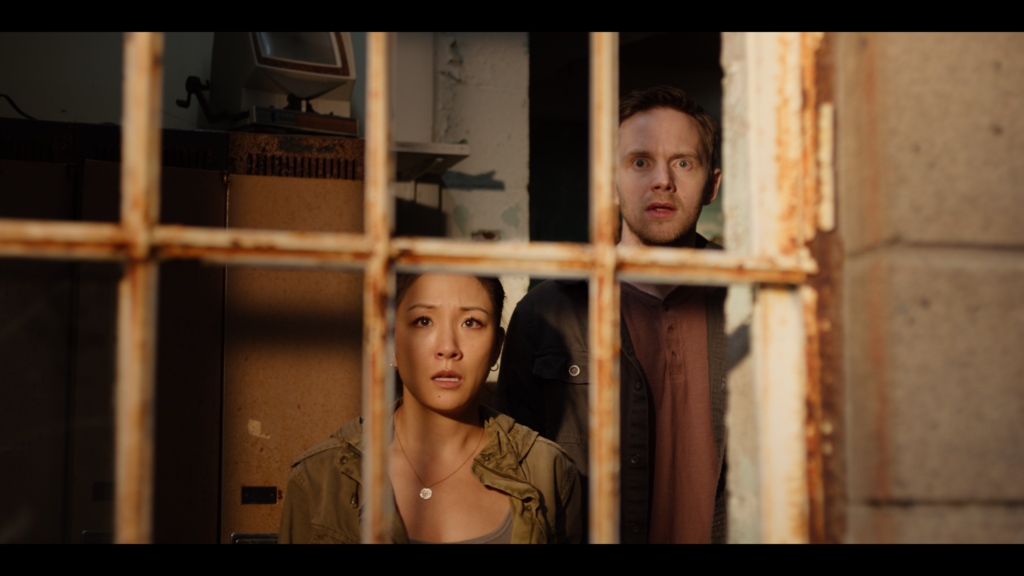
Shwayta Sharma: That kind of ties into my second question, in which we wanted to talk about the fact that you kind of utilize an isolated rural setting in a Cold War-era bunker hidden beneath a shed to cultivate a distinct, quiet tension. How does this approach of prioritizing atmospheric isolation over the urban spectacle allow you to differentiate ‘The Outer Threat’ from all of the other high-octane ‘flying saucer tropes’ sort of films that we’re used to in Hollywood?
Will Woods: Well, I think it probably is a little bit of a trope, but it’s like trying to contrast this more agrarian existence where the characters are living a simpler life that’s a little bit more private. They’re somewhat living within nature and homeschooling their kids and pursuing this cerebral existence in a more natural setting. And then I wanted to contrast that with more technological discoveries and highly technical threats as well.
Shwayta Sharma: That leads me to William Fichtner. William, you’re a veteran of massive Hollywood disaster films. You’ve worked on major studio productions throughout your career. What drew you to this Canadian independent sci-fi project, and what stood out about working with this team and Will Woods especially?
Will Woods: Oh, good question!
Will Fichtner: I refuse to answer this in front of him (laughs). It all starts with the script. If it’s not on the page, it’s not on the stage, you know? It’s the story that took me beyond. You know, I think about these things in life about where the world’s going. So I’m reading this script a couple of years ago, and I’m engaged, and somewhere in this story is this wonderful moment in a diner with a guy (William Fichtner’s character Sam) that’s dealing with his own issues about humanity. Not only humanity, but his own humanity, and how he’s going to operate under these circumstances or what he’s going to do now because everyone is being challenged with what is happening in this story. I found the combination of all of that to be really, really gripping. Will and I talked about this; it’s one thing to read the script and have that sort of experience on paper, but then Will and I spoke on the phone a couple of times, and it was those conversations where somewhere along the line, something happens, and the button goes off, and I said: “I’m in”. That happened fairly quickly. And then I got to go up to lovely North Bay, which I have to tell you, was an absolutely perfect location to shoot this film, and you can very much see it in the film. It’s just wonderful. And there’s something that’s very alone about being up there, especially in these more rural parts out of the town. And it was just a memorable experience. I’m really glad that I took the journey.
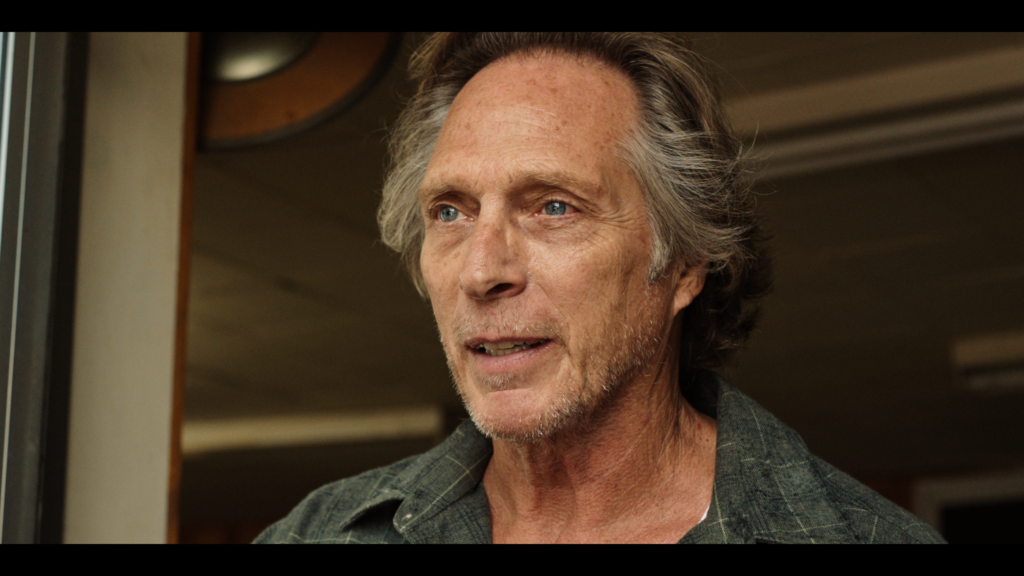
Shwayta Sharma: Well, thank you so much for being a part of this film! Your character Sam is introduced as a former veterinarian. He’s deeply rooted in a profession that’s about caring and healing. Yet ultimately, he has to bend his morals and do some not-so-great things to ensure his own survival. How did you use this specific background of his character and his profession to ground the desperate, sort of sinister survival instincts that kick in in the diner scene you mentioned earlier?
Will Fichtner: So earlier, Will shared with me that his dad is a vet. And I love what he has told me about him. He mentioned what a caring guy he was. And I feel that you don’t have to be a vet to care about living beings that you take care of. So I didn’t feel like I had to super explore that. I personally love animals as well. I have a dog, and I’m not even going to tell you that I love my dog. I’m, in fact, in love with my dog. I start every day by hugging her first. So I have all of that going on, and sometimes you don’t need to give it a name if it’s already like living inside of you. I feel like that’s part of it all. But everything ultimately goes back to the story and to these characters being in these challenging moments, and to how their lives change after that. What do you do? How do you act? What do you say? You, in fact, are more guarded and choose your words carefully. And I think that Will did an incredible job writing all this into the script because it’s there. It’s all there!
Shwayta Sharma: Well, I personally love ‘first contact’ films. I am very excited to finally watch this as it has been released in Canadian theatres on July 24th. Thank you both for being here with me. I really appreciate all the time you’ve given us today.
Will Woods: Appreciate it.
Photo Credits: VVS Films.