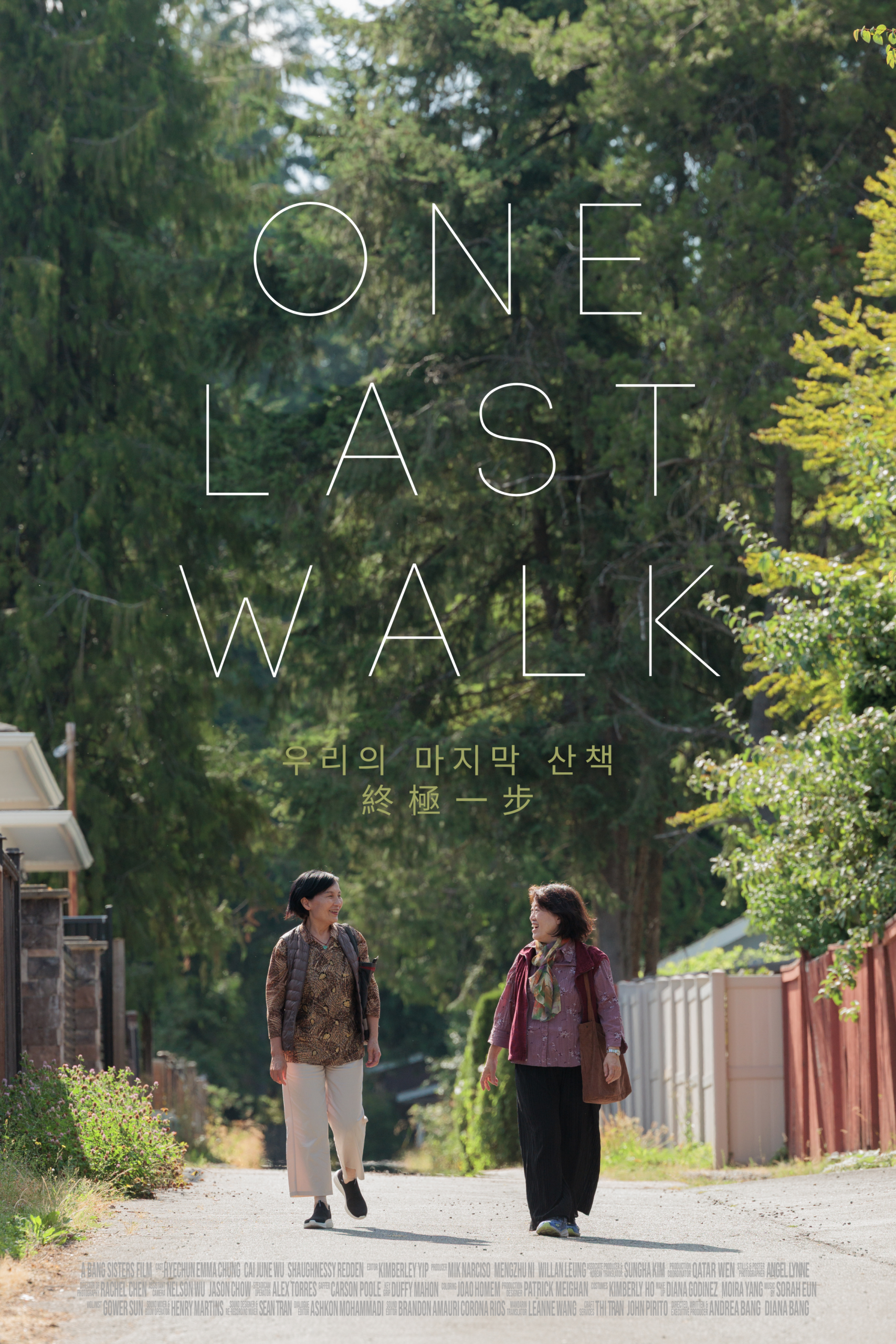
In their short film, ‘One Last Walk’, real-life sisters and Korean Canadian filmmakers, Andrea Bang and Diana Bang, explore the beauty of human connection through an unlikely friendship between two elderly women who speak different languages. Inspired by their own grandmother’s experience of forming a bond with a Cantonese-speaking neighbour during her visits from South Korea, the film finds tenderness, humour, and joy in the everyday moments that bring people together. As the women embark on their final walk before one returns to South Korea, the sisters reflect on loneliness, cultural identity, and the relationships that can leave a lasting impression, even when they are fleeting. Ahead of the film’s premiere at the Reel Asian International Film Festival, Andrea and Diana speak with Shwayta Sharma about the inspiration behind the story, their collaborative approach to filmmaking, and the universal need for connection.
At its core, ‘One Last Walk’ is about two elderly women who find companionship despite not speaking the same language. What inspired this story, and what drew you to explore loneliness and friendship through the lives of two elderly women?
Andrea Bang: The story is inspired by our grandma who used to visit us from Korea. She would go for walks around the neighbourhood, and one day, we found out she’d go for walks with a Cantonese-speaker. Neither spoke the same language, but they still found companionship in each other, and we thought that was really beautiful.
One of the most beautiful aspects of the film is how the women seem to behave like young girls again when they are together, exploring their neighbourhood and engaging in small, playful, almost childlike activities. What did you want to convey about the parts of ourselves which can re-emerge when we feel truly comfortable with another person?
Diana Bang: We were inspired by childhood films which focused on the adventures of a group of kids over one transformative summer. We wanted their time together to feel youthful and very much in the moment, where they find joy in the mundane and make their own fun. They are aware that their time together is fleeting, so they try to make the most of it by being present and truly enjoying each other’s company.
Andrea Bang: There’s also something very innocent and playful that can come out when you connect with someone. It’s like when kids climb the monkey bars at the same time and, without saying a word, suddenly become best friends.
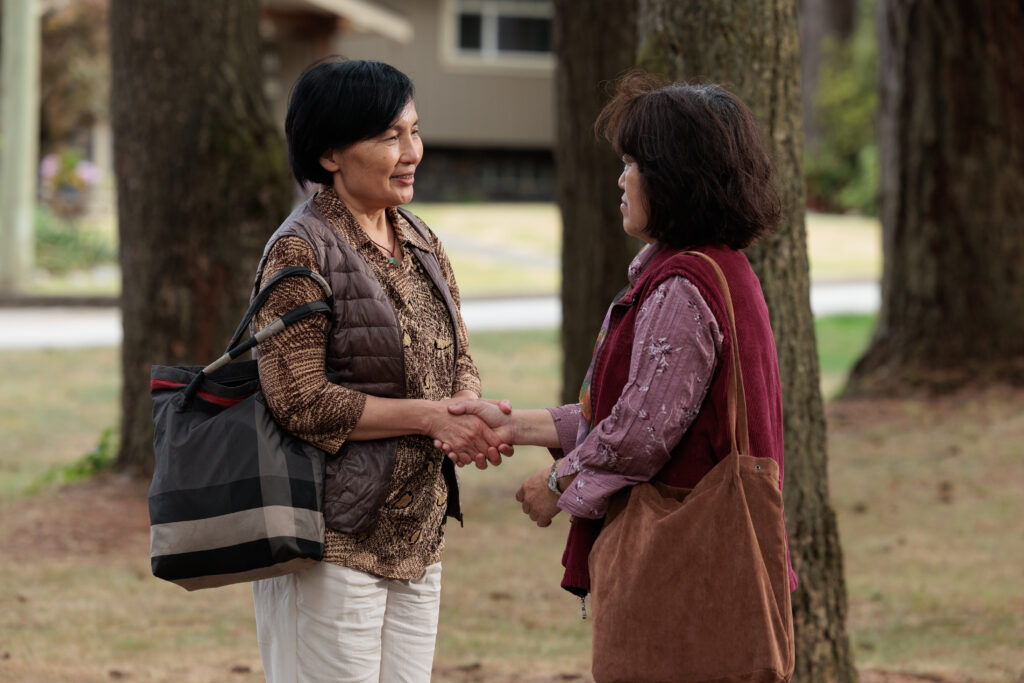
Pictured: Still from ‘One Last Walk’.
The women are unable to understand each other’s words, yet they find ways to communicate, express themselves, and share moments of genuine emotional release. How did you approach writing and directing these interactions to ensure their connection felt authentic without relying on dialogue?
Andrea Bang: We rehearsed with the actors a bunch before filming because we wanted them to feel as comfortable as possible with the script, each other, and us. And then the rest is Emma (plays Soo) and June (plays Mei), who are two very hard-working and generous actors.
The actresses convey so much through gestures, expressions, and physical interactions. How did you work with the performers to build that intimacy and sense of familiarity between the characters?
Diana Bang: As Andrea mentioned, we did a lot of rehearsals before shooting because both of our leads were completely new to acting. Emma has done some background work, but June has never been on a set. We really wanted to make sure they felt comfortable and prepared before cameras rolled. Naturally, spending all that rehearsal time together helped them build a genuine closeness. Since Andrea and I understand a bit of Korean but not Mandarin, we brought in Leanne Wang, who is an amazing actor herself and joined us as our Mandarin translator and acting coach for June. We gave them space to just play around and get used to the process, which let them do their best work.
Both women share aspects of their East Asian identities, but they come from different cultural and linguistic backgrounds. How did you navigate the balance between what connects them and what makes their experiences distinct?
Andrea Bang: We were pretty instinctual about it. We knew their personalities were different and that, naturally, their experiences were distinct in that Mei is an immigrant and Soo is visiting. But they also share the same need for human connection.
Diana Bang: We also got Emma and June to chime in if the lines felt weird or if what they were saying didn’t make sense. We wanted the characters to be as authentic as possible within the world, so it was super helpful to get their input.
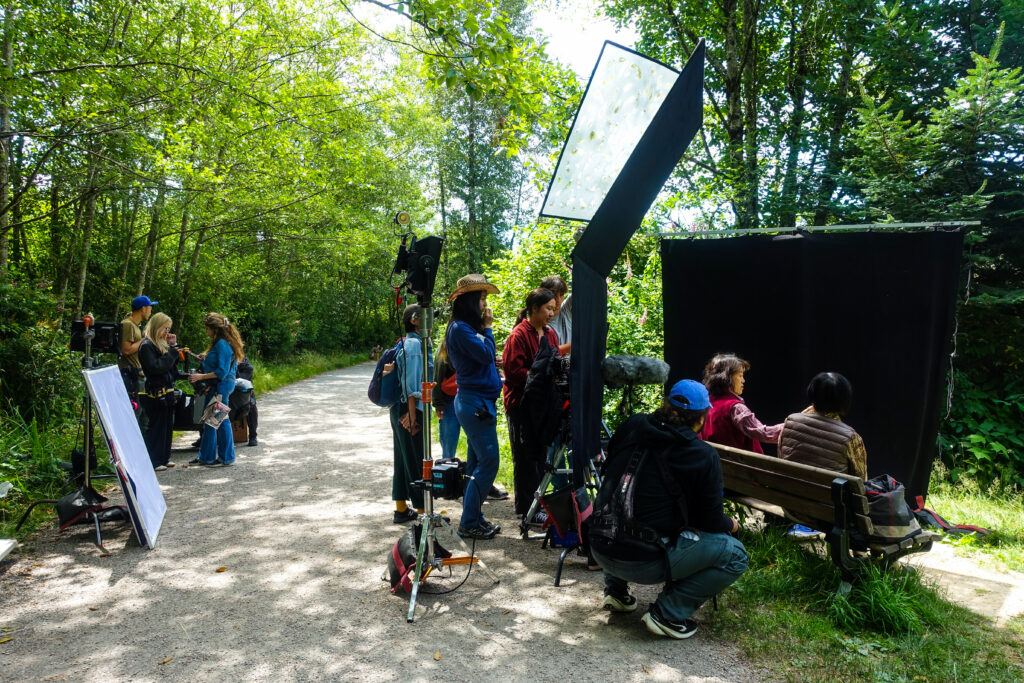
Pictured: Still from ‘One Last Walk’.
The impending goodbye gives the film a particular tenderness. Knowing that their friendship has become such a meaningful part of their daily lives, how did you approach building the emotional weight of their final walk?
Diana Bang: We knew right off the bat that we didn’t want it to be a somber, sad day, where the characters were constantly thinking about the end, but we also didn’t want it to be too light either. It was really about finding that balance of weight and levity. Anytime there was something a bit too heavy, we would try to cut it with a joke. We were lucky to have our cast, as they both quickly understood and were able to tap into the emotions and the idea of the characters’ last walk together. Also, with the help of our cinematographer, Rachel Chen, the visual language helped to elevate the idea of two lonely people coming together, crossing paths and subsequently, parting ways.
The film explores a form of loneliness that can be especially difficult to articulate. What did you hope the film would communicate about the experiences of older women, immigrants, and people who may feel unseen in their communities?
Andrea Bang: That everyone is looking for the same thing: connection. In a world that can be lonely, community is important.
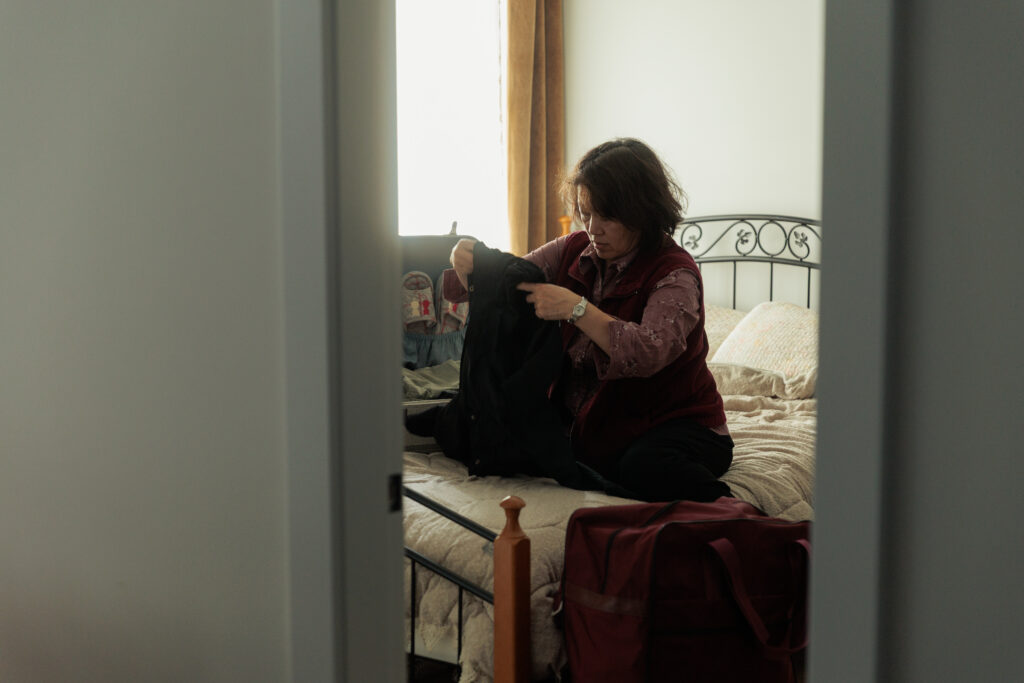
Pictured: Still from ‘One Last Walk’.
As sisters who have collaborated on projects such as Karaoke Mamas and In Loving Memory, you have developed a shared creative language of your own. How does your dynamic as siblings shape your approach to writing and directing together, and did ‘One Last Walk’challenge or deepen your collaboration in any unexpected ways?
Diana Bang: We’re lucky because we have a similar sensibility, so we’re usually on the same page. And when we’re not, we’re so used to fighting as kids anyway that it’s no different, and we get over it very quickly. It had been a while since we collaborated on any film prior to ‘One Last Walk,’ so making it in such a short amount of time just reinforced that we’re in the right place doing the right thing together and just inspired us to do more.
Andrea Bang: Yeah, a goal of ours is to direct a feature film together. We have a couple of scripts we’re shopping around, so maybe ask us again after we’ve made those haha.
The film reminds us that some relationships can be brief and still profoundly affect us. What do you hope viewers carry with them after watching ‘One Last Walk’?
Andrea Bang: What drew me to tell this story was this beautiful openness between these two characters who are ignored by the world, and in another situation would’ve maybe ignored each other, find commonality and friendship. It’s hopeful for me. So, yes, a hope and fondness for these types of moments in your life.
Diana Bang: I feel like we were writing towards a feeling of bittersweet nostalgia, so if audiences leave with a little bit of that feeling, then we’ve done what we set out to do. Other than that, I hope people see there’s more that connects us than divides us.